

Updated 3 months ago
Coffee Packaging Box: Specialty Coffee Brands: A Specification Checklist.

ypak.coffee
YPAK PACKAGING GROUP was established in 2011 and formed with 3 companies based on Hongkong, Dongguan and Foshan. We have become one of the largest coffee bag manufacturers in China. We use the best quality WIPF valves from Switzerland to keep your coffee fresh.
Conform to the plastic ban policy imposed to many different countries, we have researched and developed the sustainable packaging bags, such as RECYCLABLE and COMPOSTABLE pouches.
No minimum quantity, no color plates are required with our HP 25K INDIGO DIGITAL PRINTING service.
You are welcome to visit YPAK.

custom coffee packaging box
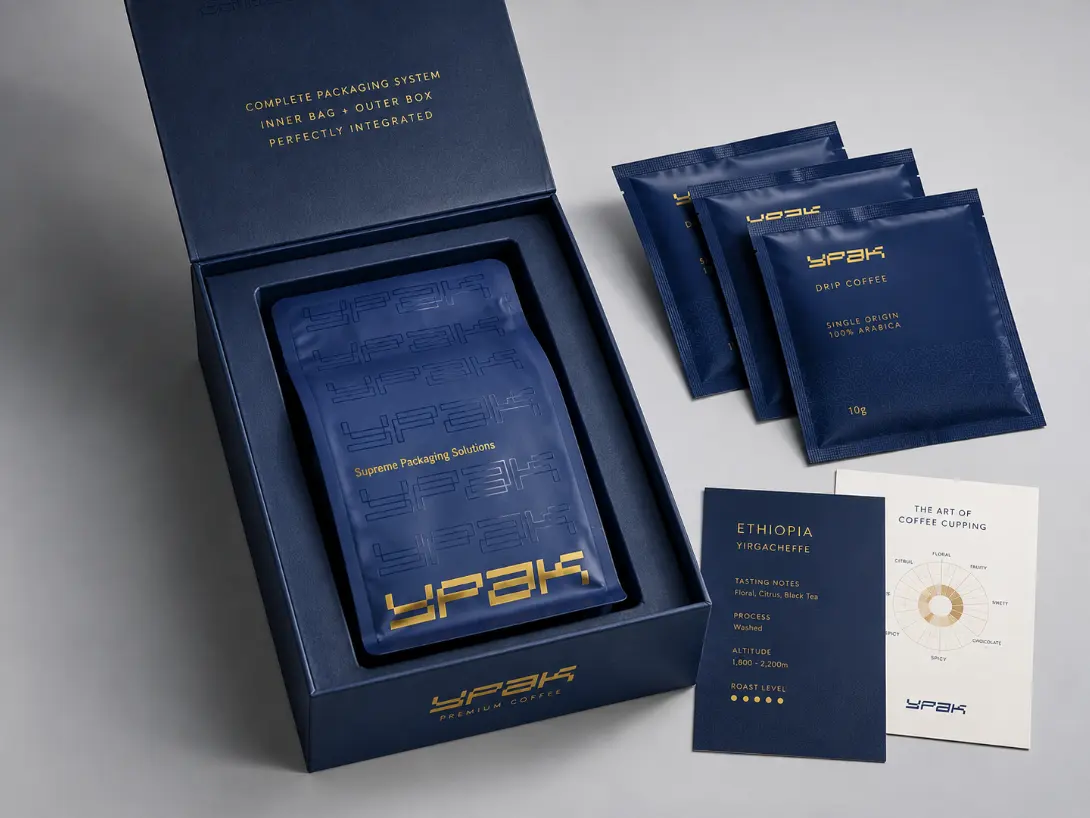
A full packed system should have a coffee packaging box, and should not be purchased individually as a printed carton. The correct outcome is founded on the product being packed, the inner liner of freshness, packing process, the sales channel and the distribution channel.
In the case of roasted coffee, the sealed pouch, drip sachet or capsule typically offers the first line of defense against oxygen and moisture. The outer box offers structure, organization of the products, space to be printed and physical protection. Its performance should thus be gauged on the job it is supposed to perform.
Develop the Background.
An effective specifications will start with the facts about the product and operation. Starting with artwork generally makes irrelevant revisions.
Record the Product
Determine all those items to be put in the box. Include the coffee format, net weight, number of units, the accessories, cards and inserts.
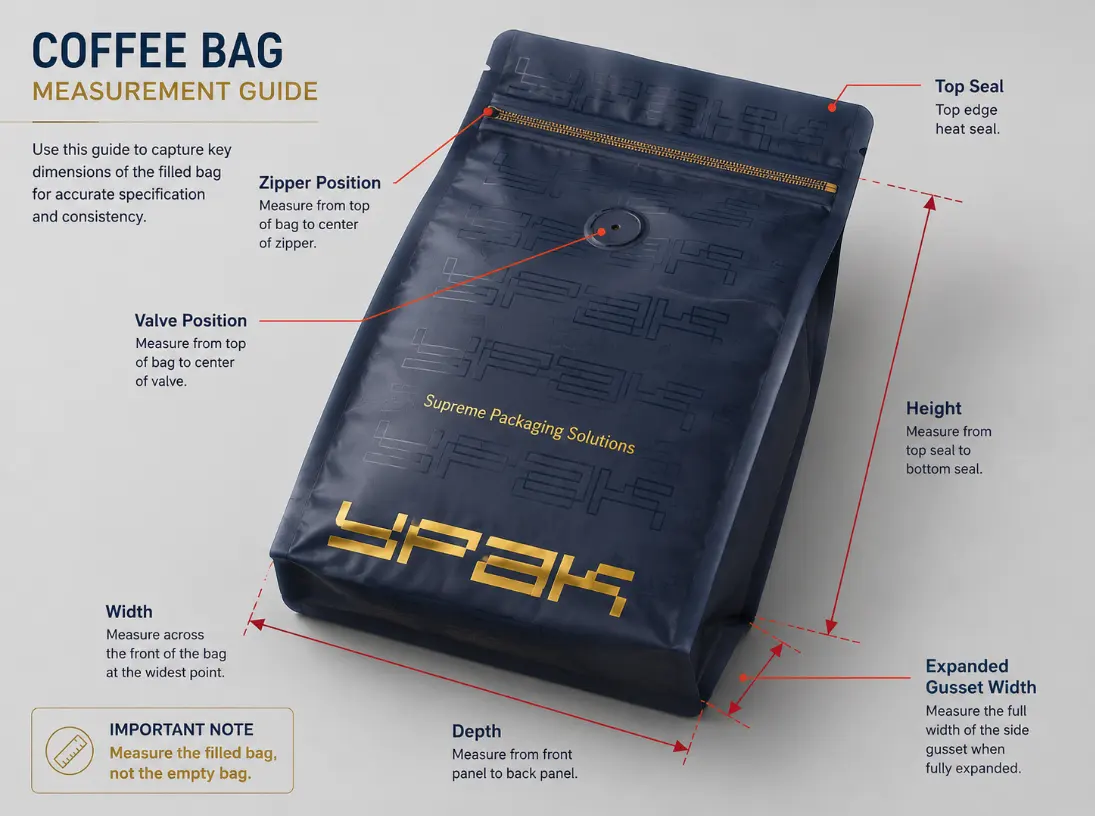
In case of flexible coffee bags, sample a few normally filled bags, instead of an empty pouch. Note the largest width, depth, height, gusset expansion, zipper location, top seal and valve location.
Define the Route
Indicate whether the package is to be stocked on the counter or delivered on a master case, or delivered by a carrier network, or is to be gifted. The different requirements on the routes are different in terms of board strength, closure, abrasion resistance, labels and testing.
Name the Owner of the Packing.
Create the individual(s) to create, fill, wrap, label and case-pack the units. The manual design that is done by a small team may need other locks and folds as compared to those achieved with semi-automatic equipment.
Write Measurable Requirements.
Such general statements like strong, premium or eco-friendly do not provide a supplier with a credible production goal. Turn everything the expectations are into verifiable things.
| Requirement | Information to provide | Acceptance evidence |
| Product fit | Sensitive areas and dimensions filled. | Loaded structural sample |
| Packing | Technique of fabrication and target rate. | Timed packing trial |
| Distribution | Case plan, route and packed weight. | Shipping or handling of test. |
| Printing | Dieline, colors, text, and finish. | Approved physical prototype |
| Reordering | Versions and revisioning of artwork. | Signed production specification |
Use a Tolerance Range
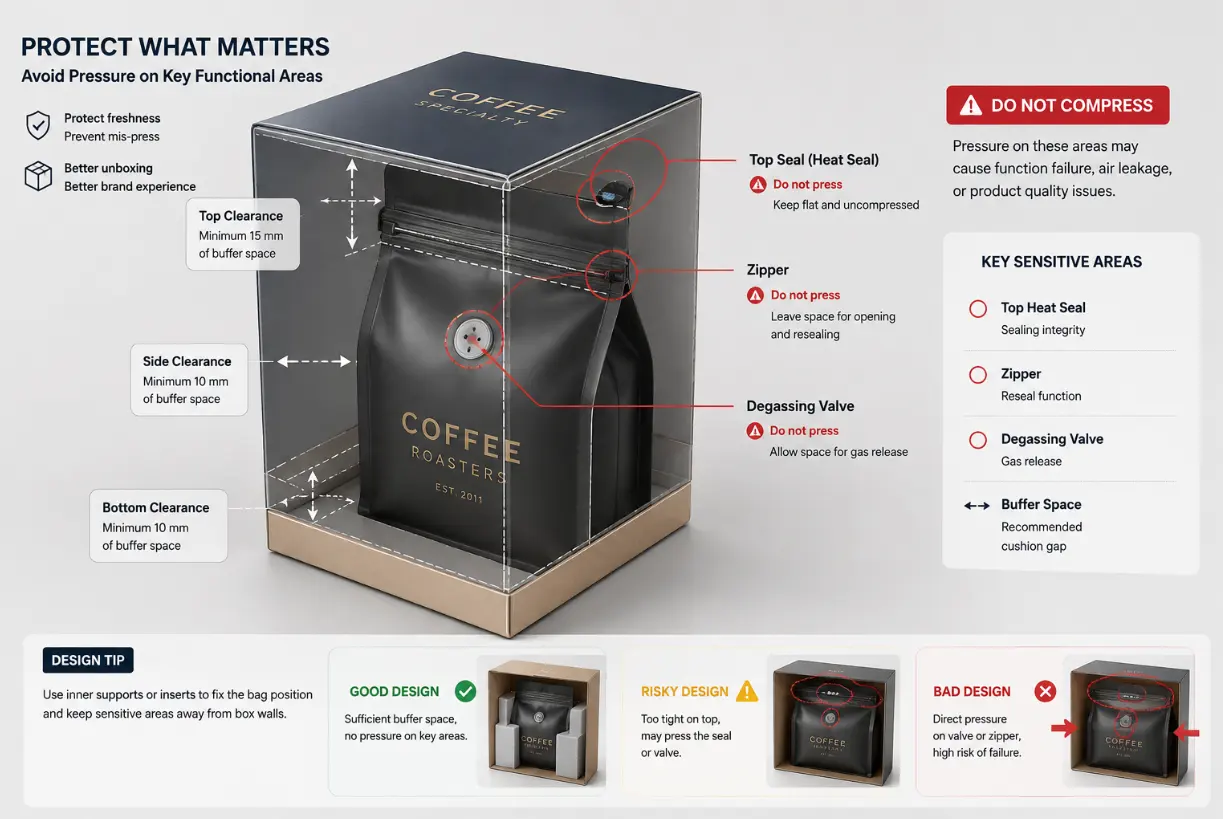
Define the internal size not solely in terms of an average product. The box should be able to accommodate normal filled-product variation without having too much empty space.
The tolerance should be able to facilitate the easy loading but not allow the product to lean, rotate or impact another product during transportation.
Mark Sensitive Zones
Continuous pressure on a degassing valve, zipper or heat seal should not be exerted on a coffee packaging box. The flexible pouch should also not have hard accessories like locking tabs and insert edges.
Indicate these spots on product drawing and verify with loaded samples.
Choose to Pack.
The building must suit the day-to-day functioning and the completed look.
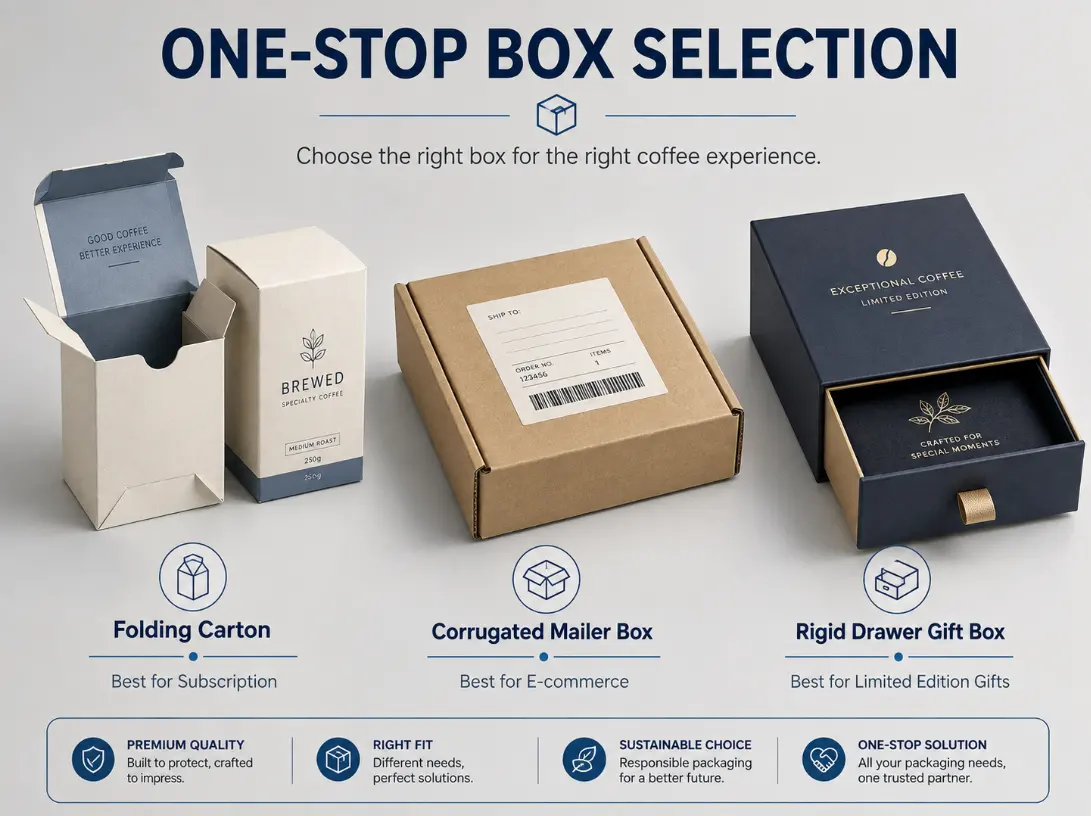
Folding Cartons
Folding cartons are usually provided in a flat form and have the capability to minimize storage space. Tuck-end, crash-lock and automatic-bottom provide various levels of support and various forming speeds.
Test the carton to open flat, the bottom to fit and the closure to ensure it is sound with the actual product loading.
Corrugated Mailers
Corrugated mailers have the capability of supporting subscriptions, e-commerce orders and multiple product packages. Label the packed weight, route that should be used, flute, paper grade, closure and internal movement limit.
A mailer is to be tested with its final label positioning and internal organization instead of being a blank box.
Rigid Presentation Boxes
Premium gifts and limited releases can be supported using rigid formats. Drawer, lift off lid and book style offer controlled presentation, but are more challenging to assemble, store, and transport.
Total cost of operation should be compared with the presentation value.
Build across the Dieline.
The art must be in accordance with the accepted format. Graphics can be performed on text before a dieline has been affixed and graphics may be placed on folds, locks, glue spots or hidden panels.
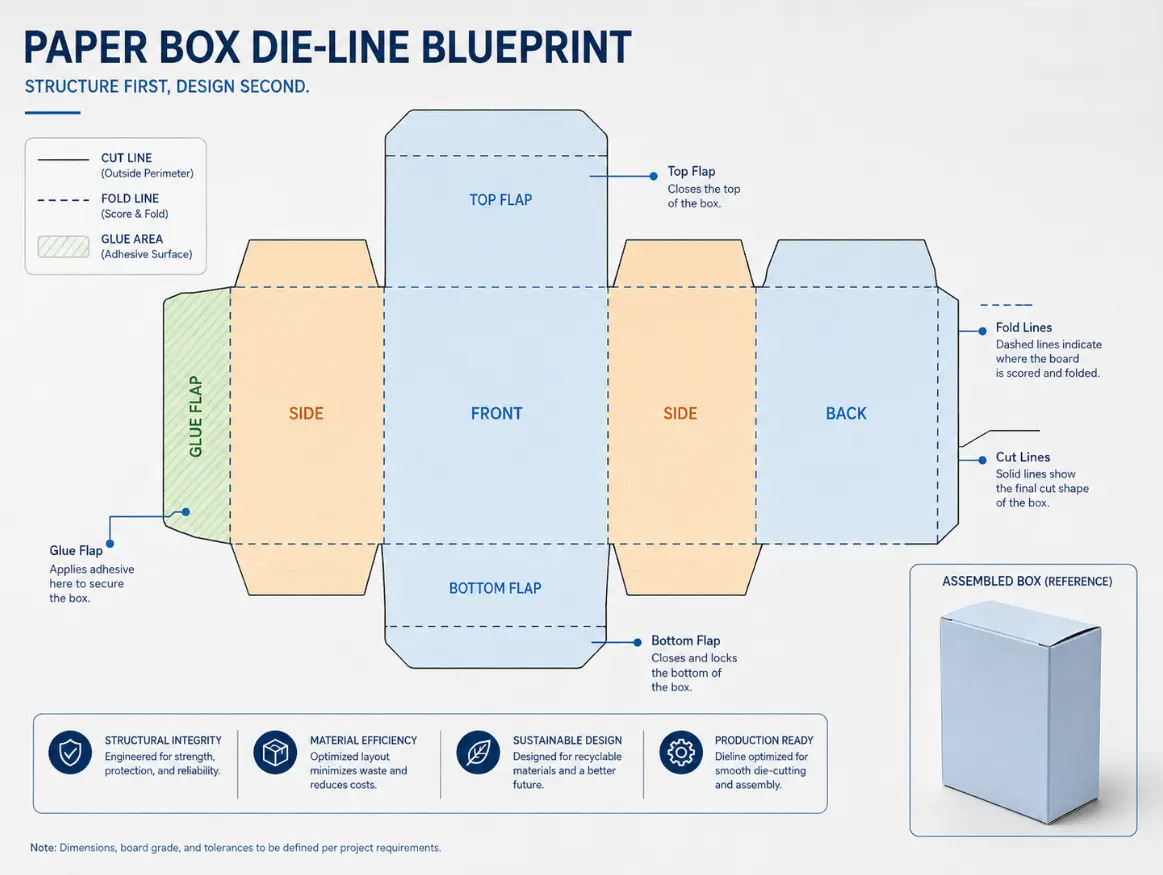
Assign Panel Roles
Give every panel that you can see a purpose. The brand, name of the product and coffee format may be displayed on the front panel, brewing instructions, origin, statements required, and barcodes can be displayed on the side and back panel.
Do not provide the same visual emphasis to all messages. The customer must be able to easily understand the product.
Reserve Variable Areas
Establish clear spaces with roast dates, lot codes, best-before dates, shipping labels, language version as well as market specific information.
The labels, cards, sleeves or controlled artwork version can often be used instead of a new box format with every coffee to make a change in product specifications.
Approve Physical Color
Color is reproduced on white paperboard, kraft stock, corrugated liners, specialty papers, and flexible coffee films in varying ways. The ultimate relationship between the materials cannot be guaranteed by a screen image.
Physical samples Approve physical samples with the outer box coordinating to a pouch, label or card.
Use Approval Gates.
One prototype is not enough to provide the green light to the mass production. split the review in three gates.
- Structure gate: Check filled-product fit, clearances, opening, closure, inserts and removal of the product.
- Packing gate: Fill and assemble multiple units and record assembly time, errors and scrapes.
- Production gate: Receive the printed prototype, specification, revision of artwork, pack form, quantity and delivery schedule.
When the package is to be shipped, add a distribution trial with the completed box, insert, product and master-case set up.
Compare the Full Quote.
Two quotations could have the same unit price, but different materials, services or risks. Request the suppliers to quote based on the same written specification.
See whether the quotation contains:
- Tooling and design.
- Unprinted and printed samples.
- Board and insert specifications.
- Plates or cylinders of printing.
- Finishing and gluing on the surface.
- Assembly or kitting
- Master cases and packing form.
- Conditions of freight and delivery.
- Number of copies of each version of the artwork.
- Lot and transit lead-time.
Make a comparison of landed cost, packing labor, warehouse space, anticipated waste, and obsolete inventory as opposed to unit price alone.
Checks on Materials.
Paper box/ inner coffee pouch may be designed of different materials and garbageed in other ways. Assess them individually.
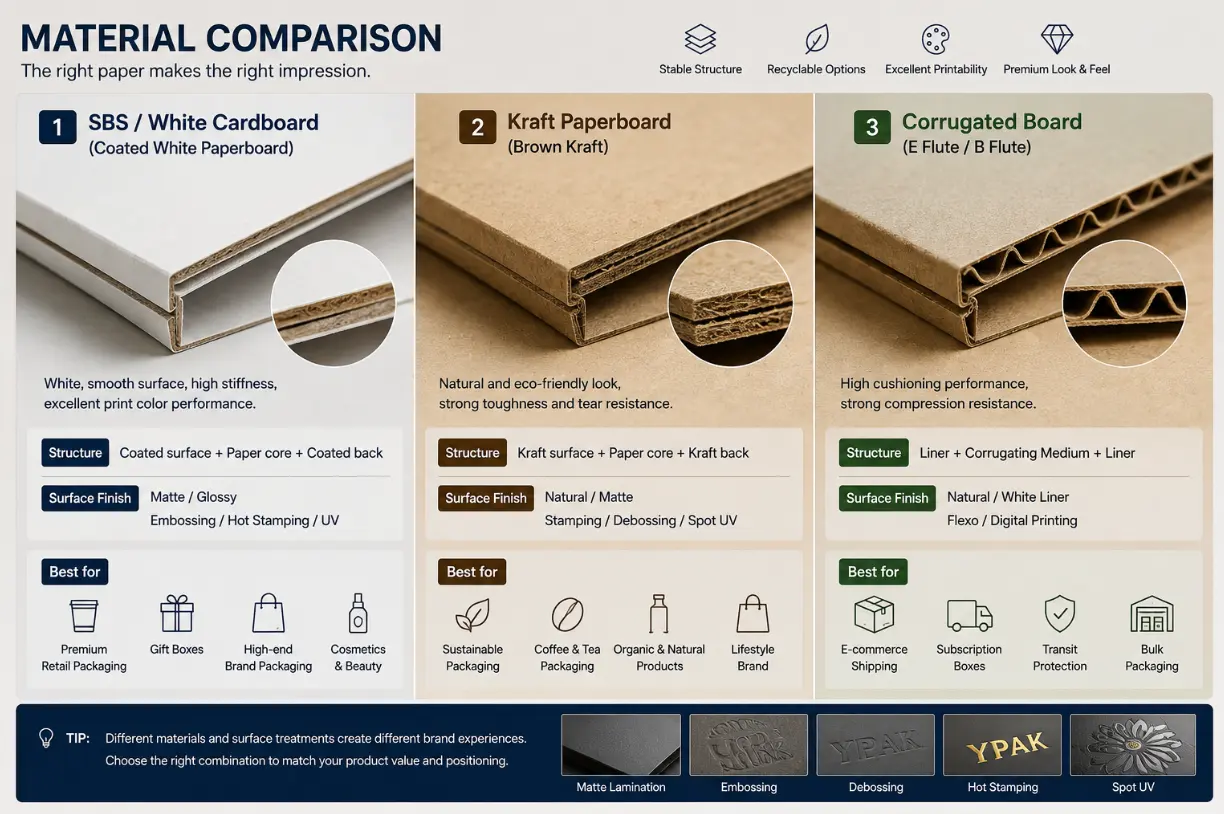
Identify the Construction
Ask the supplier to identify the name of the board, finishes, adhesives, windows, inserts, metallic layers, magnets, lamination and other decorative materials.
Arguments made regarding material ought to show what the construction is finished and what market the construction is to be used in, rather than a general term such as paper or sustainable.
Request Supporting Evidence
Inquire documents to confirm the suggested claim and confirm that the collection or processing system of the locality where the construction is to be accepted will accept the construction.
YPAK also offers options of recyclable mono-material, compostable and PCR coffee pouch. The inner packages bear various barrier, certification and disposal requirements as compared to an outer paper box.
Brief the Supplier.
The complete request of quotation should allow the supplier to know the product, route, artwork and the standard of acceptance without the need to reconstruct the project with the help of separate messages.
Provide:
- Known or sampled product dimensions.
- The size and the location of the product.
- Target sales and distribution channel.
- Good structure and mode of opening.
- Board and strength requirements.
- Insert or divider requirements.
- Printing and completing details.
- Number of each version of artwork.
- Flat supply, or assembled supply.
- Master-case, delivery requirements.
YPAK has regular products in the form of customizable coffee bags, drip coffee packaging, paper boxes, gift packaging, and mailer solutions. The arrangement of the inner and outer is also possible to coordinate the dimensions, artwork review, samples and shipment planning.
Conclusion
An efficient standard coffee box is an outcome of specifications controlled and not visual choice. The filled product, route, packing method, tolerances, material, artwork controls and approval evidence should be specified by the buyers prior to production.The best specification will give the supplier specifications that are measurable and give the buyer a checkable standard. The product fit, packaging performance, print approval, distribution testing and total cost will be recorded, and it will be easier to compare and control future orders.
FAQ
Written by
ypak.coffee
ypak
YPAK PACKAGING GROUP was established in 2011 and formed with 3 companies based on Hongkong, Dongguan and Foshan. We have become one of the largest coffee bag manufacturers in China. We use the best quality WIPF valves from Switzerland to keep your coffee fresh.
Conform to the plastic ban policy imposed to many different countries, we have researched and developed the sustainable packaging bags, such as RECYCLABLE and COMPOSTABLE pouches.
No minimum quantity, no color plates are required with our HP 25K INDIGO DIGITAL PRINTING service.
You are welcome to visit YPAK.
Related Articles
YPAK at World of Coffee Panama 2026: Coffee Packaging for Short Runs and EU-Bound Lots
PPWR Recyclability Grades for Coffee Packaging: What Survives 2030, and What Survives 2038
Customized Coffee Packaging Solutions: From Product Ideas to Market-Ready Packaging