

Eco-Friendly Coffee Bag Ideas for Modern Brands
A growing problem of coffee brands today is the ability to be responsible and at the same time offer fresh products. The eco-conscious consumers do not just want great flavor anymore but they would also demand an eco-conscious packaging. Coffee packaging has emerged to be a major aspect of brand perception, and it determines the purchase behavior and future loyalty.
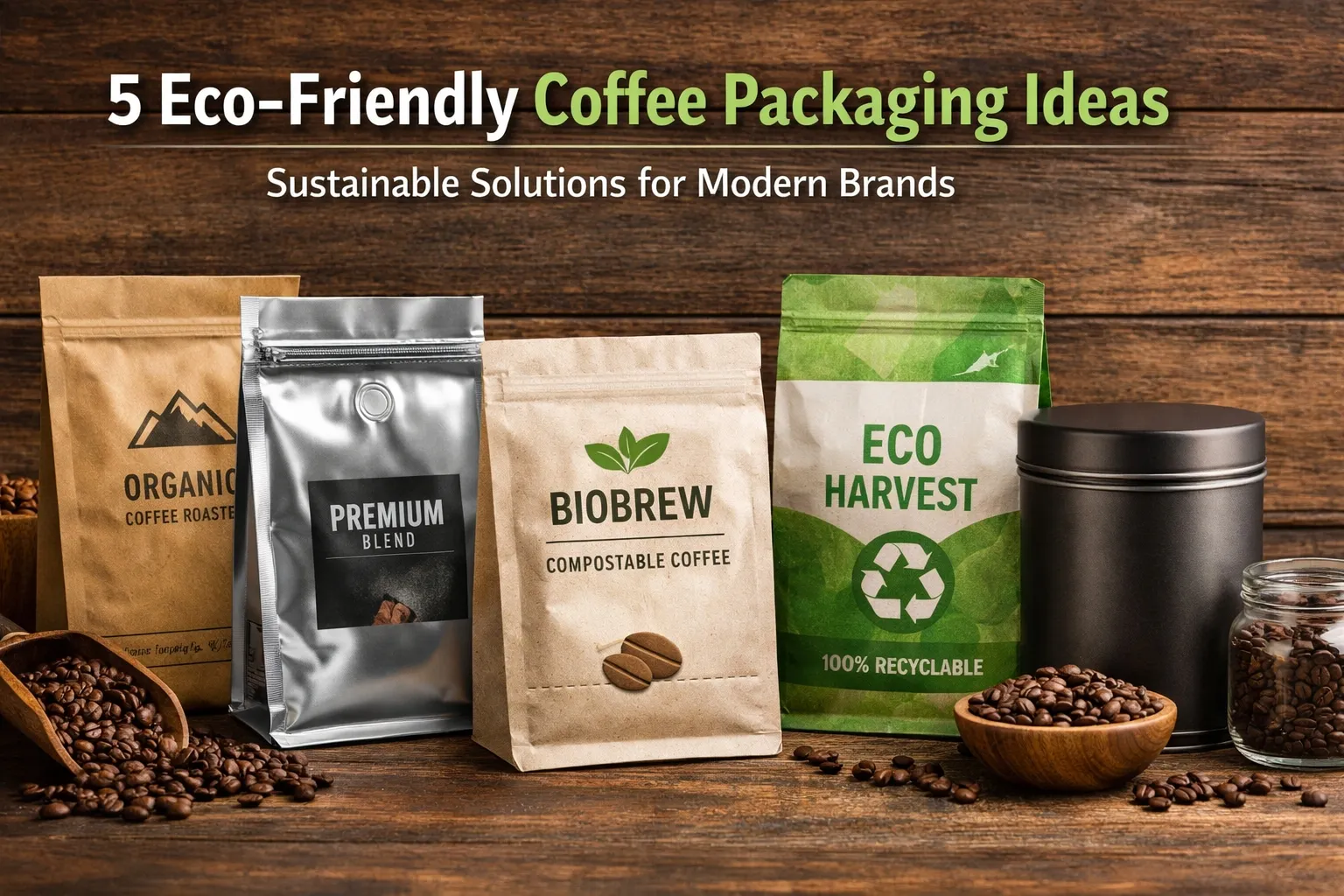
This guide discusses five viable coffee packaging designs that blend sustainable materials with a high aesthetic appeal. The solutions assist the brands to lessen environmental influence without compromising on the quality of the products or shelf life.
Why Eco-Friendly Coffee Packaging Matters
Sustainable packaging goes beyond replacing plastic. It entails re-assessing the whole lifecycle-raw materials to disposal. The new packaging strategies are also designed to minimize waste, enhance recyclability, and decrease carbon emissions. Sustainable packaging is concerned with as little environmental impact as necessary, but fulfills functional and commercial requirements.
In coffee, packaging serves two purposes: to preserve freshness and as a branding surface. Nonetheless, consumers have come to demand that packaging should be in support of environmental values. To fulfill this demand, many coffee businesses are moving towards recyclable, compostable, or biodegradable materials.
Brand identity can also be reinforced through adopting eco-friendly packaging. Studies have demonstrated that sustainability can enhance customer confidence and appeal to more environmentally conscious consumers, particularly the younger generations.
1. Kraft Paper Coffee Bags
One of the most common materials that are used in sustainable coffee packaging is kraft paper. It provides a natural appearance that fits organic or premium coffee brands.
These bags can usually be recycled and are affordable, hence a viable choice among startups and well-established roasters. They also offer a clean platform on which they can brand, and companies can design minimalist or high-end designs without using too many materials.
Nevertheless, kraft paper might not be very effective in offering a high level of protection against oxygen and moisture. In order to preserve the freshness of coffee, the brands usually add it to inner linings or valves. The containers of coffee should be able to maintain the flavor and not be exposed to air as freshness is the main determinant of the quality of the product.
Best for:
- Small-batch roasters
- Organic or natural branding
- Budget-conscious packaging solutions
2. Aluminum-Based Coffee Packaging
Aluminum covers are excellent in preserving light, moisture, and oxygen. This renders it the best in terms of coffee aroma preservation and shelf life.
Another advantage is recyclability. Aluminum is also widely accepted in the recycling system and, as such, it presents a viable choice to brands that have the goal of minimizing waste.
However, aluminum packaging can be quite expensive. Brands have to strike a balance between performance and pricing particularly in the competitive retail markets.
Best for:
- Premium coffee brands
- Long-distance shipping
- Products requiring extended shelf life
3. Compostable and Biodegradable Coffee Bags
Compostable packaging is becoming popular with consumers seeking low impact options. These bags can be produced of plant-based materials like PLA, rice paper, or cornstarch-based films.
These materials may decompose into natural components in a rather short period of time when they are disposed of under proper conditions.
Such packaging passes a clear message of a brand being committed to sustainability. Nevertheless, it needs a well-developed disposal system, including industrial composting plants, to obtain complete environmental advantages.
Best for:
- Eco-focused brands
- Direct-to-consumer coffee sales
- Markets with composting systems
4. Recyclable Flexible Packaging
The compromise between performance and sustainability is flexibility in packaging using recyclable materials. The mono-material constructions in these bags are usually more easily recycled in recycling systems compared to multi-layers packaging.
They can deliver excellent barrier protection with less impact on the environment than traditional plastic packages.
The other advantage is design flexibility. Brands do not have to focus on sustainability when trying out shapes, finishes, and closures.
Best for:
- Large-scale coffee brands
- Retail distribution
- Balanced cost and sustainability
5. Reusable and Refillable Coffee Packaging
One of the trends in sustainable design is the reusable packaging. Single-use bags have been replaced with refillable durable containers, which provide the customer with a durable product.
This will greatly minimize the amount of packaging waste in the long term and promote repeat buying. It also increases brand loyalty as it makes customer experience more interactive.
Nonetheless, reusable systems need to be implemented carefully. Environmental advantages will be contingent on the frequency of packaging reuse and ease of refill by the consumers.
Best for:
- Subscription coffee brands
- Local coffee shops
- Premium or lifestyle-focused products
How to Choose the Right Coffee Packaging
Selecting the right packaging depends on several factors:
- Product freshness: Barrier protection is essential to maintain flavor
- Target audience: Eco-conscious buyers often prefer visible sustainability efforts
- Distribution channel: Shipping and storage conditions affect material choice
- Budget: Some materials offer better sustainability but at higher costs
Each option has trade-offs. For example, paper packaging is affordable but less protective, while aluminum offers durability at a higher price. Brands should evaluate their priorities and choose a solution that aligns with both operational needs and customer expectations.
Final Thoughts
Sustainable coffee packaging is no longer a fringe phenomenon- it is turning into a new norm. Kraft paper bags to reusable containers, brands can offer a variety of options on how to impact the environment positively and at the same time, improve their visual image.
It is not only a matter of picking green materials, but rather to build the packaging systems that are not only sustainable and functional, but also branded. Through careful decisions, coffee companies can develop a package that keeps their product and the environment safe.
Related Articles
Two Gates on the Road to the EU: Reduction by Design and the Documentation Chain for Coffee Packaging

Recyclable Coffee Bags: How to Protect Freshness Without Compromising Sustainability

Your Brand, Perfectly Packaged: The YPAK Guide to Selecting a High-Quality Custom Coffee Bag