

How To Determine The Right Coffee Bag Dimensions?
Selecting the right coffee bag dimensions is more than just a packaging decision—it directly impacts your product freshness, branding, logistics, and customer experience. Whether you are a coffee roaster, distributor, or the private label brand, the right bag size can increase the shelf appeal, minimize waste and increase sales.
In this guide, we will dissect all the information you need to know about coffee bag sizing, the standard sizes, the most important considerations, and some advice on how to make the best decision.
Why Coffee Bag Dimensions Matter
Coffee packaging is not just about holding beans—it plays a critical role in:
- Preserving freshness
- Enhancing brand visibility
- Improving storage and transport efficiency
- Influencing customer perception
The size of your coffee bag influences the use of your product by customers and the frequency of their re-order. Inadequate sizing may result in unsized air or stale coffee or inefficient packaging.
As industry knowledge dictates, the majority of successful coffee brands are based on a limited number of standardized sizes to make operations easier and establish consistency.
Step 1: Start with Coffee Weight (Most Important Factor)
How much coffee each bag will hold is the first stage in determining the size of coffee bags. The required volume and structure is directly influenced by the weight.
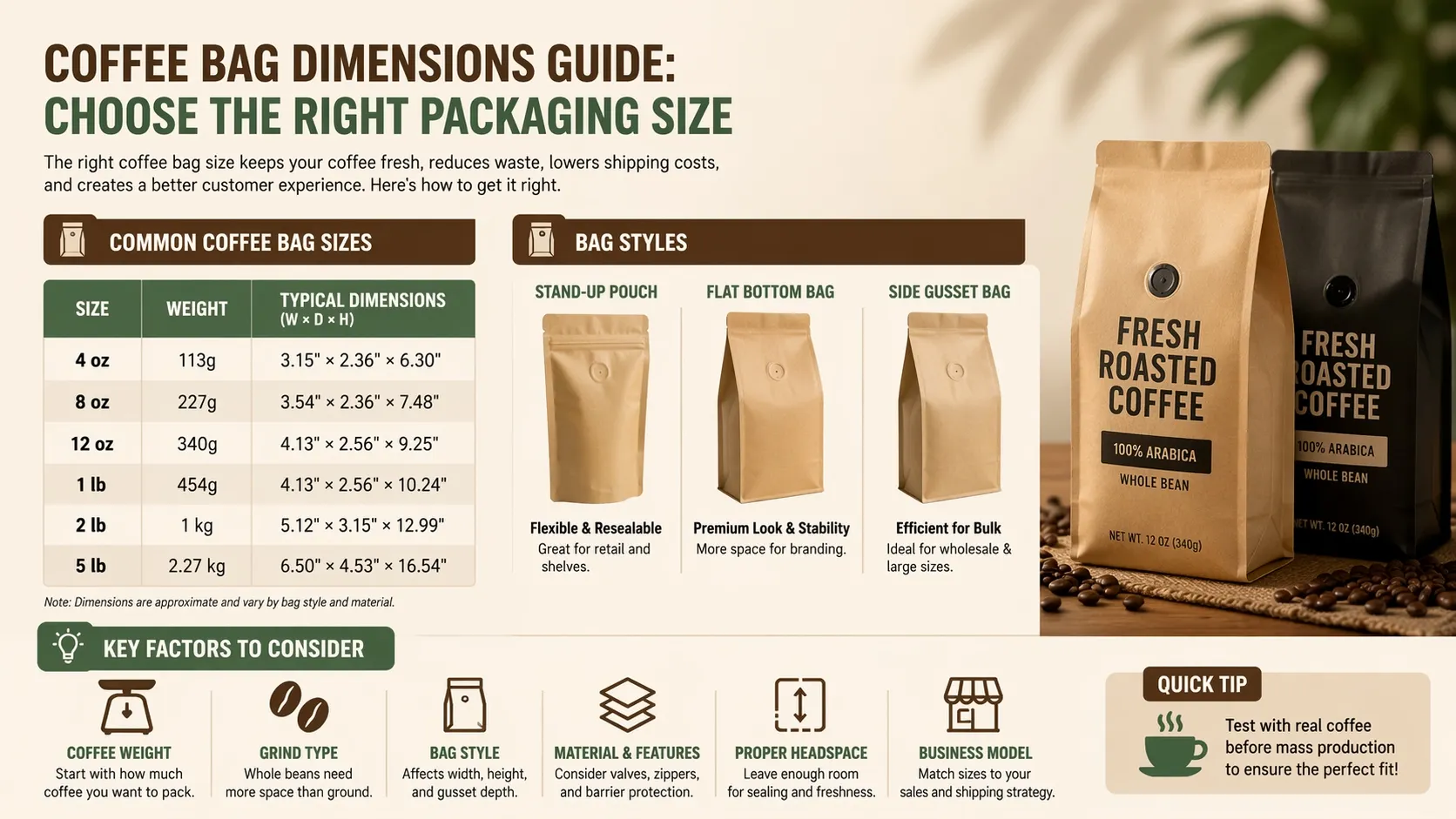
Common Coffee Bag Sizes
- 4 oz (113g) – Ideal for samples or promotional packs
- 8 oz (227g) – Small retail or specialty batches
- 12 oz (340g) – Industry standard for retail
- 1 lb (454g) – Popular for regular coffee drinkers
- 2 lb (1 kg) – Great for bulk home users
- 5 lb (2.27 kg) – Wholesale or commercial use
These sizes are widely used because they match customer consumption habits and pricing expectations.
💡 SEO Tip: The keyword “12 oz coffee bags” and “1 lb coffee bags” have high search demand—use them in product pages.
Step 2: Understand Coffee Density (Whole Bean vs Ground)
Not all coffee fills a bag the same way.
- Whole beans take up more space due to air gaps
- Ground coffee is more compact and dense
This means the same weight of coffee may require different bag dimensions depending on the grind type.
👉 Example: A 12 oz whole bean bag may need slightly larger dimensions than a 12 oz ground coffee bag.
Step 3: Choose the Right Bag Style
Coffee bag dimensions are closely tied to the packaging style you select. Each style affects how the product sits, stores, and displays.
Popular Coffee Bag Types
1. Stand-Up Pouches (Doypack)
- Flexible and resealable
- Ideal for retail shelves
- Great for branding
2. Flat Bottom (Box Bottom) Bags
- Premium appearance
- Excellent stability
- Larger printable surface
3. Side Gusset Bags
- Efficient for bulk packaging
- Common for larger sizes (1 lb–5 lb)
Each style changes the width, height, and gusset depth, which ultimately determines the final dimensions.
Step 4: Know Standard Coffee Bag Dimensions
While custom packaging is common, there are standard dimension ranges used across the industry.
Typical Coffee Bag Dimensions
| Size | Width | Depth | Height |
|---|---|---|---|
| ½ lb | ~3.25" | ~2.5" | ~7.75" |
| 1 lb | ~4.25" | ~2.5" | ~10" |
| 5 lb | ~6.5" | ~4.5" | ~16.5" |
These dimensions provide a baseline but can vary depending on materials and bag structure.
Step 5: Consider Materials and Features
The material you choose affects how much the bag can expand and how it holds shape.
Common Materials:
- Kraft paper (less flexible, eco-friendly)
- Foil-lined bags (better freshness protection)
- Matte or glossy laminated films
Additional features to consider:
- Degassing valve – releases CO₂ while keeping oxygen out
- Zipper closure – improves resealability
- Tear notches – better user experience
These elements require extra space and should be included when calculating final dimensions.
Step 6: Leave Proper Headspace
Headspace refers to the empty space at the top of the bag.
Why it matters:
- Prevents overfilling
- Allows sealing and zipper placement
- Accommodates valve functionality
Too much space makes the product look underfilled, while too little can cause sealing issues. Experts recommend balancing volume and appearance carefully.
Step 7: Align with Your Business Model
Your packaging strategy should reflect how your coffee is sold.
Retail Strategy
- Focus on 250g–340g sizes
- Ideal for freshness and trial purchases
Subscription Brands
- Standardize around one main size
- Simplifies logistics and inventory
Wholesale & B2B
- Use larger formats (1kg–5kg)
- Reduces packaging costs and frequency
Choosing the right size mix helps streamline operations and reduce unnecessary complexity.
Step 8: Test Before Finalizing
Before committing to bulk production:
- Request sample bags
- Perform fill tests with real coffee
- Test sealing and storage conditions
Different roast levels and bean sizes can affect how the coffee fits inside the bag, so testing ensures accuracy.
Step 9: Think About Branding & Shelf Impact
Coffee packaging is a powerful marketing tool.
The right dimensions can:
- Improve shelf presence
- Create a premium feel
- Provide enough space for branding elements
Flat-bottom bags, for example, offer more surface area for logos and storytelling, making them ideal for specialty coffee brands.
Common Mistakes to Avoid
- Choosing size based only on weight without testing
- Ignoring differences between whole bean and ground coffee
- Offering too many size options (complicates operations)
- Not accounting for valves, zippers, or sealing space
Final Thoughts
The dimensions of coffee bag are a compromise between functionality, branding and customer experience. A simple emphasis on such variables as weight, type of grinding, bag style, and materials can help you to develop a packaging that will not only preserve your coffee but also promote your brand.
In the vast majority of cases, the best results will be achieved by using a minimum number of lines that will be one large retail size, one small one, and one bulk size.
Related Articles
Two Gates on the Road to the EU: Reduction by Design and the Documentation Chain for Coffee Packaging

Recyclable Coffee Bags: How to Protect Freshness Without Compromising Sustainability

Your Brand, Perfectly Packaged: The YPAK Guide to Selecting a High-Quality Custom Coffee Bag