

Updated 2 weeks ago
The Recyclable Coffee Packaging Playbook: A 5-Phase Transition Roadmap to EU PPWR Compliance
ypak.coffee
YPAK PACKAGING GROUP was established in 2011 and formed with 3 companies based on Hongkong, Dongguan and Foshan. We have become one of the largest coffee bag manufacturers in China. We use the best quality WIPF valves from Switzerland to keep your coffee fresh.
Conform to the plastic ban policy imposed to many different countries, we have researched and developed the sustainable packaging bags, such as RECYCLABLE and COMPOSTABLE pouches.
No minimum quantity, no color plates are required with our HP 25K INDIGO DIGITAL PRINTING service.
You are welcome to visit YPAK.

PPWR compliant coffee bags
Sustainable Coffee Packaging Is No Longer Optional — It Is Your Market Entry Permit
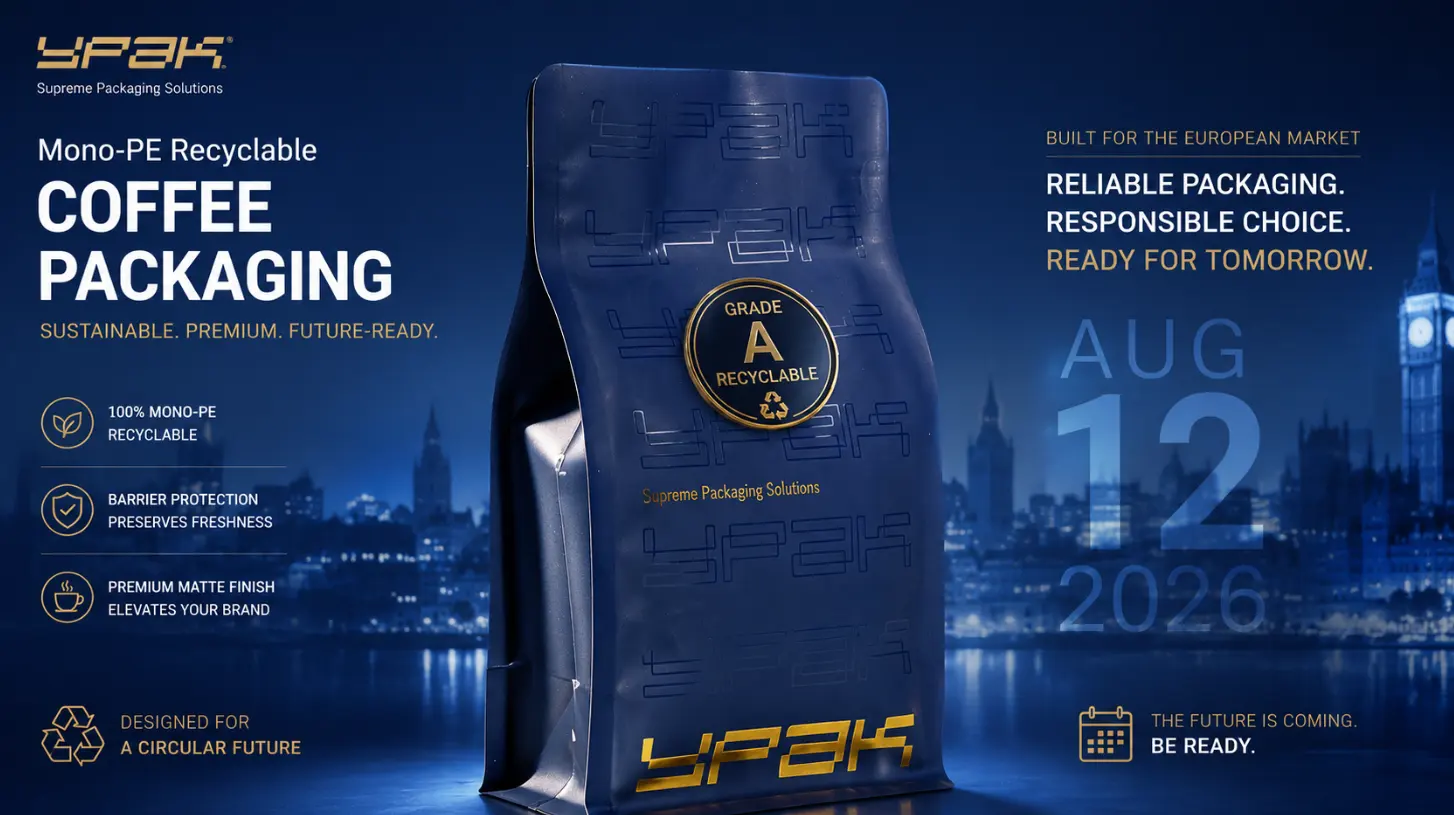
With the EU Packaging and Packaging Waste Regulation (PPWR) officially entering its application phase on August 12, 2026, the window for unplanned transitions has closed. For specialty coffee roasters exporting to Europe, the shift toward sustainable coffee packaging is no longer a matter of ethics — it is a matter of market access. This playbook delivers a validated, five-phase implementation roadmap designed to help roasters transition from legacy laminates to verified PCR coffee bags and recyclable coffee packaging with minimal risk and maximum financial return.
The August 12 Reality Check — Why Ad-Hoc Transitions Fail
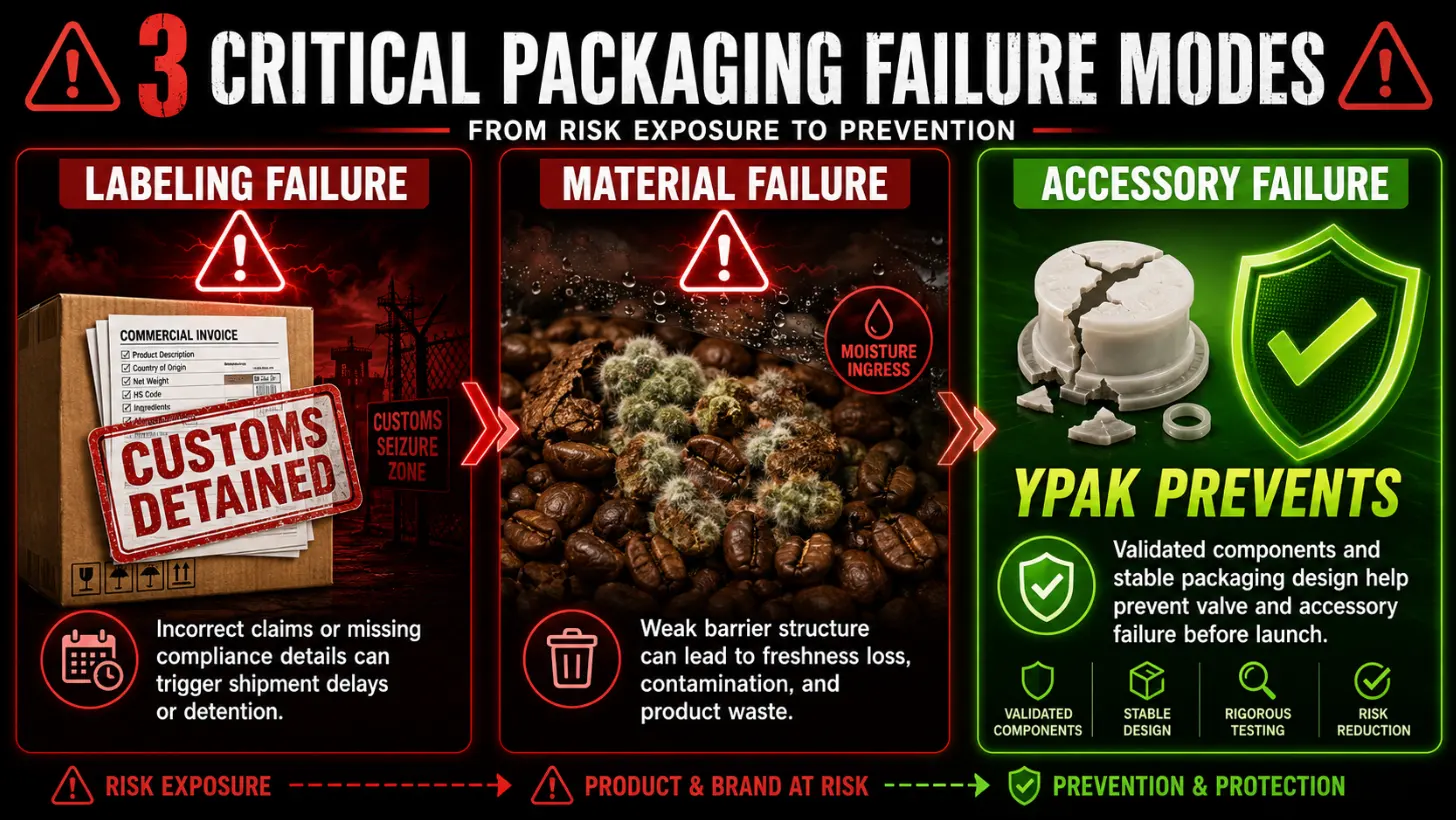
In the chaotic rush toward the PPWR deadline, we have observed three recurring failure modes among coffee roasters:
1. The Labeling Crisis: Incorrectly applied Triman logos or Italian material codes lead to entire shipments being detained at customs as "misleading marketing," resulting in destruction and heavy fines.
2. The Material Crisis: Roasters switch to "claimed recyclable" pouches that lack adequate barrier properties, causing their specialty beans to degrade before reaching the consumer — destroying brand trust.
3. The Accessory Crisis: Roasters audit the pouch film but ignore the PFAS residues and polymer conflicts hidden in valves and zippers, causing their entire DfR (Design for Recycling) rating to collapse.Transitioning without a roadmap is a high-stakes gamble. YPAK serves as your compliance co-pilot, guiding you through a disciplined, five-phase playbook.
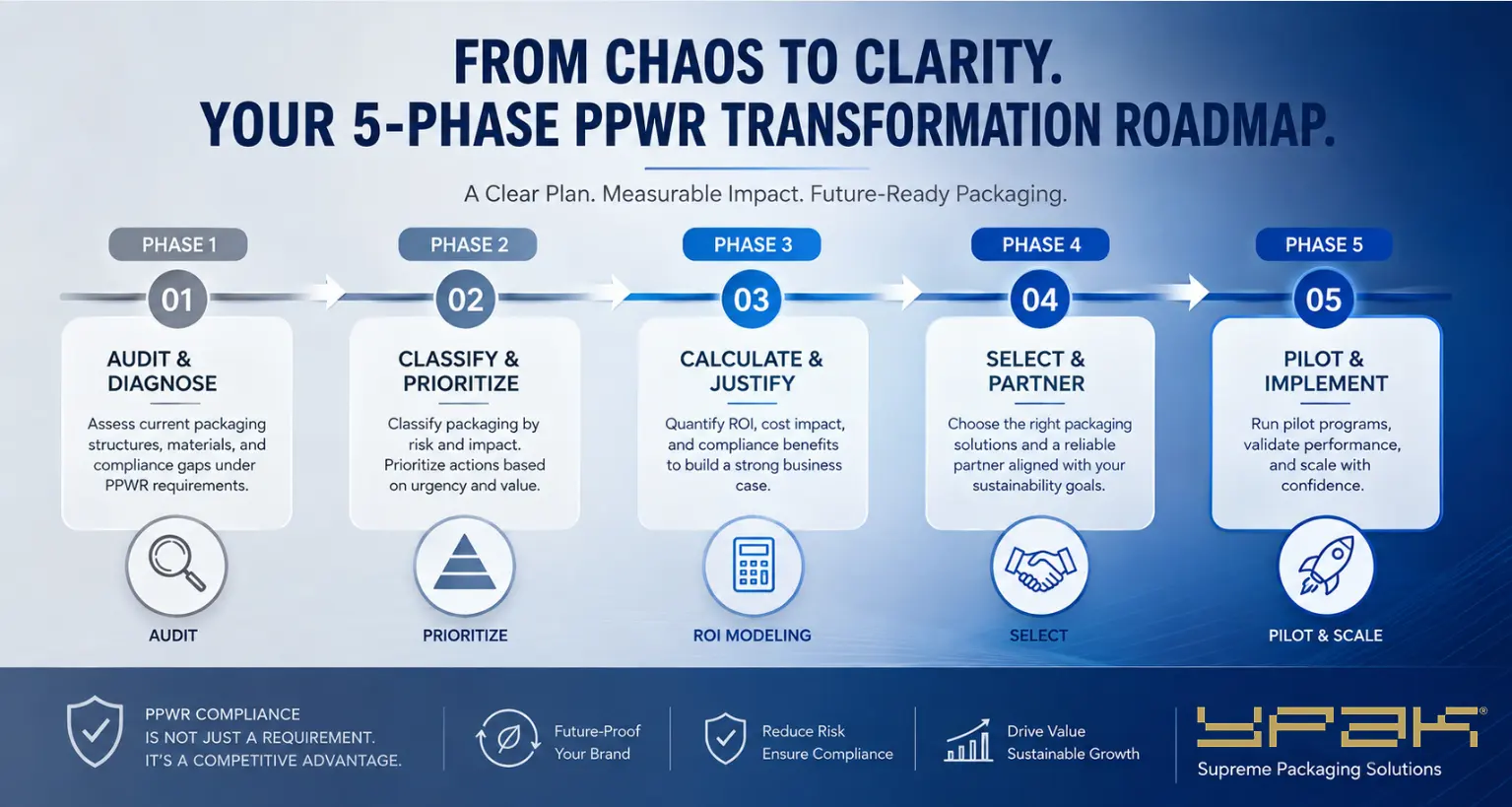
Phase 1 — The Compliance Audit: Know Your Baseline (Weeks 1-2)
Core Mission: Inventory every active SKU and audit the Technical Data Sheet (TDS) of each coffee packaging structure.
Key Actions:
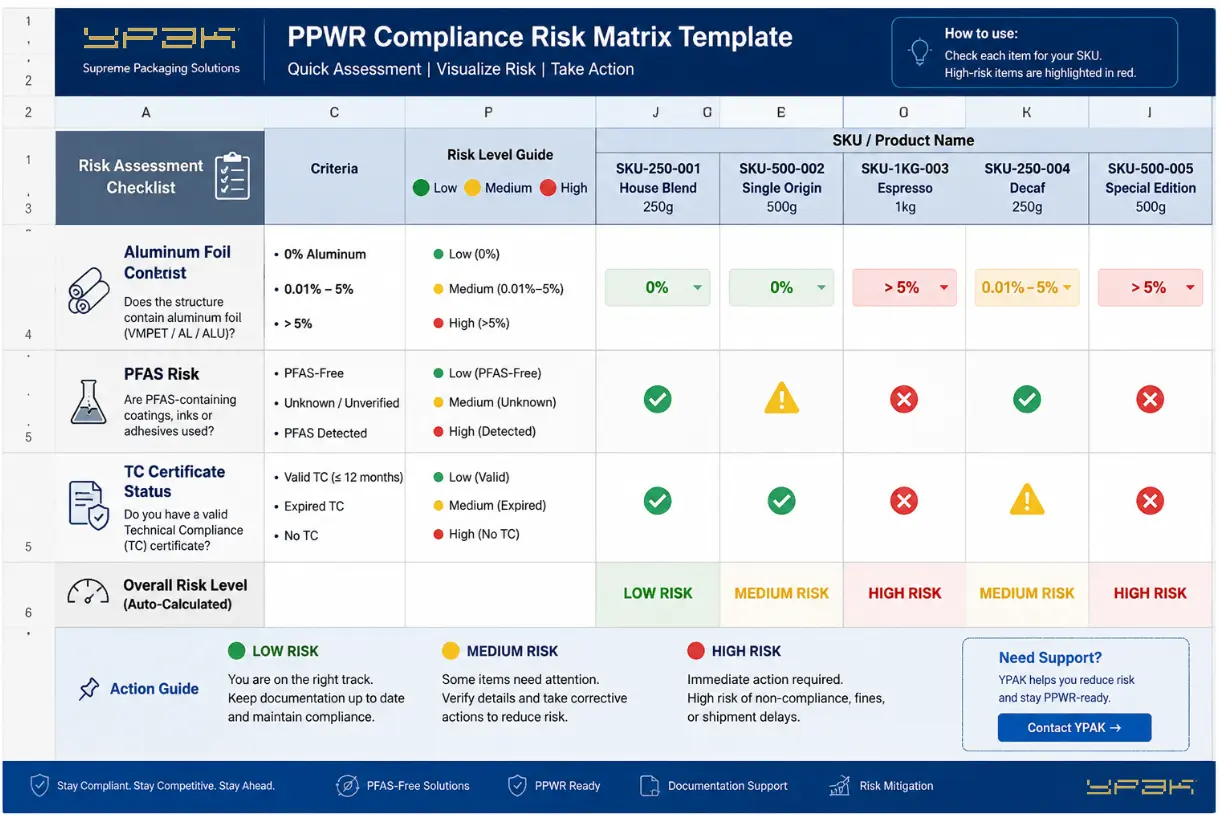
• Flag all high-risk inventory containing aluminum foil (AL) or PFAS-based coatings;
• Verify whether your supplier can provide a GRS Transaction Certificate (TC) for every batch of material;
• Build a simple "Compliance Risk Matrix," classifying your SKUs into High / Medium / Low risk tiers.YPAK Support: We offer a Free Material Compliance Audit. Send us your existing pouch specifications, and we will issue a professional market-entry risk assessment, identifying which SKU demands the fastest transition.
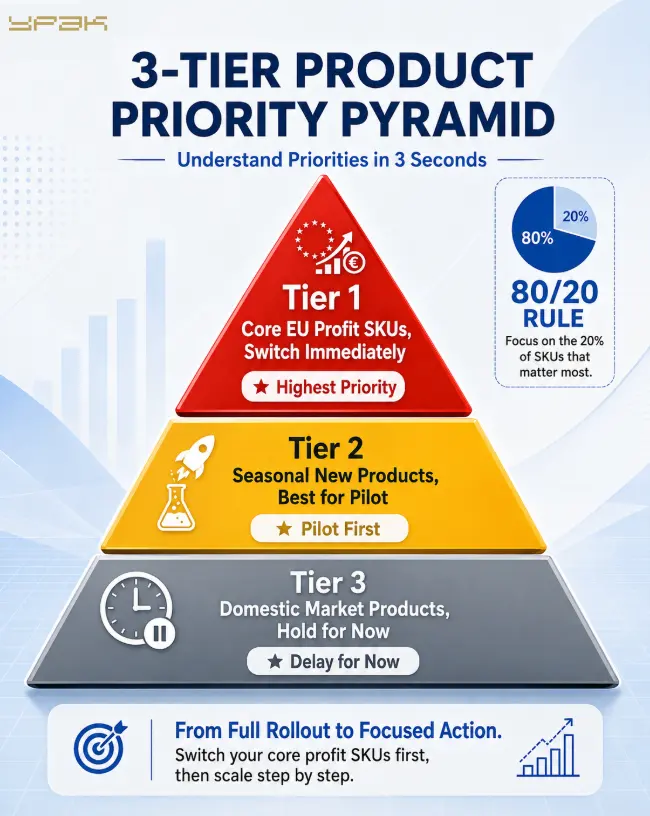
Phase 2 — Portfolio Tiering: What Switches First? (Weeks 3-4)
Core Mission: Do not switch your entire catalog at once. Prioritize based on commercial impact.
Tiering Logic:
• Tier 1: Core revenue SKUs sold into the EU (maximum compliance ROI);
• Tier 2: Upcoming seasonal releases (no legacy baggage — ideal for piloting);
• Tier 3: Domestic or non-EU products (can be deferred).Key Principle: Leverage 20% of your SKUs to capture 80% of the compliance dividend.
Phase 3 — Material Selection: Calculating Your True ROI (Weeks 5-6)
Core Mission: Make a financially grounded decision across three coffee packaging pathways. Below is YPAK's comparative model, based on European EPR fee structures (Germany, France, Spain) and verified factory test data:
Material ROI Comparison Table
| Evaluation Dimension | Legacy Foil (PET/AL/PE) | YPAK High-Barrier Mono-PE | YPAK 30% PCR Coffee Bags |
| DfR Recyclability Grade | Grade D/E (Non-Recyclable) | Grade A (>95% Recyclable) | Grade A (>95% Recyclable) |
| EPR Eco-Modulated Fees | Penalty Surcharge (Malus) | Green Discount (Bonus) | Green Discount (Bonus) |
| 2030 Recycled Content Mandate | Non-Compliant | Compliant (PCR-ready) | Compliant (30% PCR included) |
| PFAS Compliance Risk | High (coatings/adhesives) | Low (SGS 430-scan) | Low (SGS 430-scan) |
| OTR (Oxygen Barrier) | ≤0.8 cc/㎡/24hrs | ≤5 cc/㎡/24hrs | ≤5 cc/㎡/24hrs |
| WVTR (Moisture Barrier) | ≤0.5 g/㎡/24hrs | ≤0.5 g/㎡/24hrs | ≤0.5 g/㎡/24hrs |
| Test Conditions | 23℃/0%RH; 38℃/90%RH | 23℃/0%RH; 38℃/90%RH | 23℃/0%RH; 38℃/90%RH |
| Flavor Protection (30 Days) | Excellent | Excellent (Zero Sensory Loss) | Excellent (PCR Isolated In Core) |
| Total Cost Per Tonne (incl. Tax) | Highest (rising annually) | Moderate (Green Discount) | Moderate-Low (Plastic Tax Exemption) |
| Brand Premium Potential | Weak ("Non-Recyclable" stigma) | Strong (Grade A badge) | Strongest (verified circular story) |
Decision Guidance: If your immediate priority is lowest entry cost, choose YPAK's high-barrier Mono-PE. If your strategy targets 2030 compliance plus tax exemption, the 30% PCR coffee bags deliver the highest total ROI.
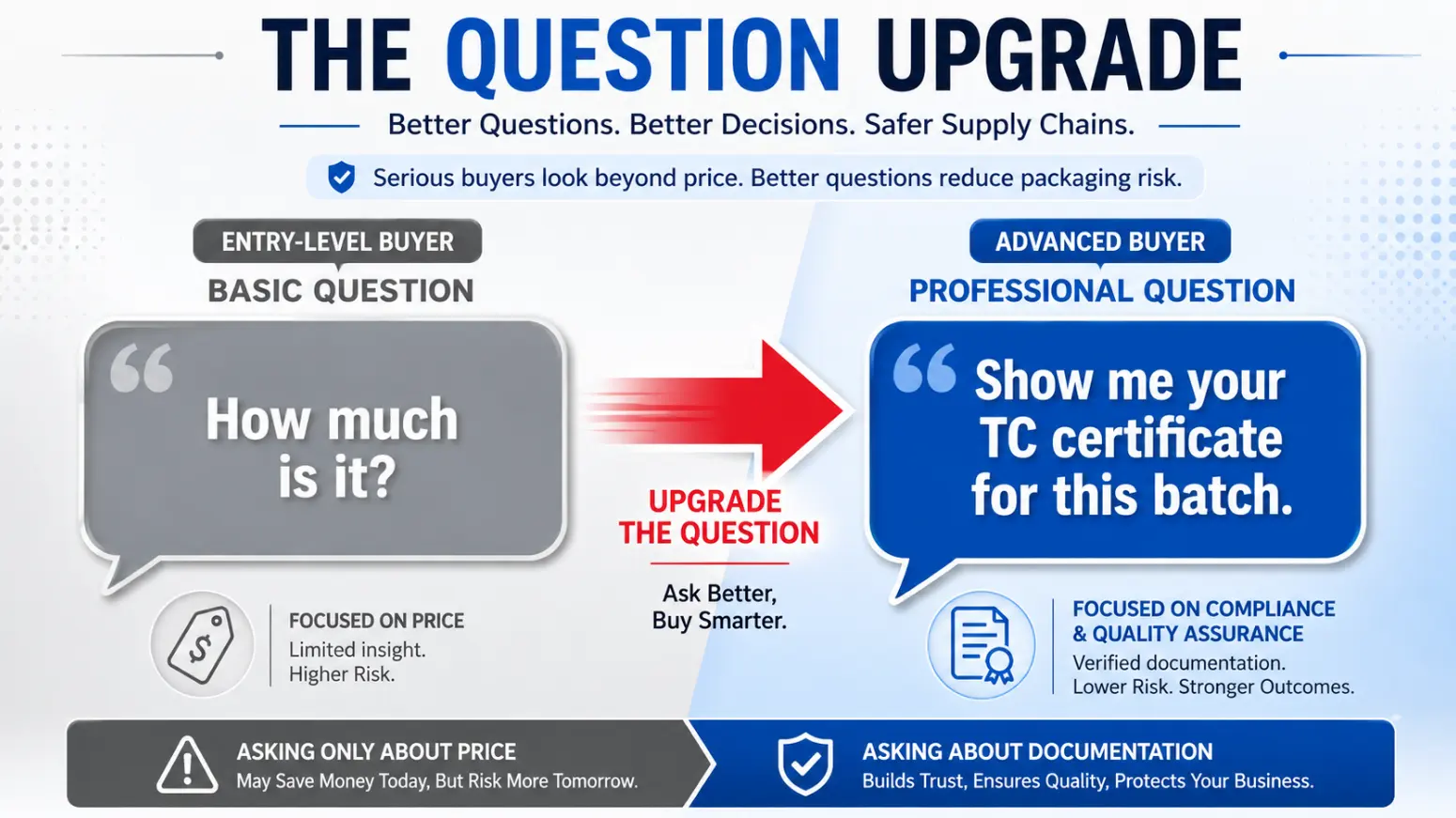
Phase 4 — Supplier Vetting: The 3 Questions You Must Ask (Weeks 7-8)
Before signing any agreement, demand three technical disclosures from your recyclable coffee packaging supplier:
1. "Are your valves and zippers polymer-compatible with the PE pouch body?" (Prevents rejection as contaminants in recycling sorting);
2. "Can you provide an order-specific Transaction Certificate (TC) for every batch?" (Proves the true origin of recycled content in your PCR coffee bags);
3. "Does your PFAS testing cover accessories, inks, and lubricants?" (Avoids a total-pouch audit failure).The YPAK Standard Answer: We standardize Swiss-made WIPF PE-compatible valves, deliver order-level TC digital archives, and pass SGS 430-substance full-assembly scans.
Phase 5 — The Pilot Launch: Test Before You Scale (Weeks 11-12)
Core Mission: Validate your new sustainable coffee packaging with a single seasonal single-origin lot.
Execution Points:
• Leverage our Low MOQ (500 units) advantage to print a small batch of compliant recyclable coffee packaging;
• Conduct a 3-month real-shelf stability observation, monitoring flavor peak intensity;
• Collect positive consumer feedback on the "Recyclable" badge during the pilot phase.
The August 12 Countdown — Your Week-by-Week Checklist
| Timeline | Mandatory Action | YPAK Support |
| Now (Weeks 1-2) | Complete compliance audit | Free Material Audit |
| Weeks 3-4 | Confirm priorities & lock materials | ROI Comparison Model |
| Weeks 5-8 | Supplier vetting & sampling | Free Sample Kit |
| Weeks 9-10 | Artwork compliance review | Pre-Print Compliance Check |
| Weeks 11-12 | Pilot batch launch | Low MOQ (500 units) |
| Before Aug 12 | Full-scale switch of core SKUs | TC Digital Archive setup |
Conclusion: Sustainable Packaging Is Not the Finish Line — It Is the New Starting Line
August 12 is not a punishment; it is an industry quality filter. Roasters who systematically embrace PCR coffee bags, recyclable coffee packaging, and verified sustainable coffee packaging will secure lower tax rates, stronger brand premiums, and more resilient retail partnerships.Don't let your coffee packaging become the weakest link in your specialty supply chain. Contact YPAK today to start your free compliance audit and seize the 2026 market advantage.
FAQ: Expert Insights for Coffee Roasters
Written by
ypak.coffee
ypak
YPAK PACKAGING GROUP was established in 2011 and formed with 3 companies based on Hongkong, Dongguan and Foshan. We have become one of the largest coffee bag manufacturers in China. We use the best quality WIPF valves from Switzerland to keep your coffee fresh.
Conform to the plastic ban policy imposed to many different countries, we have researched and developed the sustainable packaging bags, such as RECYCLABLE and COMPOSTABLE pouches.
No minimum quantity, no color plates are required with our HP 25K INDIGO DIGITAL PRINTING service.
You are welcome to visit YPAK.