

Updated 2 months ago
PPWR Compliance for Coffee Packaging: EU Enforcement Has Begun

ypak.coffee
YPAK PACKAGING GROUP was established in 2011 and formed with 3 companies based on Hongkong, Dongguan and Foshan. We have become one of the largest coffee bag manufacturers in China. We use the best quality WIPF valves from Switzerland to keep your coffee fresh.
Conform to the plastic ban policy imposed to many different countries, we have researched and developed the sustainable packaging bags, such as RECYCLABLE and COMPOSTABLE pouches.
No minimum quantity, no color plates are required with our HP 25K INDIGO DIGITAL PRINTING service.
You are welcome to visit YPAK.
PPWR coffee packaging
On August 12, 2026, the EU Packaging and Packaging Waste Regulation (PPWR) became applicable across all 27 member states. For many roasters, that date felt like a long-awaited full stop — but for EU market surveillance authorities, it was the starting point of enforcement. It is also the moment when "recyclable coffee packaging" moved from a marketing concept to a hard market-access requirement.
In its official announcement on the day the rules entered into application, the European Commission made clear that all packaging placed on the EU market must now withstand scrutiny under the recyclability design duty: packaging must be assessed against the Design for Recycling (DfR) framework, materials must fit an existing recycling stream, food-contact packaging must be PFAS-compliant, and labels must meet the new requirements. The Commission also confirmed it would implement the rules "in a pragmatic and unbureaucratic way," supported by guidance published in March 2026.
One sentence summarises the situation: enforcement has begun, but we are still inside a "warning first, fine second" transition window. For roasters still evaluating their position, PPWR-compliant coffee packaging is no longer optional — the window is your competitive head start.
PPWR Compliance for Coffee Packaging: What Changed on August 12
What entered into force on August 12 was not paper clauses but two hard, directly checkable requirements:
1. The PFAS restriction is now in force. Food-contact packaging containing PFAS above strict limits can no longer be placed on the EU market — the most testable measure of the day. The Commission's official announcement lists the PFAS restriction as a core August 12 measure and provides implementation guidance for customs and market surveillance authorities. For coffee packaging, the risk points sit in coatings, print treatments and degassing valve components — which is why a PFAS-Free test report is moving from a nice-to-have to a ticket to market.
2. Recyclability has become a design duty. From August 12, packaging must be assessed against the DfR framework and graded A–E. Multi-layer laminates (kraft/aluminium/PE) cannot be separated at the recycling stage and fall directly into the low-grade band. Two points must be kept distinct: what applies from August 12, 2026 is the design duty plus grade assessment; from January 1, 2030, only packaging achieving recyclability grades A, B or C can be placed on the market. The three years in between are your conversion window.
EU Coffee Packaging Regulations in Action: Customs, Market Surveillance and Retail
PPWR enforcement does not rely on a single EU inspectorate. It happens through three parallel channels:
Member State Market Surveillance Authorities
National authorities enforce PPWR under their own legislation. The Commission's March 2026 guidance gives them a common inspection scope: recyclability grading, labelling, PFAS compliance and traceability of the responsible operator.
Customs and Logistics
Non-compliant packaging can be intercepted at import clearance. Industry feedback since the phased application shows that customs delays and carrier rejection are among the first real-world consequences.
Retail and E-commerce Platforms
European retailers' procurement screens are often stricter than the regulation: "can this bag be recycled, are the labels in place, do you hold compliance declarations" is already standard in shelf-access checklists. On e-commerce channels, non-compliant listings risk delisting.
These three channels add up to a decisive reality for roasters: even if your product is never randomly inspected, your buyers — retailers, platforms and carriers — are enforcing the market on your behalf. Compliance documentation (PFAS-Free testing, Declaration of Compliance, recyclability statements) is no longer a customs backup file; it is the first document you should hand over when quoting a client. A fully compliant pack without a verifiable documentation chain can still lose the deal at a buyer's audit stage.
PPWR Penalties for Packaging: The Warning-to-Fine Window and the Real Cost
In its FAQ updated in early August 2026, the Commission signalled two measures friendly to smaller brands:
- Warning before fine. Companies placing non-compliant packaging on the market are first given a warning before fines are applied — a buffer for brands still mid-transition.
- Guidance on existing stock. The FAQ provides handling guidance for existing stock, avoiding blanket destruction.
This does not mean delay is free. Fine levels are set by each member state; publicly reported industry information puts typical fines in a range of roughly €10,000–€200,000 per infringement, with significant variation between countries. Add customs delays, delisting and brand damage, and the real cost of one non-compliant shipment far exceeds the fine itself.
The lesson for roasters: enforcement has a human face, but the window is closing. The warning mechanism protects brands that have already started moving — it is not a permanent exemption for those that have not.
Recyclable Coffee Packaging Compliance: 3 Pitfalls Coffee Brands Miss
Against the enforcement scope, coffee packaging's typical risks cluster in three areas:
- Non-recyclable structure. Kraft/aluminium/PE laminates are the traditional workhorse of coffee packaging, but they cannot be delaminated at recycling and grade low under DfR. This is the largest and most widespread structural risk.
- Missing or incorrect labels. Recycling labels, material codes and disposal instructions missing — or composite materials wrongly marked with paper codes (e.g. 20/21 PAP). Labelling is the most frequently inspected item between 2026 and 2028.
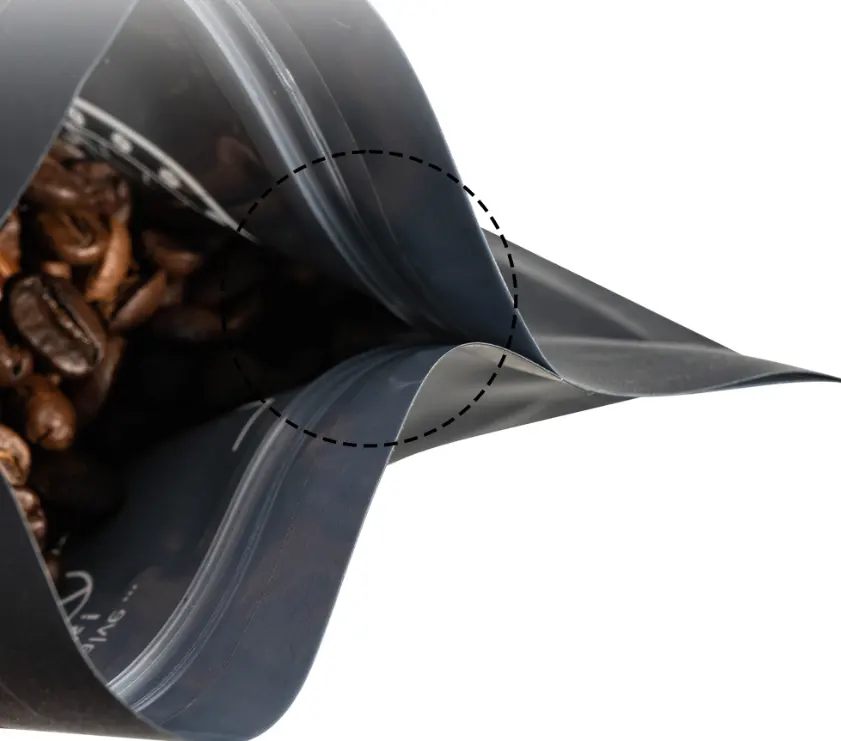
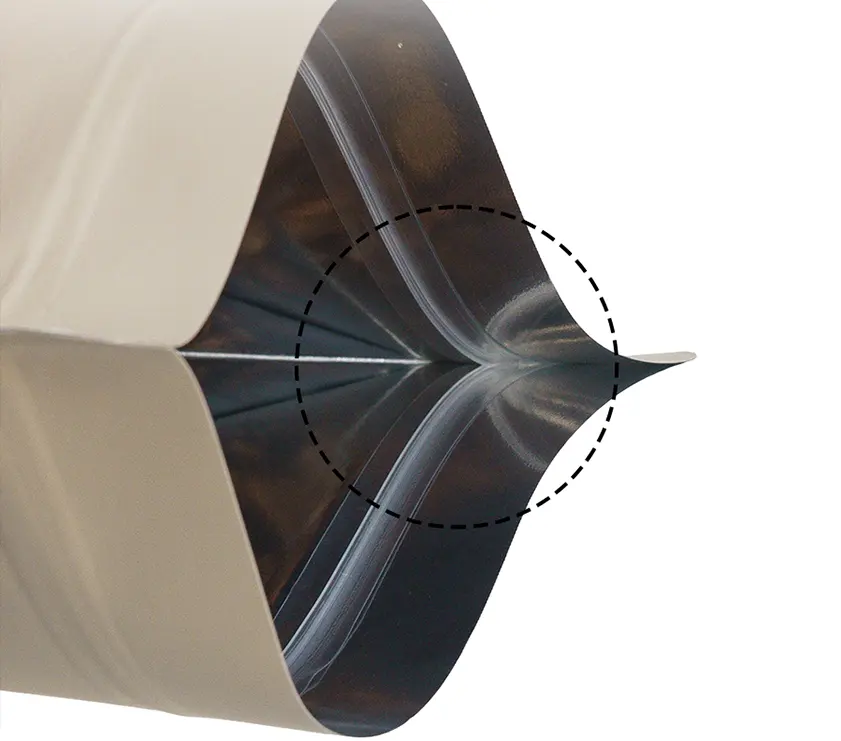
- Components that break whole-bag recyclability. Valves, zippers and stickers in mixed materials pull the entire bag out of the recycling stream; PFAS residue in coatings or valves directly triggers the August 12 ban. Recyclability applies to the whole package; PFAS compliance applies across the whole chain.
Conventional Coffee Bags in Stock: Handling Legacy Inventory Under PPWR
If you still hold conventional laminate bags in stock, the FAQ direction is to handle them by category and phase them out: stock already in the distribution chain transitions under member state guidance, while new orders must move to recyclable structures. Three practical steps:
- Legacy stock: classify inventory and in-transit packaging as "sold-but-unshipped / in warehouse / new purchase" and schedule the transition against the member state existing-stock guidance.
- New volume: from now on, every newly ordered coffee bag should be designed as a recyclable structure with compliant labelling — do not repeat the old mistake into the next cycle.
- Components: switch valves, zippers and other components in parallel so the whole package — not just the bag body — is recyclable. Avoid the awkward position of a compliant body with a non-compliant whole bag.
PPWR Compliance Timeline: 2026–2030 Key Milestones for Coffee Packaging
| Timeline | Milestone | What it means for coffee packaging |
| Aug 12, 2026 | PPWR applies across the EU; PFAS restriction in force | Recyclability becomes a design duty; DfR grade assessment required |
| 2026–2027 | Implementing acts and labelling rules released (from Q4 2026) | Label details still being finalised; prepare within the framework |
| 2027 | Digital marking transition (EPR symbol first) | Reserve panel space and technical plan for QR digital marking |
| Aug 12, 2028 | Harmonised labelling system fully applies (incl. QR digital marking) | Recycling labels, material codes and QR information all mandatory |
| Jan 1, 2030 | Recyclability grades A/B/C mandatory; mandatory PCR content; empty-space limits | Low-grade packaging is phased out; recyclability plus recycled content both required |
This table answers the question every buyer asks: "Is it too late to switch now?" — No, but the window is narrowing year by year. 2026–2028 is the structural conversion window; after 2028, labelling and data take over; after 2030, only compliant grades remain on the shelf. Smart roasters are not waiting for the thresholds — they are compressing all three windows into one switch: choose a recyclable structure now, reserve label space now, and lock in a PCR supply now. One investment covers both the 2028 and 2030 gates.
PPWR Compliance Checklist for Coffee Packaging: 10 Items to Verify
A ten-point self-audit for roasters evaluating their compliance status:
- Have existing bag formats completed a DfR recyclability grade assessment?
- Have core SKUs switched to mono-material recyclable structures?
- Are valve, zipper and sticker materials compatible with bag-body recyclability?
- Is a PFAS-Free test report in hand (against the August 12 ban)?
- Are recycling labels and material codes printed correctly (no paper codes on composites)?
- Is panel space reserved for the 2028 harmonised label and QR digital marking?
- Is an EU-based responsible economic operator (authorised representative) in place?
- Are the Declaration of Compliance (DoC) and certification files (e.g. GRS) complete?
- Are new orders designed as recyclable structures with compliant labelling?
- Is legacy stock classified against member state existing-stock guidance?
If more than two answers are "no", a packaging compliance audit should start immediately — under the current enforcement pace, every purchasing cycle you delay adds another batch of inventory that may fail the 2028 gate.
Sustainable Coffee Packaging: From Compliance Cost to Market Access
Back to the opening question: can your coffee packaging pass EU inspection now that enforcement has begun? The answer depends on where you stand — still evaluating, mid-conversion, or already holding a complete compliance file. The EU's enforcement logic is clear: warning first, fines second, phase-out third. The earlier you act inside the transition window, the lower the cost; before the 2030 A/B/C gate, all low-grade packaging will be cleared by market mechanisms, not only by enforcement.
This is why we see more European roasters writing the compliance documentation chain into their procurement standards: they are not looking for bags that merely look sustainable — they need bags that can pass any random inspection and any retailer's audit checklist.
If you are evaluating your packaging's compliance status, YPAK offers three free support items: 1) a PPWR compliance audit of your existing bag formats, graded line by line against DfR, labelling and components; 2) an OTR/WVTR measured comparison report for the new recyclable structure, so freshness data is verifiable; 3) a compliance documentation chain — PFAS-Free testing, GRS certification and DoC — delivered with samples. Send us your bag specifications and start with item one of the checklist.
FAQ: PPWR Compliance and Recyclable Coffee Packaging
Written by
ypak.coffee
ypak
YPAK PACKAGING GROUP was established in 2011 and formed with 3 companies based on Hongkong, Dongguan and Foshan. We have become one of the largest coffee bag manufacturers in China. We use the best quality WIPF valves from Switzerland to keep your coffee fresh.
Conform to the plastic ban policy imposed to many different countries, we have researched and developed the sustainable packaging bags, such as RECYCLABLE and COMPOSTABLE pouches.
No minimum quantity, no color plates are required with our HP 25K INDIGO DIGITAL PRINTING service.
You are welcome to visit YPAK.
Related Articles
YPAK at World of Coffee Panama 2026: Coffee Packaging for Short Runs and EU-Bound Lots
PPWR Recyclability Grades for Coffee Packaging: What Survives 2030, and What Survives 2038
Customized Coffee Packaging Solutions: From Product Ideas to Market-Ready Packaging