

Updated 3 months ago
Printed Coffee Boxes: Finishes and cost, Printing Methods.
ypak.coffee
YPAK PACKAGING GROUP was established in 2011 and formed with 3 companies based on Hongkong, Dongguan and Foshan. We have become one of the largest coffee bag manufacturers in China. We use the best quality WIPF valves from Switzerland to keep your coffee fresh.
Conform to the plastic ban policy imposed to many different countries, we have researched and developed the sustainable packaging bags, such as RECYCLABLE and COMPOSTABLE pouches.
No minimum quantity, no color plates are required with our HP 25K INDIGO DIGITAL PRINTING service.
You are welcome to visit YPAK.

printed coffee boxes
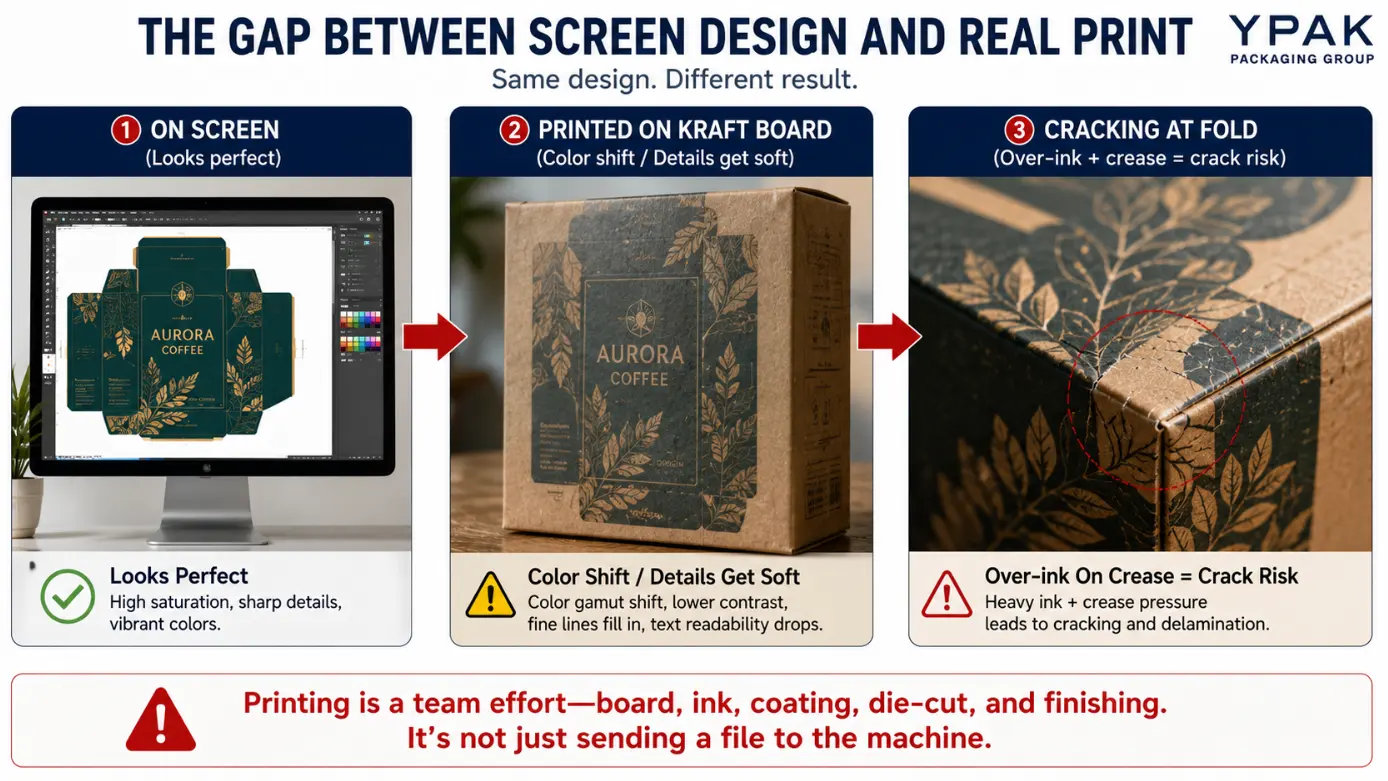
Coffee boxes are printed, making a protective cardboard outward a regulated mark. The outcome is based on more than beautiful art work. After creasing, folding, gluing, packing and handling of the box, paperboard, ink, coating, dieline accuracy and converting must work in coordination. The design which appears accurate on a monitor may lose definition on kraft board, split along a crease or enforce additional information which required by a close.
In the case of individual coffee brands, typically, the box accommodates an envelope, drip sachets or a bundle bag. The inner package is in charge of the main oxygen and moisture barrier, whilst the printed box packages the product, stores information and gives the product its retail appearance. The actual box structure and sales route should however be printed as opposed to being sanctioned as stand-alone artwork.
Start with a Print Brief.
A convenient print brief is what the customer shall acknowledge, what production shall recreate as well as what the finished carton shall endure and what the production shall recreate. It provides the designer, converter and coffee brand with a reference prior to the request of color proofs or finishing samples.
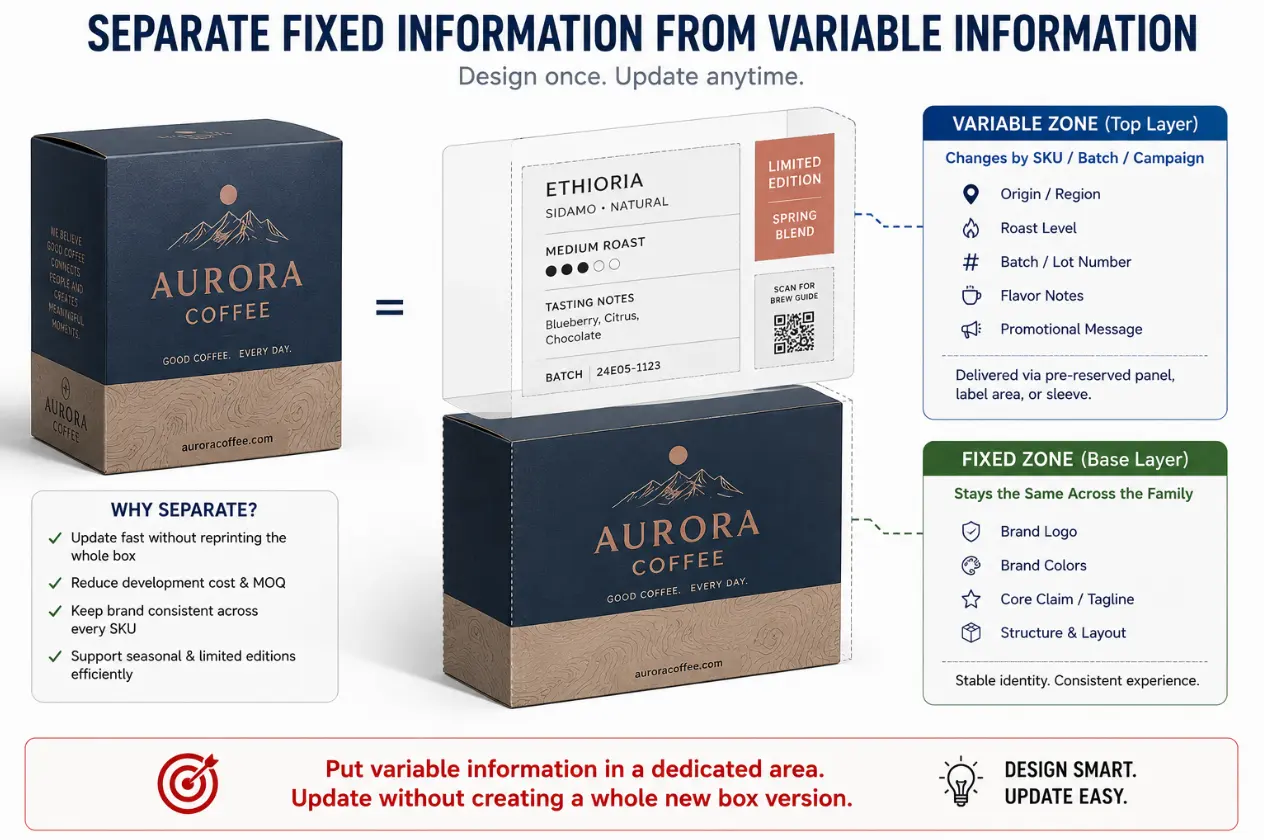
Individual Permanent and Variable Information.
The logo, brand color and the main assertion can be set in stone within a product family. Origins, roast, lot, flavor description and campaign message can be as frequently shifted. Single label field or sleeve contents A planned panel, label field or sleeve can keep variable content, so that every update needs to trigger a new version of box.
Check the Sequences of Viewing.
Indicate which panel a customer would see first on a shelf, which side a customer, when opening an online product, on an online image, and where the customer looks. Such hierarchy ensures the assignment of high contrast to the brand and product name and leaving of the softer spaces to product preparation instructions, barcodes and compliance text.
Match Printing against the Run.
The comparison should be done between printing methods and order size, number of artworks, color tolerance and reorder, and behavior. The best way to obtain the desired look is by doing it repeatedly at the necessary volume and not just the one that offers the lowest headline value.
| Method | Best fit | Cost and control point. |
| Digital printing | Short runs, launches and seasonal design and numerous SKU. | None of the common plate or cylinder charge; verify compatibility of boards, color options and finishing. |
| Offset printing | Detailed retail cartons with maintained artwork and colour. | Preparation is distributed the length and width of the run; certify ink behavior, drying, coating and sheet-to-sheet consistency. |
| Pantone spot color | Limited color palette or critical brand colors. | Adds color-controlling needs; specify the target on what will be put on the chosen paper, not on screen itself. |
| Litho-laminated print | Mailers that require fined graphics. | Mounted on corrugated board, high register, glue and finished flatness have to be verified on the printed sheets. |
The process named should be specified in a quotation instead of full color being fully specified. It should also reveal the capability of different artworks to share the production run, the method of authorizing color and which set up charges will reclaim on a re-order.
Have the Board Play in Color.
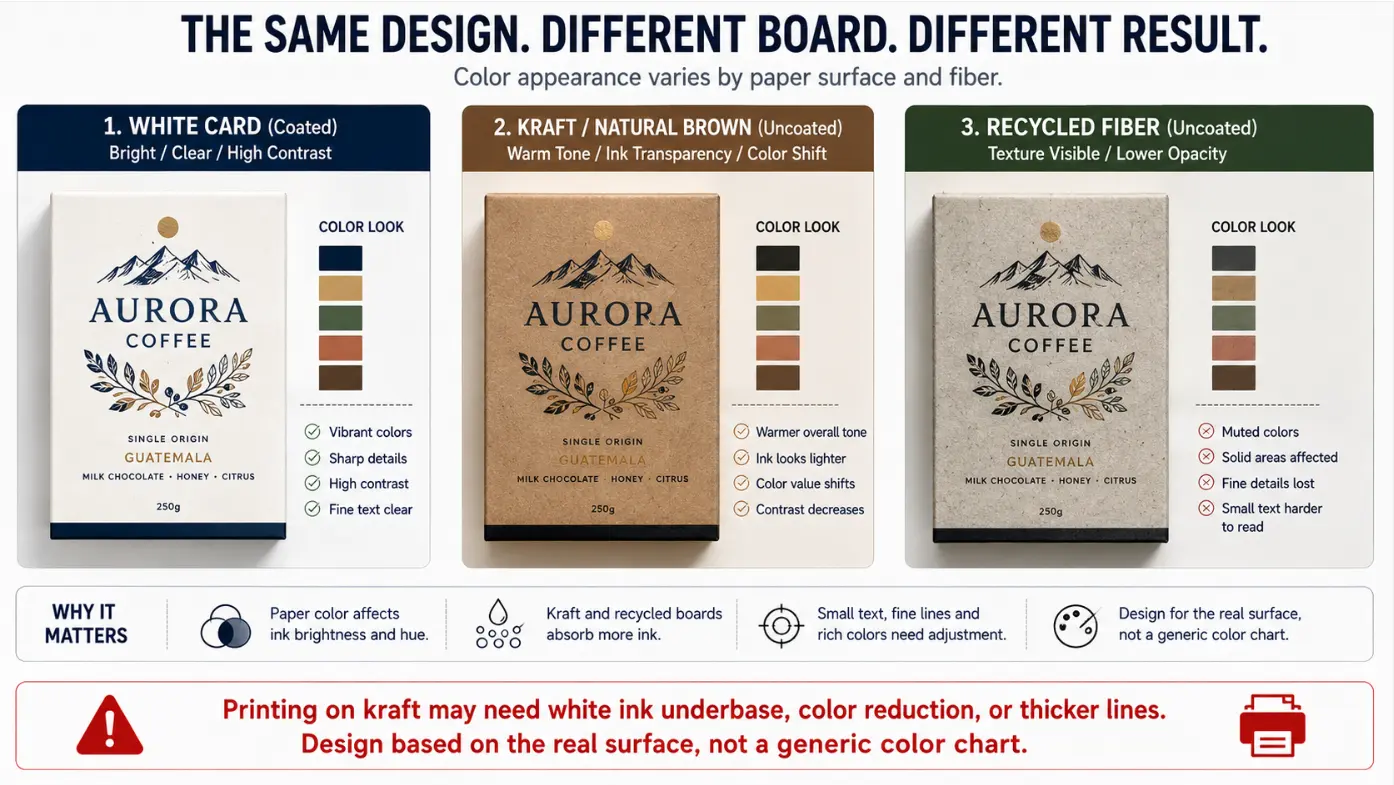
Paper contents of the printed result. The bright color and fineness of detail are normally supported in white coated board, whereas the apparent warmth, appearance of inks, values and transparency of inks are changed in natural kraft. Solvids and small typography can also be affected by recycled content, variation in surface texture and fiber as well as small typography.
Design towards the Real Surface.
The artwork to be applied to kraft board can require an opaque, white bottom coat, fewer colours or heavier line weights. An image that works on smooth white paper when photographed might not be as detailed in an absorbent or an uneven surface. An example of a printed material should be used in making the decision as opposed to a generic swatch.
New Page Protection Readability.
Scores, glue and cut edges should not contain fine text, QR codes and slim reverse lettering. Seeing a tight crease being covered with dark ink during its formation can be an indication that the box is going to crack. As an alternative to the default of a defect as a variation in printing, it might be more effective to move delicate parts or change the grain direction and coating.
Approve Color Evidence.
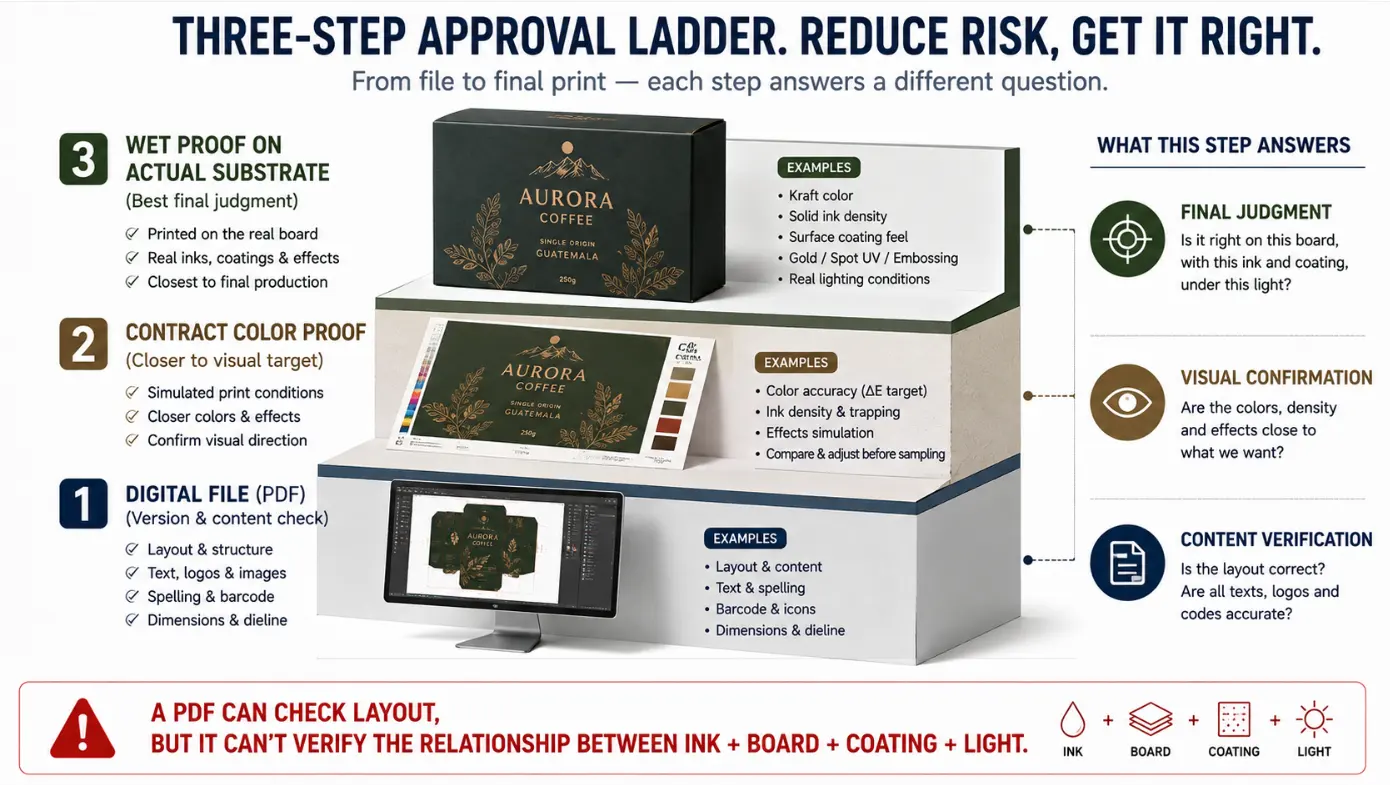
The approval of color ought to be advanced in content accuracy to physical production evidence. Just a PDF can validate placement and spelling, but not the ultimate dynamic between ink, paper and coating and light. Every stage of approval must have a given objective.
Use the Right Proof to the Decision.
A computerized document is convenient in pagination, images and text. A closer visual target can be determined by a contract color proof. Wet production sample or wet proof on the selected board is a better indicator where the kraft color, solid effect/surface coatings are the focal point of the design.
- Check the revision of the art work, dieline revision and panel orientation.
- Note approved values of CMYK, Pantone sources and white ink-layer.
- Check small type, bar codes and QR codes in final printed size.
- Look at the sample in steady lighting; maintain a signed record.
It should have an approved reference which is kept together with production specification. Reorders can then be compared with evidence instead of memory or some other screen display.
Select Finishes by Function.
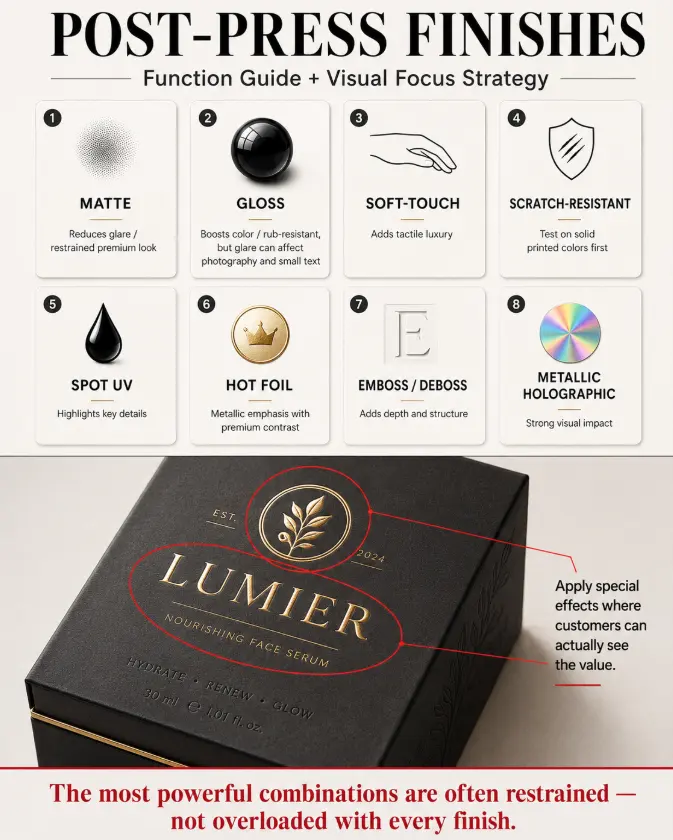
A finish modifies the look, feel and production hazard. YPAK has spot options like matte or gloss finishes, soft-touch and anti-scratch finish, spot UV, foil embedding, embossing, debossing and metallic or holographic effects. The most powerful output normally appears as a single purposeful juxtaposition as opposed to piling on all the possible processes.
Control Reflection and Handling
Matte finishes can help mitigate glare, and have the advantage of helping to keep the presentation restrained, although dark matte surfaces will demonstrate wear or fingerprints unless the coating chosen is effective. Gloss is also capable of enhancing color and the wipe resistance but reflections can make photography difficult or small texts illegible. Testing on the actual color printed should be done to test its anti-scratch performance.
Plan Special Effects to a Focal point.
The foil, spot UV and embossing are the most beneficial when they are used to make an emphasis on a logo, product name or opening detail. Registration tolerance would be relevant here where a finish would be required to match on fine printed lines. The reverse side also gets embossed and hence, should not be compromised by a fold and must not come in the way of an insert or all over the coffee pouch.
Compute the Cost of Boxes Printed.
The full cost of printed coffee boxes is not elaborated in the unit price. The cost of placing a usable box at the packing station can be changed by prepress, printing set-up, special finishes, sampling, packing, freight and the amount of versions of an artwork changed.
Differentiate between Fixed and Repeating Charges.
Cuts and some proofing charges could be paid once and the building is in the same condition. The print setup, foil setup, color matching and coating setup can be returned each run or each work of art. The quotation ought to define the reusable and retention of tools and approved references.
Move Cost/Saleable Box.
Excessive MOQ can be used to compensate a lower factory unit price as can be the art work that is outdated or rejected due to scuffing and poor registration. Find the price of inspected and on time delivery of the boxes. Carry sign inventory with it when a finish or printing job has to cause they brand to order more than they can sell out before the design is changed.
Use the Finished Print Test.
Print approval: This does not constitute print approval until the carton is molded and stuffed. Transformation of graphics can be moved in respect to the edges, can change the appearance of a crease and expose the surfaces to friction. The fact that the visual design does not disappear during the work that the box needs to carry out is shown with a filled sample.
Carry out a Packing and Distribution Check.
Assemble the box, using normal operators and equipment, place the desired pouch or sachets inside, close all the locks and put the unit into its transportation case. Assign ink transfer: ink can be transferred when the surface is scratched directly or through foils, broken folds, misaligned panels and labels that are not aligned with the information printed. Retail boxes are also supposed to be viewed standing up at shelf height whereas, mailers are supposed to be looked at following a representative delivery test.
Where possible, inspection criteria ought to be measurable. Establish tolerable color change, registration error, barcode operation and position or size of acceptable cosmetic marks prior to commencement of mass production.
Co-ordinate Boxes with YPAK.
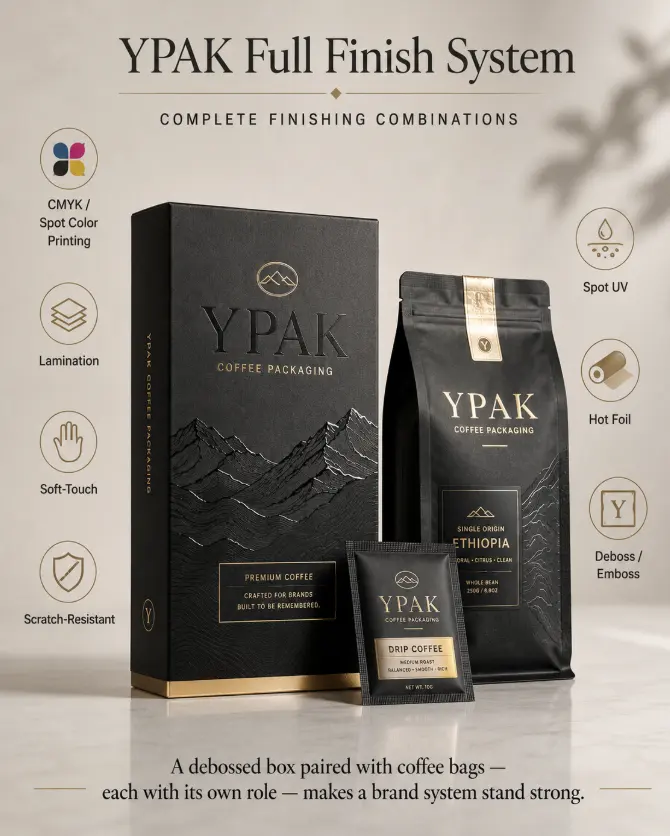
YPAK provides customerized coffee packages which can either integrate emblossed boxes with packets of coffee, drip coffee sachets, inserts as well as gift elements. Its published box solutions allow to customize full-area and also has CMYK and Pantone printing option, lamination, soft-touch, anti-scratch, spot UV, foil and embossed or debossed details.
In order to coordinate a project, filled samples of the product, the approved dieline, artwork files, color references, where to finish, the quantity of orders and where to deliver to, and the route to be used, should all be sent by the brand. Recalling the box next to the inner package of coffee will help them keep a steady brand system with each component being in charge of their respective functions.
Conclusion
Good printed coffee boxes are designed through relating paper conduct to board conduct, print technique, finish, changing and application. The most specifications are: make colour and text repeatable, secure valuable graphics on forming and handling, spend finishing money on the part that the customer can clearly see it is valuable.
Compare the options of production on the same structure and artwork prior to giving the green light, maintain physical evidences and count cost per usable box. The speciality coffee brand will have a more successful outlook of retail sales than simply settling on printing ensued in a screen image or unit quotation.
FAQ
The questions include those decisions that are mostly brought up prior to the printed boxes turning into print.
Written by
ypak.coffee
ypak
YPAK PACKAGING GROUP was established in 2011 and formed with 3 companies based on Hongkong, Dongguan and Foshan. We have become one of the largest coffee bag manufacturers in China. We use the best quality WIPF valves from Switzerland to keep your coffee fresh.
Conform to the plastic ban policy imposed to many different countries, we have researched and developed the sustainable packaging bags, such as RECYCLABLE and COMPOSTABLE pouches.
No minimum quantity, no color plates are required with our HP 25K INDIGO DIGITAL PRINTING service.
You are welcome to visit YPAK.
Related Articles
YPAK at World of Coffee Panama 2026: Coffee Packaging for Short Runs and EU-Bound Lots
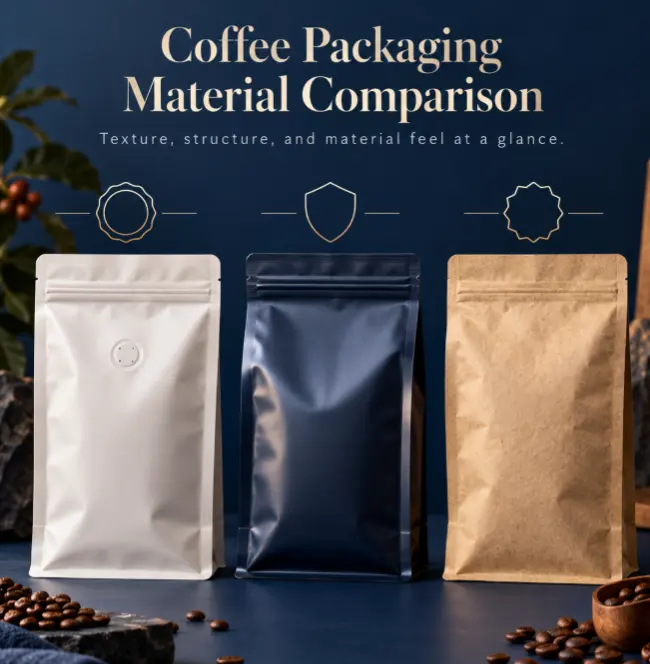
PPWR Recyclability Grades for Coffee Packaging: What Survives 2030, and What Survives 2038
Customized Coffee Packaging Solutions: From Product Ideas to Market-Ready Packaging