

Updated 4 days ago
Paperboard Packaging: A Practical Guide for Coffee Brands

ypak.coffee
YPAK PACKAGING GROUP was established in 2011 and formed with 3 companies based on Hongkong, Dongguan and Foshan. We have become one of the largest coffee bag manufacturers in China. We use the best quality WIPF valves from Switzerland to keep your coffee fresh.
Conform to the plastic ban policy imposed to many different countries, we have researched and developed the sustainable packaging bags, such as RECYCLABLE and COMPOSTABLE pouches.
No minimum quantity, no color plates are required with our HP 25K INDIGO DIGITAL PRINTING service.
You are welcome to visit YPAK.

paperboard packaging
Paperboard packaging gives coffee brands more than an outer container. It protects the primary coffee package, organizes multiple products, provides space for brand communication, and improves presentation in retail stores or subscription deliveries.
However, an attractive box will not perform well if it is the wrong box. Material, structure, dimensions, printing, finishing, insert design, and distribution conditions must work together. The best packaging projects begin with the product and production requirements, not decoration alone.
What Is Paperboard Packaging?
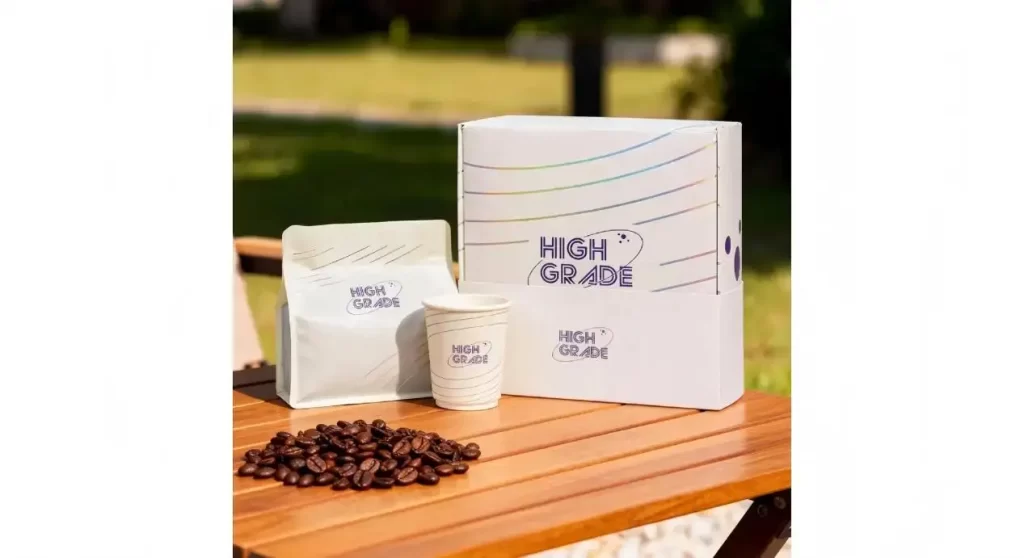
Paperboard packaging refers to cartons, sleeves, boxes, carriers, and other formats made from paper-based board. Compared with flexible coffee bags, paperboard is more rigid and stackable and provides a larger printable surface.
Common coffee applications include:
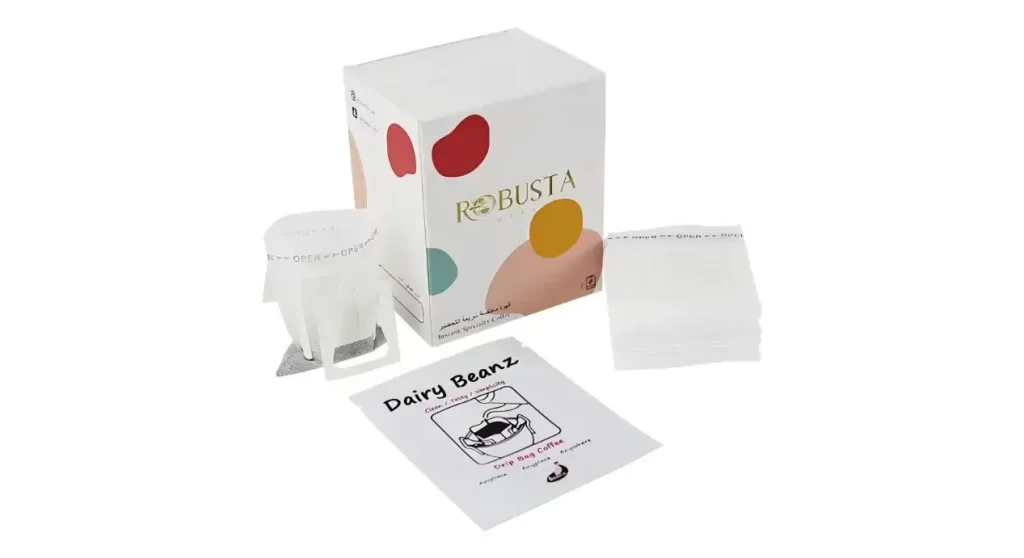
- Folding cartons for drip coffee sachets
- Retail boxes for coffee pods or capsules
- Coffee bag sleeves and gift packs
- Rigid presentation boxes
- Corrugated boxes for beverage dispensing systems
- Paperboard inserts that hold multiple products in place
Paperboard can serve as secondary packaging around a barrier pouch or form part of a complete packaging system. For example, custom-printed coffee boxes combine structural paperboard with graphics designed for the box surface.
Start with the Product, Not the Box Style
Determine what the package must contain before selecting a board grade or box shape. A glass bottle, coffee cup set, or bag-in-box beverage system needs more support than a lightweight drip coffee sachet.
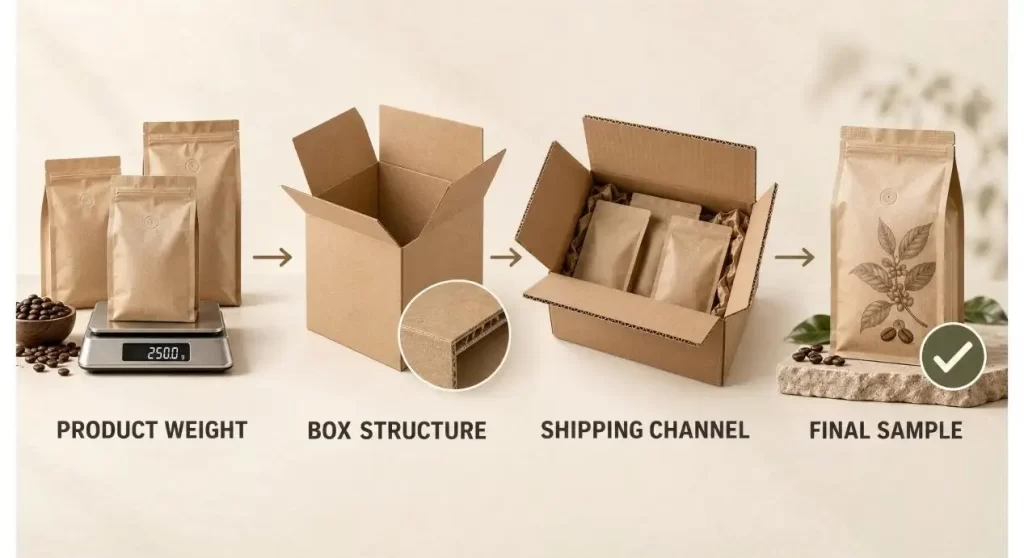
Provide the supplier with product dimensions, filled weight, quantity per box, packing orientation, sales channel, shipping method, and expected storage conditions. Sending the actual inner coffee bag or a physical prototype reduces the risk of an incorrect fit.
Allow enough clearance for efficient packing without leaving excessive empty space. A box that is too small can crush flexible pouches, while an oversized box allows movement and increases material and shipping costs.
Which Paperboard Material Should You Choose?
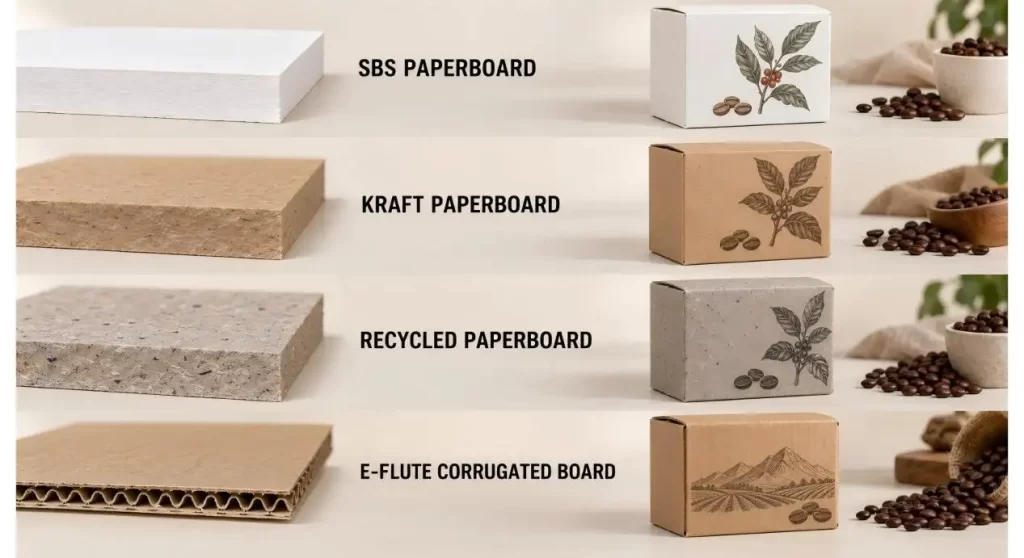
White paperboard provides a clean surface for detailed graphics, accurate colors, and premium retail presentation. Kraft paperboard is often preferred by brands seeking a natural or environmentally conscious appearance.
| Packaging requirement | Recommended format | Main reason |
| Lightweight drip sachets | Folding carton | Efficient assembly and retail display |
| Premium coffee gift set | Rigid box with insert | Strong presentation and product positioning |
| Coffee bag branding sleeve | Printed paperboard sleeve | Adds branding with less material |
| Cold brew or concentrate | Corrugated bag-in-box | Supports weight, stacking, and dispensing |
| E-commerce coffee set | Reinforced corrugated box | Better impact and compression protection |
| Seasonal small-batch launch | Digitally printed carton | Suitable for multiple designs and shorter runs |
Corrugated paperboard has a fluted middle layer between flat liners, providing greater compression and impact resistance. It is suitable for heavier products, shipping packs, beverage systems, and packages that must be stacked.
Rigid board is thicker than conventional folding-carton stock. It is commonly used for gift packaging, limited editions, launch kits, and high-value coffee collections. YPAK's UFO coffee filter box shows how a rigid format can add a distinctive premium presentation to single-serve coffee products.
Material selection should balance required strength, appearance, converting performance, unit cost, and transportation efficiency.
How Should You Choose the Box Structure?
Straight-tuck and reverse-tuck folding cartons are efficient for lightweight retail products. An auto-lock bottom can speed assembly and support more weight. Sleeves add branding without fully enclosing the primary pack, while drawer boxes and magnetic rigid boxes create a more deliberate unboxing experience.
Useful structural features may include:
- Die-cut windows
- Carrying handles
- Product inserts
- Perforated opening sections
- Display-ready tear lines
- Locking tabs
- Dispensing openings
Each feature should solve a practical need. Decorative openings can weaken important folds or unnecessarily expose the primary pack, reducing packaging performance.
Liquid coffee, cold brew, and concentrates require stronger configurations. In a paperboard bag-in-box system, the corrugated outer box provides stacking strength and branding, while an inner bag and tap contain and dispense the product.
What Value Do Printing and Finishing Options Add?
Offset printing is suitable for detailed artwork and consistent colors in larger production runs. Digital printing is useful for shorter runs, seasonal products, market tests, and multiple SKUs because it reduces the need for printing plates.
Matte and gloss lamination change both appearance and surface resistance. Spot UV highlights selected graphics, while foil stamping and embossing add tactile emphasis. These finishes can strengthen brand perception, but using too many can increase cost without improving clarity.
Roast level, origin, net quantity, brewing instructions, barcodes, and required recycling information must remain readable. Packaging should communicate quickly rather than forcing customers to search through decorative elements.
Does Paperboard Preserve Coffee Freshness?
Paperboard provides structure, light protection, and secondary physical protection, but it is not usually the main barrier in a coffee package. Roasted coffee is vulnerable to oxygen, moisture, and aroma loss.
The primary bag should therefore provide suitable barrier performance, seal integrity, and, when required, a degassing valve. The paperboard box protects the bag, groups individual portions, and creates a retail-ready exterior. A coordinated bag-and-box system, such as YPAK's recyclable coffee packaging kit, can maintain consistent branding across all packaging components.
How Can Paperboard Packaging Be More Sustainable?
Eliminating unnecessary material is often more meaningful than making a broad environmental claim. The box should use enough board to withstand handling and distribution without being unnecessarily heavy.
Brands can also consider responsibly sourced paperboard, readily recyclable structures, reduced plastic lamination, right-sized packaging, water-based inks, and components that are easy to separate after use.
Claims such as recyclable, compostable, biodegradable, or plastic-free should be supported for the complete packaging system and the disposal conditions in the target market. Coatings, adhesives, windows, and inserts may affect recyclability even when the exterior is paper-based.
What Should Be Checked Before Mass Production?
Begin with a dieline and structural prototype. Insert the actual product and test assembly, closure, opening, product removal, barcode placement, and shelf stability.
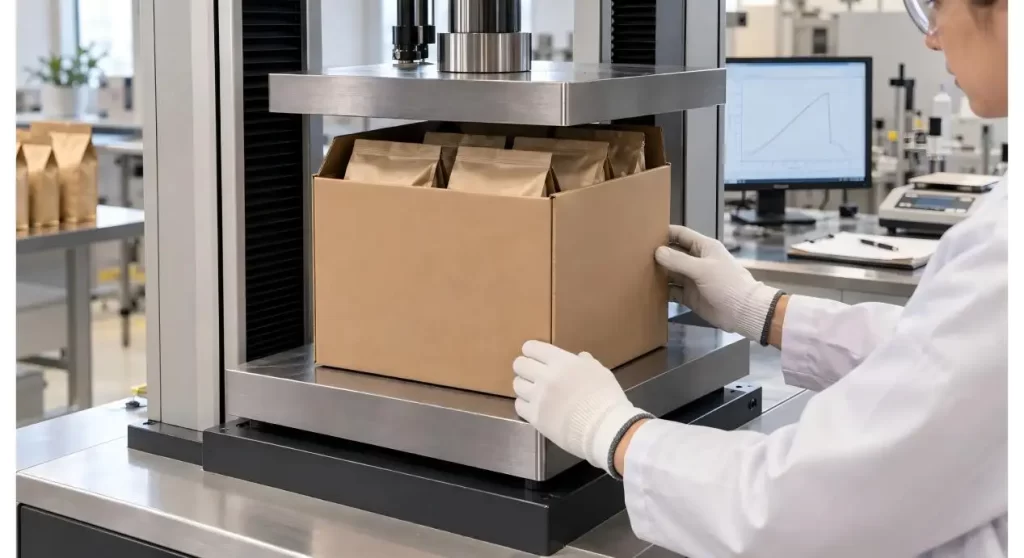
Next, review a printed sample for text accuracy, color, image resolution, finishing positions, fold alignment, and regulatory information. Compression, vibration, and drop tests should simulate real shipping conditions for e-commerce or long-distance distribution.
Final approval should cover both artwork and physical structure. A screen rendering cannot confirm board stiffness, color variation, fit, or assembly performance.
Conclusion
Effective paperboard packaging combines the right material, an efficient structure, reliable printing, and proven transport performance. Before confirming a box design, coffee brands should consider the primary package, product weight, distribution environment, brand positioning, and sustainability requirements.
A capable packaging supplier should coordinate the dieline, prototype, printing, surface finish, inserts, and outer shipping configuration. Brands developing a new coffee box or complete coffee packaging system can contact YPAK with the exact product size, quantity, artwork, target market, and desired finish for a more accurate recommendation.
FAQ
Q1. Can paperboard packaging come into direct contact with coffee?
Paperboard is usually used as secondary packaging around a sealed coffee pouch. Direct food contact requires suitable food-contact materials, coatings, inks, and supporting compliance documentation.
Q2. What is the difference between paperboard and corrugated board?
Paperboard is generally lighter and commonly used for retail folding cartons. Corrugated board has a fluted middle layer that provides greater stacking and shipping strength.
Q3. Can paperboard coffee boxes be customized?
Yes. Size, structure, printing, finish, windows, handles, inserts, and opening systems can be customized according to the product and order requirements.
Q4. Does a paperboard box keep roasted coffee fresh?
It adds physical and light protection but is not normally the primary oxygen and moisture barrier. The sealed coffee bag is the key component for maintaining freshness.
Q5. What information should a buyer provide before requesting a quote?
Provide product dimensions, filled weight, quantity per box, preferred structure, artwork, order quantity, destination, and desired finish. A physical sample is helpful when precise fit is critical.
Q6. What Is the Minimum Order Quantity?
The minimum order quantity is 2,000 pieces. Final requirements may vary depending on the packaging size, material, structure, printing method, and customization specifications.
Written by
ypak.coffee
ypak
YPAK PACKAGING GROUP was established in 2011 and formed with 3 companies based on Hongkong, Dongguan and Foshan. We have become one of the largest coffee bag manufacturers in China. We use the best quality WIPF valves from Switzerland to keep your coffee fresh.
Conform to the plastic ban policy imposed to many different countries, we have researched and developed the sustainable packaging bags, such as RECYCLABLE and COMPOSTABLE pouches.
No minimum quantity, no color plates are required with our HP 25K INDIGO DIGITAL PRINTING service.
You are welcome to visit YPAK.