


Updated 6 months ago
Jute Bags for Coffee Packaging: Sustainable & Durable Solutions

ypak.coffee
YPAK PACKAGING GROUP was established in 2011 and formed with 3 companies based on Hongkong, Dongguan and Foshan. We have become one of the largest coffee bag manufacturers in China. We use the best quality WIPF valves from Switzerland to keep your coffee fresh.
Conform to the plastic ban policy imposed to many different countries, we have researched and developed the sustainable packaging bags, such as RECYCLABLE and COMPOSTABLE pouches.
No minimum quantity, no color plates are required with our HP 25K INDIGO DIGITAL PRINTING service.
You are welcome to visit YPAK.
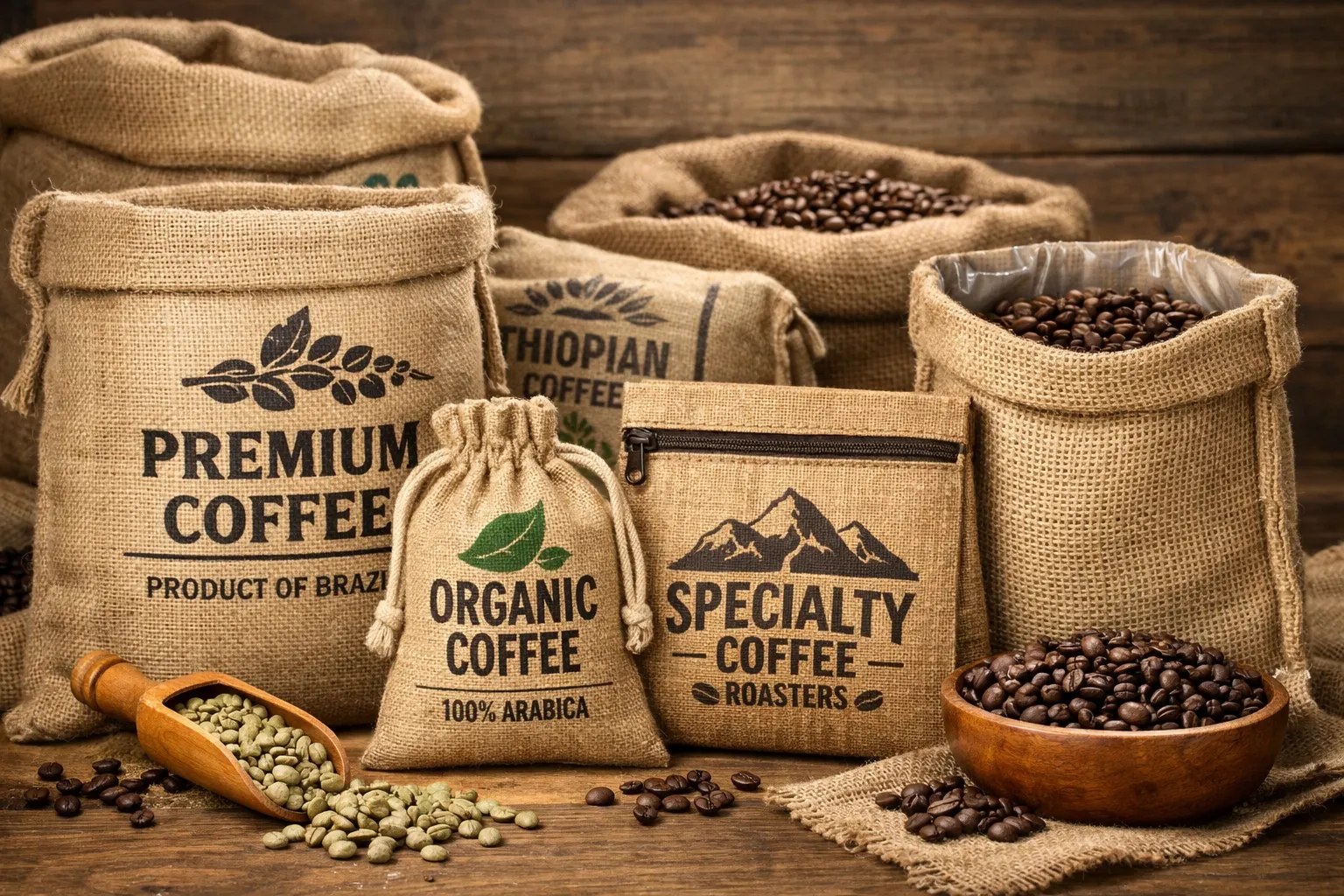
Jute Bags for Coffee Packaging: Sustainable & Durable Solutions
Packaging in a modern competitive coffee industry represents more than a container, it is about your brand ethics, quality and about your responsibility to the environment. Since consumers have grown more environmentally conscious and aware, jute bags have become a promising option to coffee packaging as a sustainable and appealing solution to consumers.
Since ancient times when coffee growing areas are used to produce coffee, jute bags have been instrumental in securing and transportation of coffee beans. This paper will discuss the reasons why jute bags are the best option to package coffee in, its advantages, varieties, customization, and how they can help in both sustainable and branding.
What Are Jute Bags?
Jute bags are produced with the use of natural fibers that are obtained on the jute plant which is grown mainly in India and Bangladesh. It is the so-called golden fiber, jute, biodegradable, durable, and breathable, which is why it is particularly appropriate when working with agricultural goods such as coffee.
Over decades, coffee exporters have been using jute sacks to transport green coffee beans to different countries of the world. Even nowadays, a lot of coffee shipments such as Brazil or Ethiopia are packed in the traditional jute bags and they are shipped to the international market.
The reason why Jute Bags will be best in the coffee packaging.
1. Excellent Breathability
Packaging of coffee beans and coffee beans in particular should be in a manner that allows movement of air. The natural weaving that jute is designed in offers a ventilation factor which helps eliminate moisture and mold formation in transportation and storage.
This is critical in ensuring that the quality and flavor of the coffee beans are not damaged during the long shipping processes.
2. Strong and Durable Material
Jute fibers have high tensile strength. Jute coffee bags are capable of carrying great weight- normally 50kg-70kg- and thus can be used in exporting coffee in large quantities.
They are durable and therefore less likely to tear or spill in the course of handling, stacking as well as international shipping.
3. Bio and eco friendly.
Sustainability can be considered as one of the key benefits of jute bags in coffee packaging. Jute is:
· 100% natural and biodegradable
· Compostable
· Renewable and fast-growing
· Low in environmental impact
Jute bags do not cause any residues since they are natural and can degrade easily, unlike plastic or synthetic packaging material. This renders them a good option to coffee brands that wish to cut down their carbon footprint.
4. Real and elite appearance.
Jute bags have a rustic and organic feel that suits well with the specialty coffee branding. In the case of the artisanal and organic coffee brand, the jute texture and brown appearance support the notion of authenticity and ecological friendliness.
The consumers have many associations with jute packaging as being part of the traditional coffee trade paths and quality origin beans.
Jute Bag Coffee Packaging.
In terms of coffee packaging on jute bags, the businesses have a variety of types to use depending on the business requirements.
1. Standard Jute Coffee Sacks
These consist of conventional bulk bags that are exported to green coffee beans. They are typically:
· Large (50kg–70kg capacity)
· Unstamped or printed including provenance.
· Sewed on top upon filling.
Such sacks are popular in coffee trade all over the world.
2. Laminated Jute Bags
To provide extra protection against moisture, laminated jute bags may have a thin inner layer (usually polypropylene or biodegradable versions). This allows durability and shields beans against humidity and still allows external breathability.
3. Small Retail Jute Bags
Retail coffee packages, Gift sets, and promotion packages are increasingly being packaged in smaller jute pouches (250g 5kg). These bags may be tailored to using draw strings, zip or branded.
Specialty roasters and eco-oriented brands are some of the major consumers of them.
Coffee Brands Customization.
Contemporary coffee companies realize that packaging is a component of customer experience. Coffee packaging in jute bags may be differentiated in a number of ways:
Custom Printing
Brands can print:
· Company logos
· Origin details
· Certifications (organic, fair trade, etc.)
· QR codes for traceability
Direct printing on jute will help in increasing the brand visibility and maintaining the natural appearance.
Size and Capacity Options
Jute packaging is customizable in size, whether it is in bulk export sacks or in small boutique retail bags.
Colored and Dyed Jute
Natural brown is mostly used, but jute bags could be dyed in other colors to match the brand identity.
Inner Linings
The use of inner liners enhances moisture resistance and shelf life particularly roasted coffee beans.
Sustainability and Corporate Responsibility.
Consumers are now requiring transparency and environmental responsibility. Brands can use jute bags to package coffee because they can:
· Reduce plastic usage
· Encourage sustainable farming.
· Encourage degradable packaging.
· Enhance sustainable brand position.
It is also through jute production that millions of farmers in the producing countries are able to make it and enhance the rural economy. Coffee firms can be in line with international sustainability through responsible sourcing.
Global Coffee Supply Chain: Jute Bags.
Jute bags are still the standard use of transporting green coffee beans in the international coffee trade. The large coffee-producing nations are still depending on jute because it is convenient and cost-effective.
For example:
· Colombia is a country that exports green coffee in jute bags in great quantities.
· Jute bags are also being heavily used in Vietnam, a top coffee producer in the world.
These conventional sacks are commonly marked and contain information that is important in specialty coffee trading such as the markings that show country of origin, producer and lot number.
Written by
ypak.coffee
ypak
YPAK PACKAGING GROUP was established in 2011 and formed with 3 companies based on Hongkong, Dongguan and Foshan. We have become one of the largest coffee bag manufacturers in China. We use the best quality WIPF valves from Switzerland to keep your coffee fresh.
Conform to the plastic ban policy imposed to many different countries, we have researched and developed the sustainable packaging bags, such as RECYCLABLE and COMPOSTABLE pouches.
No minimum quantity, no color plates are required with our HP 25K INDIGO DIGITAL PRINTING service.
You are welcome to visit YPAK.
Related Articles
Two Gates on the Road to the EU: Reduction by Design and the Documentation Chain for Coffee Packaging

Recyclable Coffee Bags: How to Protect Freshness Without Compromising Sustainability

Your Brand, Perfectly Packaged: The YPAK Guide to Selecting a High-Quality Custom Coffee Bag