

How to Package Coffee for E-commerce Shipping
Excellent packaging and clever shipping is no longer something great in the booming market of online coffee sales; it determines whether your product will arrive to the customers fresh and beautiful plus brand-worthy. Since the e-commerce sales of coffee are also growing, a perfect ability to effectively package will assist you in making a distinction of quality, improve conversion, and create an impact in the markets, such as Indonesia, Southeast Asia, and more.
The reason why coffee packaging and shipping are important.
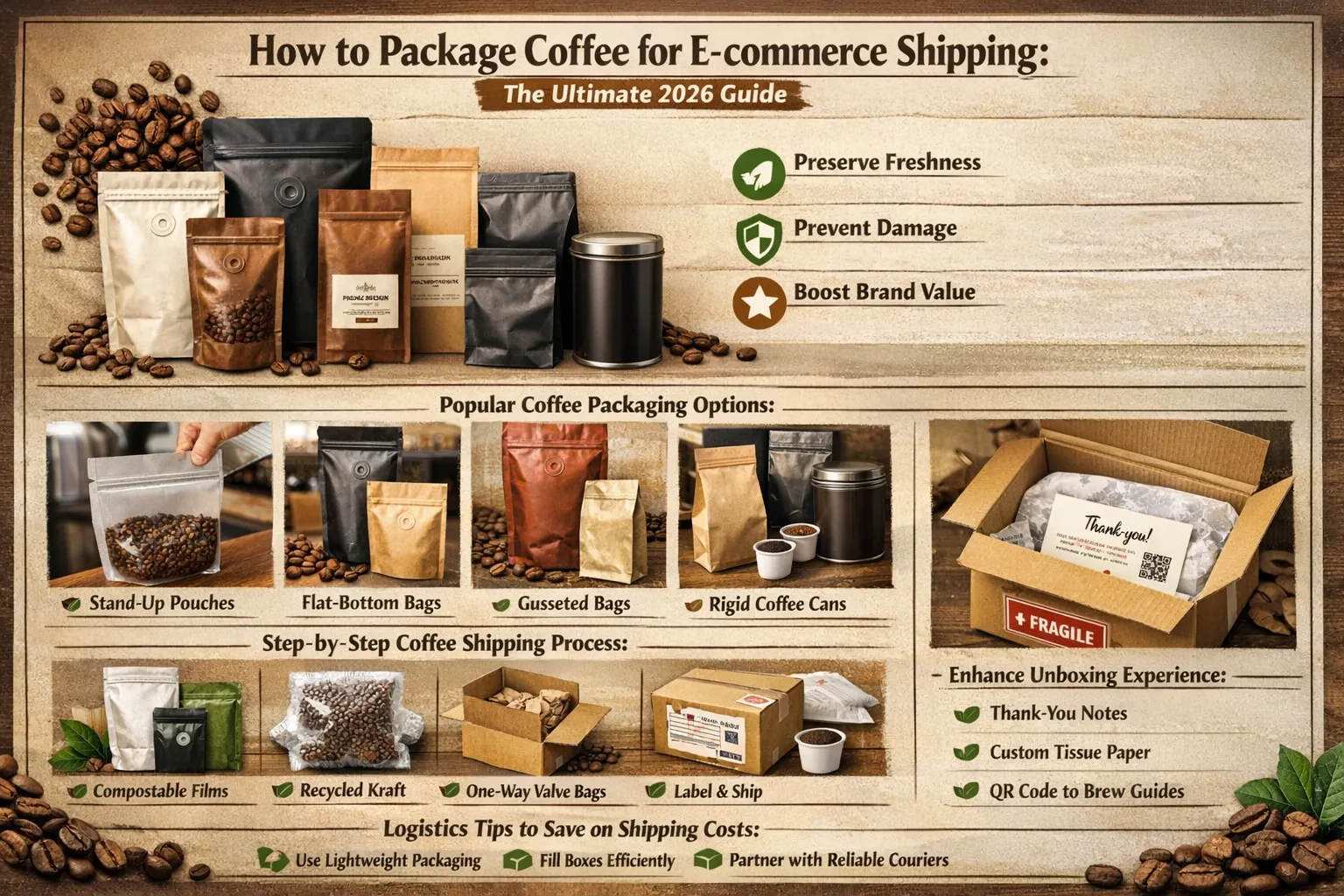
Coffee is a sensitive product - the taste and smell may deteriorate soon upon seeing air, water, or direct light. Whichever the shipping, be it locally in Indonesia or abroad, your packaging must:
· Preserve freshness
· Prevent physical damage
· Communicate brand value
· Maintain a reasonable shipping cost.
It is expected that the world market of e-commerce coffee will increase many times until 2034, so quality of packaging and logistic planning are the competitive advantages that your business is not to be indulged.
The decision on Coffee Packaging.
1.Stand-Up Pouches (Best E-commerce and Retail)
The bottom of these types of flexible bags is flat, and they usually have resealable zip locks and one-way degassing valves that allow the gases of coffee to escape but not oxygen.
Benefits:
· Good shelf life and display of the products.
· Keeps beans fresh longer
· Lightweight- lowers the cost of shipping.
Best fits: Subscription coffee sellers, specialty roasters, and boutique brands that are sold in 250 g-1 kg sizes online.
2.Flat-Bottom Coffee Bags
Flat-bottom designs have an added stability and room to print logos, origin stories or roast profiles. These bags will give the high-end appearance of the bags and are well suited to sell one bag or as a gift pack.
Pro tips:
· Include dates of roasting and tasting notes.
· Create artwork that is culturally related (e.g., Indonesian coffee regions)
3.Gusseted Bags
These are plain folded bags which widen when filled and hence ideal in greater amounts or large size products.
Pros:
· Economical when it comes to large quantities.
· Stackable and easy to store
Disadvantages: It needs external clips/ties to reseal and possibly a box to display in a store.
4.Rigid Coffee Cans
Rigid or metal containers provide the most protection against air, sunlight and water. They are more expensive (more postage) and good with high quality or gift coffee products.
Best suited: Ground coffee, cold brew packs or special editions.
5.Single-Serve Pods (K cup / Nespresso Compatible)
Single-serve machines are ideal when it comes to filling the empty pods that would be offered to customers. They are normally pre-packed and they maintain freshness in individual cups.
Considerations:
· Higher production cost
· Needs special sealing equipment.
· Environmental concern of waste materials is on the increase.
Single step Coffee packaging to ship.
Shipping packaging is not limited to the bag. The following is a sure way of delivering coffee intact and fresh:
1. Portion & Seal: Roast, cool and package coffee into finished use portions (e.g. 250 g, 500 g, 1 kg). Store in airtight valve bags.
2. Include Absorbers When Necessary: In long shipments, some sellers will include oxygen absorbers or desiccants in an attempt to control moisture.
3. Protective Layer: Place the coffee bag in a bubble wrap or kraft paper to make it easy to handle.
4. Select the Best Outer Box: Corrugated boxes are harder to hit, stack, and minimize chances of being crushed.
5. Fill Empty Space Fill empty space with biodegradable peanuts or recycled kraft paper to stop bag movement during transportation.
6. Label Clearly: Add roast date, handling instructions (e.g. Keep Dry, Fragile) and correct Hs code (when shipping to other countries).
Freshness Preservation Packaging Materials.
The effective coffee packaging typically consists of:
· Barrier Foil Layers: Barricades light and air.
· One-Wway Degassing Valve: Permits the release of CO2, inhibits oxidation.
· Reusable Zippers: This is convenient to customers.
· Waterproof Outer Coats: Stops quality impairment in wet shipments.
Eco-friendly materials (compostable films, recycled kraft) are on the fashionable side as well - it attracts conscious consumers and enhances brand image.
What E-commerce Customers Desire.
Visual Design & Brand Story
Between the packaging lies a tale, as in when the beans were grown (e.g. Java, Sumatra, Bali), roast philosophy, tasting notes and brand spirit. When customers feel that they are related to the source and quality of the product, they purchase more.
Good design:
· Increases perceived value
· Promotes social sharing (unboxing photos)
· Improves return purchases
Unboxing Experience
A superb unboxing experience keeps the customers excited and increases their chances of sharing their purchase online. Consider including:
· Custom tissue paper
· Thank-you cards
· QR codes with brew guide info or origin information.
These minor details add value to the brand and make people more loyal.
Shipping Costs Reduction Logistics Tips.
Unless properly planned, shipping costs can consume profit margins. Consider:
· Packaging with light weight to reduce dimensional weight prices.
· Combining deliveries to shipping centers.
· Finding logistics partners who offer good rates, particularly to international destinations such as Asia, Europe and North America.
Final Thoughts
Packaging should not be a question of protection, but a key component of your online coffee branding and customer experience. With the help of freshness-oriented materials, attentive design, and intelligent logistics, you will be able to take your coffee e-commerce to the next level and create a base of regulars.

Written by
ypak.coffee
ypak
YPAK PACKAGING GROUP was established in 2011 and formed with 3 companies based on Hongkong, Dongguan and Foshan. We have become one of the largest coffee bag manufacturers in China. We use the best quality WIPF valves from Switzerland to keep your coffee fresh.
Conform to the plastic ban policy imposed to many different countries, we have researched and developed the sustainable packaging bags, such as RECYCLABLE and COMPOSTABLE pouches.
No minimum quantity, no color plates are required with our HP 25K INDIGO DIGITAL PRINTING service.
You are welcome to visit YPAK.
Related Articles
Two Gates on the Road to the EU: Reduction by Design and the Documentation Chain for Coffee Packaging

Recyclable Coffee Bags: How to Protect Freshness Without Compromising Sustainability

Your Brand, Perfectly Packaged: The YPAK Guide to Selecting a High-Quality Custom Coffee Bag