

Updated 5 months ago
Flat Bottom Bags Vs Stand Up Pouches: Packaging Comparison Guide
Arafatshuvo509

flat bottom bags vs stand up pouches
Flat Bottom Bags Vs Stand Up Pouches: Ultimate Packaging Comparison Guide
Packaging is no longer a container. It is a silent salesman, a brand storyteller, and a freshness protector. The stand-up pouches vs. the flat bottom bags debate is more than ever in the competitive coffee and food industry. Before comparing the types of flexible packaging, it is important to have a basis for the comparison.
Both formats are believed to be contemporary flexible barrier packaging, which is trendy in the coffee, tea, snacks, and dry food industries. They both use multi-layered laminated packaging to maintain the freshness of their products, but their structure and shelf performance are extremely dissimilar.
What are Stand-Up Pouches (Doy Pack Pouches)?
Stand-up pouches are one of the most popular modern food packaging solutions. They possess a bottom gusset that swells when filled, allowing the pouch to stand erect.
Key features:
• Made of laminated packaging films.
• Has zipper packaging with resealable zippers.
• Often uses oxygen barrier packaging.
• Lightweight and cost-efficient
• Proper heat-sealed packaging pouch design.
Technical insight:
Stand-up pouches are normally used:
• PET / PE / ALU layers.
• Thickness: 100–180 microns
• Oxygen transmission rate (OTR): very low with foil variants.
• Moisture barrier: medium to high, based on film structure.
They are generally applied in:
• Snack foods
• Ground coffee
• Protein powders
• Dry fruits
What are Flat Bottom Bags (Quad Seal Bags)?
Flat-bottom bags are quality packaging designs that are more stable and can be branded. They are made like a quad seal bag, i.e., four corner seals and a flat bottom.
This causes them to look box-like.
Key features:
- Good bottom packaging construction.
- Better bottom gusset stability package.
- Maximum shelf stability
- Good quality gourmet product packaging design.
- Good shelf life of products.
Technical insight:
Flat-bottom bags typically use:
- 5-layer laminated structure
- Kraft combinations and high barrier foil.
- Oxygen and moisture barrier optimized for coffee.
- Thickness: 120–200 microns
- Strong side, load support gussets.
They are typically used in:
- Specialty coffee beans
- Premium tea brands
- Artisan snacks
- High-end retail packaging
Basic Structural Distinction: Flat Bottom Bags Vs Stand Up Pouches
The main pouch packaging options are minimized to shape and stability.
Stand Up Pouch:
- Curved bottom gusset
- Flexible shape
- A bit wobbly when not full.
- Less challenging storage and transportation.
Flat Bottom Bag:
- Box-shaped structure
- Strengthened sides and flat bottom.
- Strong shelf stability
- Premium presentation
This structural difference influences every aspect, including branding and logistics.
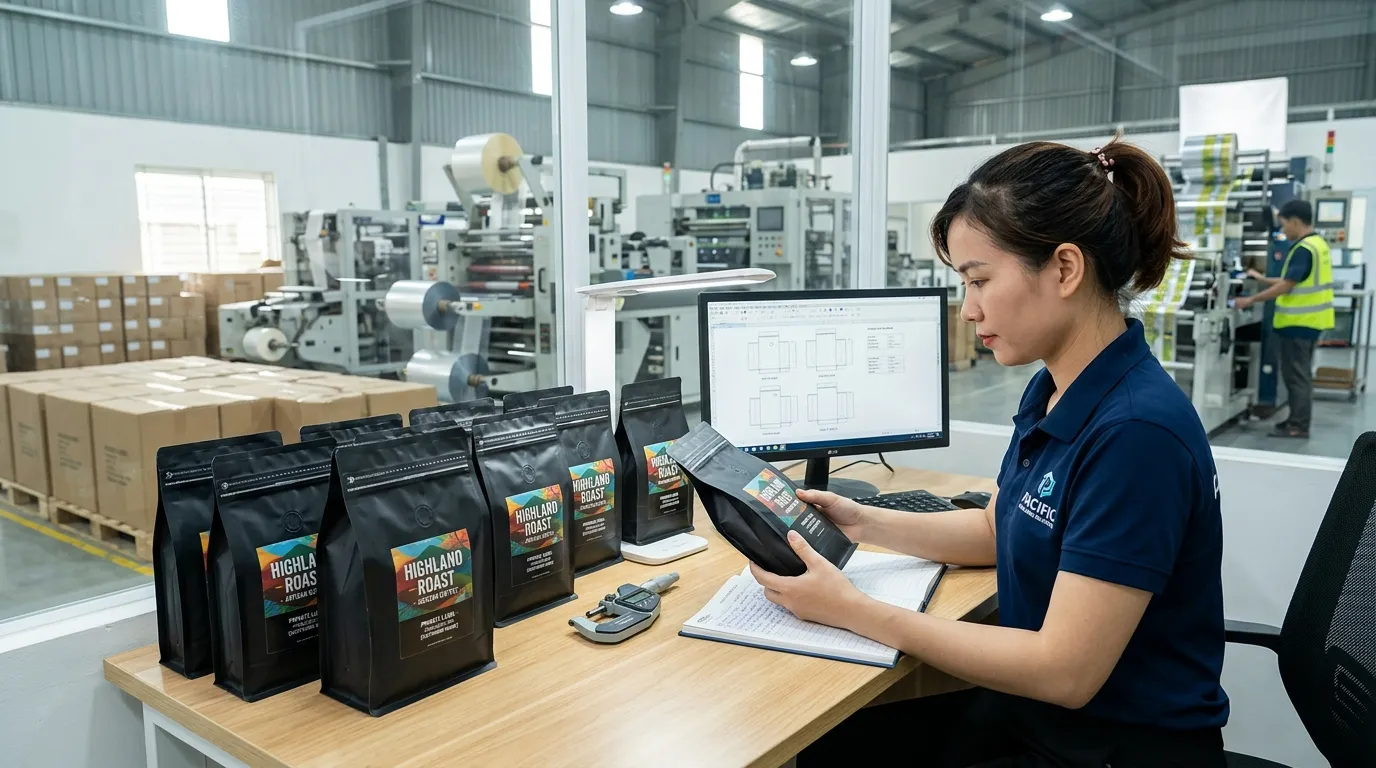
Packaging Performance Comparison
Flat-bottom bags are clearly the victors in the shelf presence packaging comparison.
They:
- Stand perfectly straight
- Show all panels to be branded.
- Create a quality retail display packaging effect.
Stand-up pouches:
- Small lean on shelves.
- Less structured appearance
- Impact Packaging Design.
Packaging Durability Comparison
Regarding the strength of flat bottom bags and stand up pouches, they are both strong, but:
- Flat-bottom bags are more effective in carrying heavy weights.
- Stand-up pouches are more compliant to pressure.
- Flat bottom is the most suitable in the case of bulk coffee beans.
Material Engineering and Barrier Technology
The modern packaging requires high-barrier foil laminate bags and multi-layer protection.
Common technologies used:
- Aroma retention packaging technology.
- Seal coffee bags of freshness.
- Nitrogen coffee preservation.
- Food-grade packaging materials
Flat-bottom bags generally provide:
- Stability of the oxygen barrier.
- Less time volatility loss.
Stand-up pouches contain:
- Lightweight material usage
- Cost-efficient barrier layers
Coffee Packaging Insight: What's the Best?
With the example of flat-bottom bags and stand-up pouches to pack coffee, both are trendy, yet they are used to achieve different branding purposes.
Flat Bottom Coffee Bags:
- Most appropriate for premium coffee brands.
- Better packaging designs for coffee bean roasting.
- Excellent shelf life extension package.
- Preferably prefers nitrogen flushing.
Stand Up Pouches:
- Suitable for low-end coffee brands.
- Small batch packaging.
- Flexible for startups
Food Packaging Applications
It is a product positioning in the case of flat-bottom bags and stand-up pouches in food packaging.
Flat-bottom bags:
• Gourmet snacks
• Organic food products
• Premium dry goods
Stand-up pouches:
• Chips
• Protein powders
• Retail snacks
Both formats can fit dry food packaging pouch and snack packaging pouch types, yet the flat bottom offers superior shelf branding.
Wholesale and Economy Coffee Packaging Options
The comparison of the cost efficiency of packaging is important in business.
Stand Up Pouches:
• Lower production cost
• Faster manufacturing
• Excellent in mass production.
Flat Bottom Bags:
• Higher cost due to structure.
• More material usage
• Greater retail value perception.
For buyers searching:
• wholesale purchase flat-bottom bags vs stand up pouches.
• stand-up pouch packaging supplier vs flat bottom.
Sustainability and Eco Trends
The shift towards sustainable packaging formats is redefining both designs. Stand-up pouches vs environmentally friendly flat-bottom bags:
- They both can utilize recyclable films.
- Kraft paper is available.
- Both formats have compostable layers.
This is because Kraft-based structures render flat-bottom bags one of the main brands in the high-end eco branding.
Unboxing Experience and Consumer Psychology
Modern brands are highly concerned with how the unboxing experience and packaging are designed.
Flat-bottom bags:
• Feel more premium
• Design unboxing experiences.
• Stronger emotional branding
Stand-up pouches:
• Functional experience
• Practical and less high-end.
This directly affects the packaging consumer preference study results in the retail markets.
Conclusion:
Flat-bottom bags vs stand up pouches is not only a packaging problem, but a branding problem. Flat-bottom bags offer high-end appearance, improved structure, and improved shelf impact, and stand-up pouches offer flexibility, low cost, and mass production. Flat-bottom packaging is a better long-term choice if you are willing to take your coffee brand to the next level with luxury and technical perfection. Today, discover the most appropriate solutions at YPAK Coffee and package them as a powerful brand.