

Updated 3 days ago
Custom Printed Boxes: From Coffee Packaging Design to Production

ypak.coffee
YPAK PACKAGING GROUP was established in 2011 and formed with 3 companies based on Hongkong, Dongguan and Foshan. We have become one of the largest coffee bag manufacturers in China. We use the best quality WIPF valves from Switzerland to keep your coffee fresh.
Conform to the plastic ban policy imposed to many different countries, we have researched and developed the sustainable packaging bags, such as RECYCLABLE and COMPOSTABLE pouches.
No minimum quantity, no color plates are required with our HP 25K INDIGO DIGITAL PRINTING service.
You are welcome to visit YPAK.

custom printed boxes
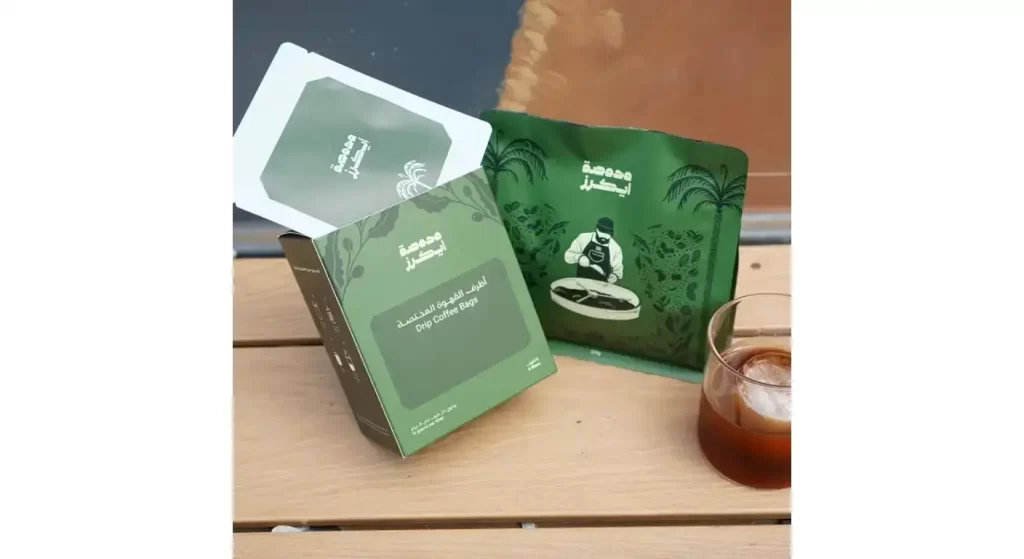
Custom printed boxes do much more than display a logo. For coffee brands, they can organize drip coffee sachets, protect retail pouches, present coffee gift sets, communicate origin information, and connect several products within one recognizable brand system.
Successful customization begins with the product rather than the artwork. Product dimensions, filled weight, packing orientation, sales channel, printing process, and surface finish should be confirmed before the final design is approved.
A beautiful box will not support the brand if it takes too long to assemble, fits poorly, or varies from one production run to the next.
What Should Be Determined Before Designing the Box?
First, define what the box must contain and how the product will be sold. Provide the size and filled weight of each item, the number of units per box, the required packing orientation, and whether the package will be used in retail stores, subscription shipments, or international distribution.
Also define:
- Target order quantity
- Number of artwork versions
- Preferred box style
- Insert or divider requirements
- Target retail price
- Destination market
- Sustainability requirements
- Packing and assembly process
Whenever possible, send physical product samples to the supplier. The dimensions and shape of an empty coffee pouch can differ significantly from those of the filled pouch.
Which Box Structure Fits the Coffee Product?
Tuck-end folding cartons are suitable for lightweight drip coffee sachets, capsules, and small accessories. An auto-lock bottom can reduce assembly time and provide better support for heavier contents.
Sleeves provide branding around a pouch, tray, or existing box while using less paperboard. Drawer boxes and rigid boxes create a more deliberate opening experience for gift sets and premium collections.
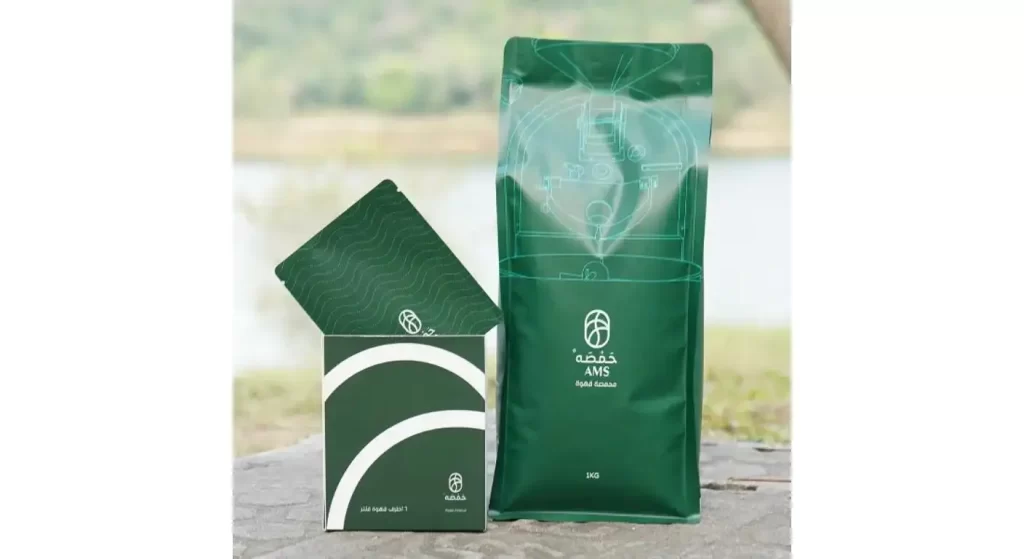
The structure should be designed around the product rather than forcing several products into a standard box. YPAK's custom printed drip coffee box is developed for common five- or ten-pack drip coffee formats and can provide a more controlled fit than a generic retail carton.
How Should the Dieline Be Prepared?
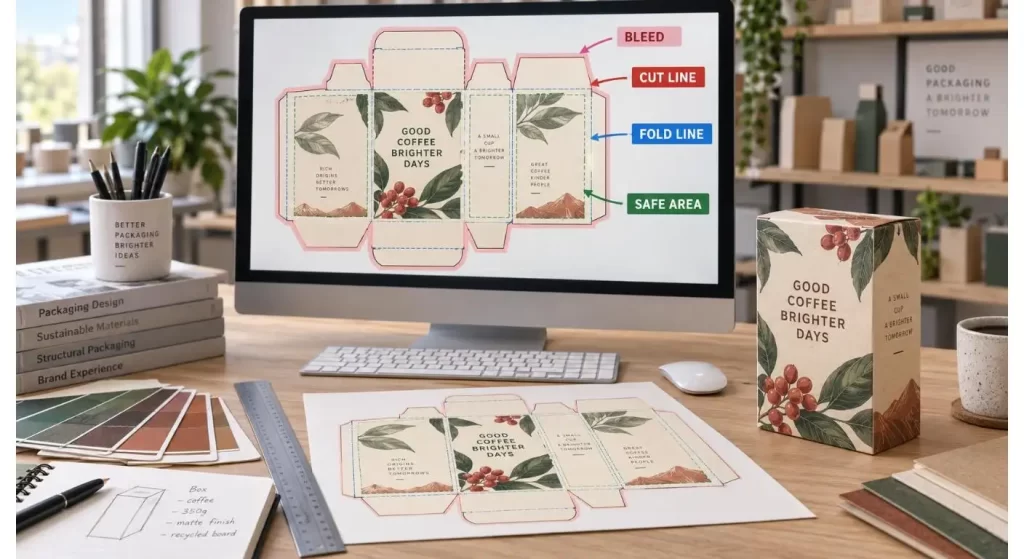
The dieline defines cut lines, folds, glue areas, flaps, and printable panels. Artwork should be created on the approved production dieline rather than on a presentation mockup used only to estimate dimensions.
| Artwork item | Delivery requirement | Final check |
| Dieline | Supplier-approved size and version | Cut and fold layers remain separate |
| Fonts | Outlined or correctly packaged | No missing or replaced fonts |
| Images | High-resolution linked or embedded files | No pixelation at final size |
| Colors | CMYK or specified spot colors | Critical brand colors identified |
| Bleed | Extended beyond cutting line | No exposed paper edge after trimming |
| Barcode and QR code | Vector or high-resolution format | Tested at printed size |
| Special finishes | Separate clearly named layers | Position and coverage confirmed |
Keep essential text, logos, barcodes, and QR codes within the safe area. Extend background colors and images into the bleed area to prevent unintended white edges after trimming.
Artwork must also account for:
- Fold direction
- Panel orientation
- Glue zones
- Window openings
- Locking tabs
- Insert positions
- Finish registration
A three-dimensional rendering is useful for presentation, but it cannot replace an accurate production file.
Which Printing Method Should Be Selected?
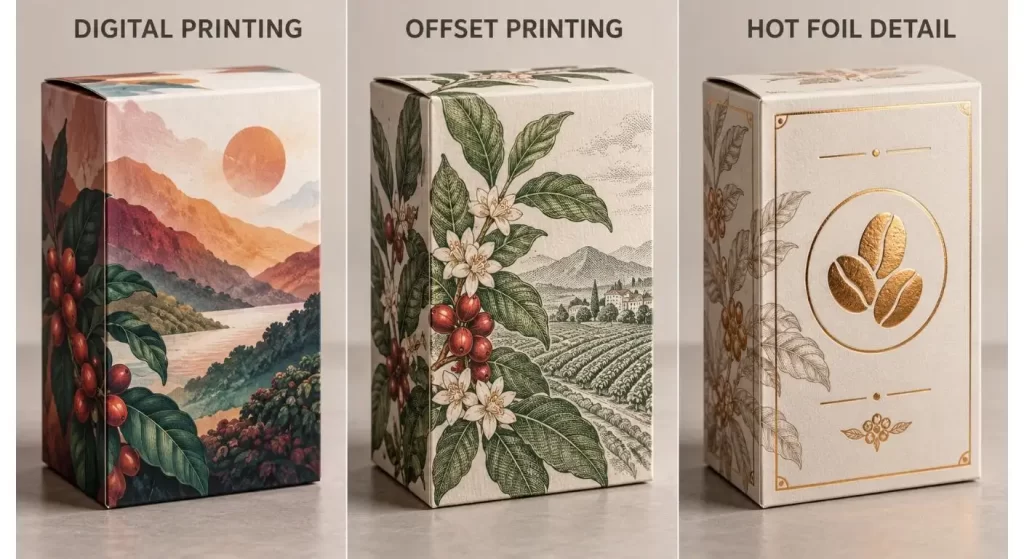
Digital printing is well suited to short runs, seasonal coffee releases, test markets, and product ranges with multiple origins. It allows brands to change artwork without ordering a large quantity of every SKU.
Offset printing is often preferred for paperboard boxes requiring detailed graphics and consistent color in larger production runs. Other printing processes may be recommended depending on the board, design, and order quantity.
The lowest unit price should not be the only selection criterion. Total project cost is influenced by setup charges, order quantity, number of designs, reorder frequency, color requirements, and waste from unused inventory.
How Can Color Consistency Be Controlled?
Screens reproduce color with light, while printed packaging uses ink on a physical surface. Paper color, coating, finish, and ink system can all affect the final result.
Supply accurate artwork color values and identify critical brand colors. When color accuracy is essential, request a printed proof or press sample rather than approving a screen image alone.
Natural kraft board can mute lighter colors. White paperboard can produce brighter graphics, while uncoated paper absorbs ink differently from coated stock. The same artwork may therefore appear significantly different across materials.
Which Finishes Add Meaningful Value?
Matte and gloss lamination change the appearance and improve surface resistance. Spot UV highlights selected areas, while foil stamping, embossing, and debossing create contrast through reflection or texture.
Soft-touch finishes can support premium gift packaging but should be tested for scratching, fingerprints, and consistency. Handles, windows, ribbons, magnets, and specialty closures may improve appearance or functionality while also increasing cost and assembly requirements.
Use finishing techniques to reinforce the design hierarchy. A single embossed logo may create more impact than several competing decorative effects.
YPAK custom printed coffee boxes can be developed with different graphics, structures, and finishes for drip coffee sachets, roasted coffee pouches, retail packs, and gift applications.
How Should Multiple Coffee SKUs Be Managed?
Coffee brands often sell several origins, roasts, flavors, or seasonal variations. Producing a separate box for every SKU can create unnecessary inventory pressure.
A shared master box can be combined with removable labels, cards, sleeves, or printed inserts. This keeps the core brand identity consistent while allowing variable product information to change.
For premium collections, use a reliable common structure and vary selected colors or illustrations. With YPAK horizontal coffee bags, removable cards can communicate origin or promotional information without changing the complete package.
What Should Be Checked During Sampling?
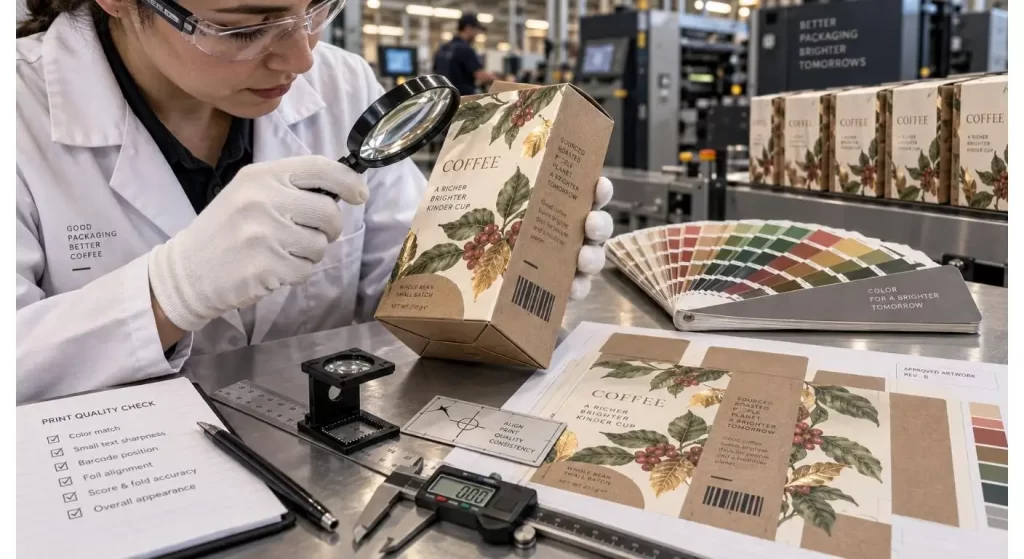
Begin with an unprinted structural sample. Use actual products to check fit, closure, product removal, shelf stability, shipping-carton compatibility, and assembly speed.
Then review a printed proof for:
- Text accuracy
- Color reproduction
- Image resolution
- Barcode readability
- Fold alignment
- Finish position
- Surface scratching
- Visible adhesive
The final sample should match the approved material, structure, artwork, and finish as closely as possible. Record every approved specification so repeat orders can be produced to the same standard.
How Can Production Problems Be Reduced?
Finalize product dimensions and artwork before production begins. Late changes can affect the dieline, insert, barcode, printing plates, cost, and delivery schedule.
Submit one clearly identified final artwork file and one written specification to the supplier. Avoid sending several files with the same name, as an outdated version may accidentally enter production.
During mass production, inspect board thickness, print color, cutting position, folding accuracy, adhesive strength, finish registration, and packing quantity. Retain an approved finished box as a reference for future orders.
Conclusion
Effective custom printed boxes combine accurate product fit, a suitable structure, controlled printing, and a clear brand system. The design must perform at the packing table, in the customer's hands, on the retail shelf, and throughout transportation.
Before requesting a quotation, prepare the product dimensions, filled weight, quantity per box, artwork count, material preference, finish, destination, and delivery target. Coffee brands can explore YPAK's coffee packaging solutions or contact YPAK for dieline development, sampling, printing, and production support.
FAQ
Q1. What information is required for custom printed boxes?
Provide product dimensions, filled weight, quantity per box, box style, artwork, material, finish, order quantity, and destination. A physical product sample improves structural accuracy.
Q2. Is digital printing suitable for coffee boxes?
Yes. It is useful for shorter runs, seasonal releases, and multiple SKUs. The best method still depends on quantity, material, color requirements, and budget.
Q3. Can the supplier develop the dieline?
Yes. The supplier can create the dieline after confirming the product size, box structure, board grade, and insert requirements.
Q4. Why do printed colors differ from colors displayed on a screen?
Screens display RGB light, while printing uses ink on paper. Board color, coating, ink absorption, and surface finish all influence the printed result.
Q5. Should a physical sample be approved before production?
Yes. A physical sample verifies product fit, structure, color, finish, and assembly performance before mass production.
Q6. What Is the Minimum Order Quantity?
The minimum order quantity is 2,000 pieces. Final requirements may vary depending on the packaging size, material, structure, printing method, and customization specifications.
Written by
ypak.coffee
ypak
YPAK PACKAGING GROUP was established in 2011 and formed with 3 companies based on Hongkong, Dongguan and Foshan. We have become one of the largest coffee bag manufacturers in China. We use the best quality WIPF valves from Switzerland to keep your coffee fresh.
Conform to the plastic ban policy imposed to many different countries, we have researched and developed the sustainable packaging bags, such as RECYCLABLE and COMPOSTABLE pouches.
No minimum quantity, no color plates are required with our HP 25K INDIGO DIGITAL PRINTING service.
You are welcome to visit YPAK.