

Compostable Coffee Packaging Shelf Life
What Does Compostable Coffee Packaging Mean?
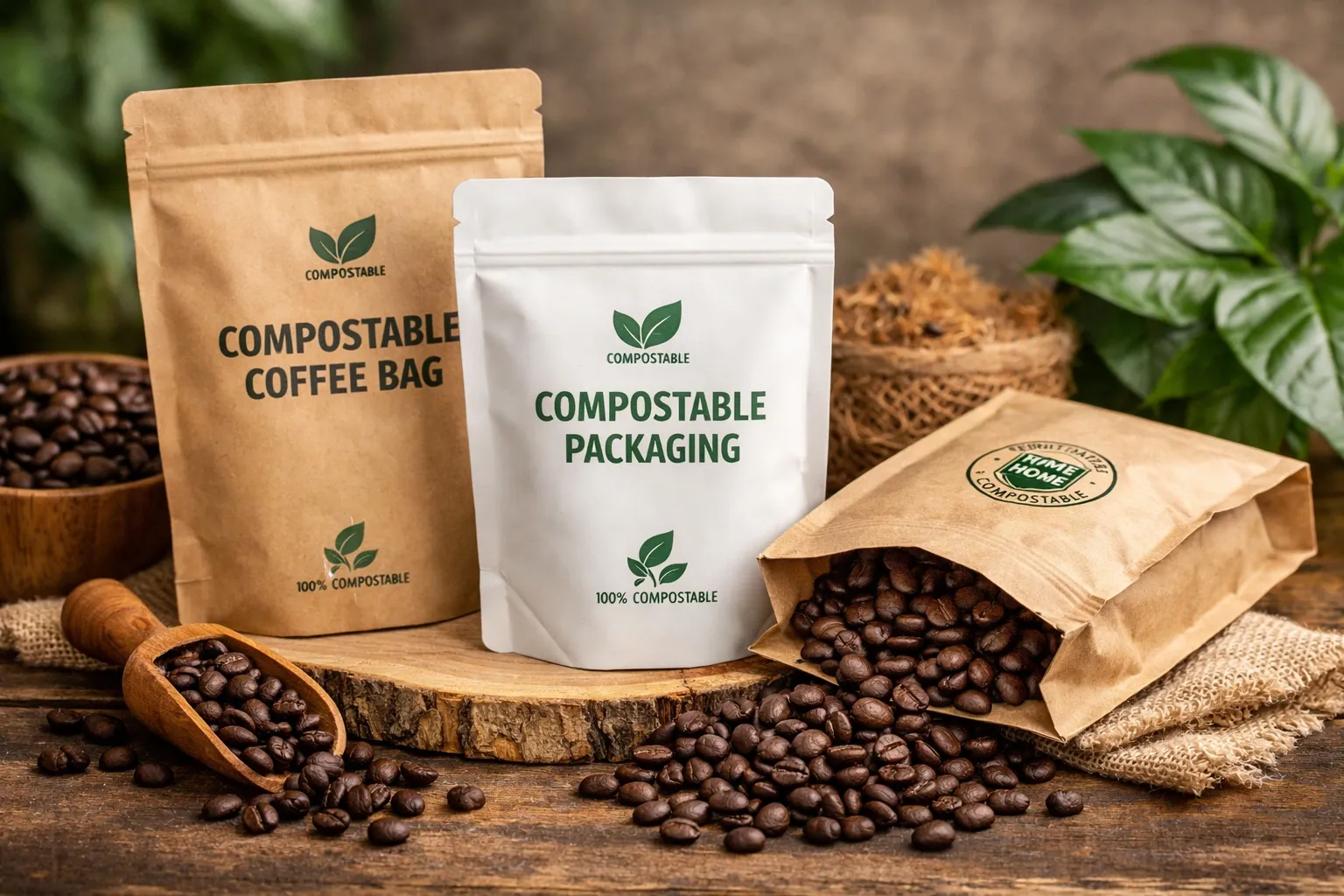
Compostable packaging can be defined as those materials that can be broken down through organic substances in certain conditions like heat, moisture, oxygen and microbial activity to form organic compounds.
In contrast to standard plastic, compostable coffee bags are generally produced out of renewable materials of plant-based sources, such as:
· Corn starch PLA (polylactic acid) bioplastic.
· Sugarcane-based materials
· Unbleached kraft paper
· Additional biodegradable vegetable fibers.
When carefully composted, these resources break down to carbon dioxide, water and nutrient rich organic matter- without leaving detrimental residues in the land.
Achieved: Product Properties:
· Under composting biodegradable.
· Reduced environmental long-term effects.
· Created using renewable and plant-based resources.
· This will help decrease the amount of plastic in landfills.
Compostable packaging is an environmental promise and a marketing opportunity to specialty coffee companies and other businesses focused on sustainability.
What is the meaning of shelf life of com-postable coffee packaging?
A popular myth is that the compostable packaging will begin to break down too soon and spill the inside coffee. Luckily, it is not the way it goes.
✔ Shelf Life does not = Degradation.
To decompose, compostable packaging will only start decaying under certain composting conditions, which include:
· Temperatures above 50°C (122°F)
· The availability of living microorganisms.
· Controlled moisture levels
· Adequate oxygen supply
Compostable coffee bags are stable and fully functional in normal storage conditions (cool and dry and not next to composting systems). They do not automatically deteriorate in warehouses shelves or in retail stores.
Normal Shelf Life of Compostable Coffee Bags.
Compostable coffee packaging usually provides: based on industry testing and manufacturer data.
9-12 Months of the Effective Protection.
The majority of PLA coated compostable coffee bags have a shelf life of around 9-12 months when properly stored.
Most of the oxygen and moisture barrier characteristics resemble the conventional plastic laminates, which enables roasted coffee beans to remain in their natural state of freshness during the planned retail period.
This puts compostable packaging as a viable solution to a majority of specialty coffee brands particularly those that have a relatively low turnover rate of their products.
Major Factors which influence Shelf life.
Even though compostable packaging is designed to withstand environmental forces, there is a range of environmental factors that can affect performance.
1. Temperature Control
The acceleration of high temperatures can be done:
· Material aging
· Coffee oil oxidation
· Aroma loss
The optimal storage temperature is 15 to 25 0 C 59-77 F. Climate-controlled storage is particularly significant in the tropical climate, such as in Indonesia, Vietnam, or Malaysia.
2. Humidity Levels
Water can also cause a deterioration in the performance of the barrier, as well as have adverse impacts on coffee quality.
Relative humidity recommended: less than 60% RH.
3. Light Exposure
Direct sunlights and U.V radiation may hasten oxidation within the bag. It is important to keep cartons out of direct light or windows.
4. Physical Handling
Multi-layer plastic laminates might be somewhat stronger in terms of mechanical strength than compostable materials. Avoid:
· Over-stacking pallets
· Excessive compression
· Sharp object punctures
The logistic of handling will maintain a longer package integrity.
The best way to increase the shelf life of Compostable Coffee Packaging.
As a coffee roaster or brand owner, the following are viable measures to guarantee best performance:
📌 Francoise mentionne 1. Store in cool dry place.
Store and distribute temperature and humidity-exposed products.
📌 Manage Inventory Wisely
Do not over stock packaging materials. Match the production cycles with packaging orders to have use within a 12 months period.
📌 Select Compostable Structures with High Barriers.
Composite structures like:
· Kraft paper exterior
· PLA inner lining can be composted.
· Degassing valves (when certified compostable)
These characteristics enhance oxygen and moisture repulsiveness and sustainability.
📌 Educate Consumers
On packaging, include storage instructions, including:
· Store in a cool, dry place
· Open carefully and put the lid back on.
· Avoid direct sunlight
Education of consumers can be used to increase the freshness of the coffee even after buying.
Composting & Disposal: Some of the Misunderstandings.
One of the most common myths is that compostable packaging can be placed in any trash bin and its disappearance is possible. This is not quite so.
Important Clarifications:
· The majority of compostable packaging needs to be properly disposed of in an industrial composting facility.
· Packaging with the label of Home Compostable is the only label that can be degraded in the backyard compost systems.
· Decomposition may also not be done efficiently in the lack of oxygen in landfill environment.
In products that are serious about sustainability, the coffee brands should consider implementing:
· On-store packaging returning programs.
· Collaborations with regional composting plants.
· Just print instructions on the bag on how to dispose of it.
Such measures enhance the effect on the environment and brand credibility.
Plastic vs. Compostable vs. Recyclable: Which is better?
Comparison Compostable Packaging Recyclable Plastic.
Environmental Impact Lower plastic long-term pollution Recycling infrastructure dependent.
Shelf Life ~9–12 months 2–3+ years
Brand Image High sustainability image Broadly accepted, not as green.
Disposal Requirements Composting plant required Recycling system required.
It does not have a single best choice. The right choice depends on:
· Brand positioning
· Local waste infrastructure
· Distribution timelines
· Sustainability goals
In the case of specialty and high end coffee brands, compostable bags would probably be more aligned with environmentally conscious people.
The Future of Coffee Packaging Compostable.
Since the world regulates the management of plastic waste more and more, and society is becoming more and more conscious of the environmental friendliness of the goods and services they use, compostable coffee packaging is not a fad, but a new shift in the industry.
Compostable coffee bags can:
· Secure the quality of coffee.
· Sustainable branding.
· Lessen the impact on the environment.
· Make your brand stand out in the competitive markets.
In the case of coffee companies in Indonesia, Southeast Asia and the global markets, the move towards compostable packaging can reinforce sustainability efforts and marketability.
In case you need assistance choosing the appropriate compostable coffee packaging strategy, optimizing barrier activity, or to consider the customized sustainable packaging solutions to your brand, do not hesitate to contact.

Written by
ypak.coffee
ypak
YPAK PACKAGING GROUP was established in 2011 and formed with 3 companies based on Hongkong, Dongguan and Foshan. We have become one of the largest coffee bag manufacturers in China. We use the best quality WIPF valves from Switzerland to keep your coffee fresh.
Conform to the plastic ban policy imposed to many different countries, we have researched and developed the sustainable packaging bags, such as RECYCLABLE and COMPOSTABLE pouches.
No minimum quantity, no color plates are required with our HP 25K INDIGO DIGITAL PRINTING service.
You are welcome to visit YPAK.
Related Articles
Two Gates on the Road to the EU: Reduction by Design and the Documentation Chain for Coffee Packaging

Recyclable Coffee Bags: How to Protect Freshness Without Compromising Sustainability

Your Brand, Perfectly Packaged: The YPAK Guide to Selecting a High-Quality Custom Coffee Bag