

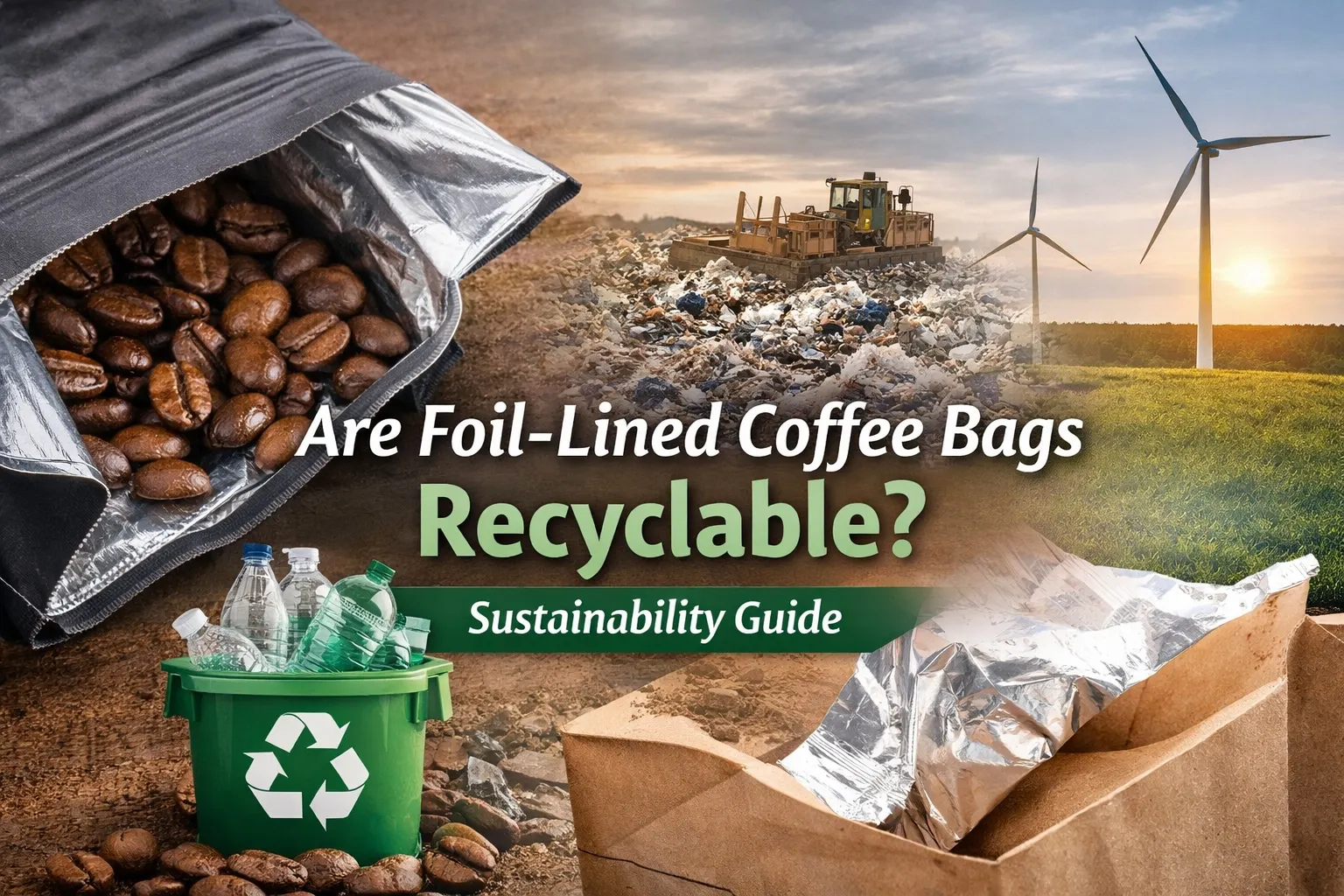
Are Foil-Lined Coffee Bags Recyclable?
As the coffee business continues to grow globally, sustainability has become a major issue to the coffee brands and the coffee consumers. One of the most popular questions in coffee packing at the current time is the following: Are coffee bags with foil linings recyclable?
They are highly popular coffee bags containing foils because they preserve the freshness. Their recyclability is however not well comprehended. In this guide, we will touch upon how foil-lined coffee bags are made, whether they can be recycled, how it affects the environment, and other alternatives to coffee brands and roasters that can be considered as sustainable.
What are Foil-Lined Coffee Bags?
Foil-lined coffee bags are multi-layered packaging materials which have a thin layer of aluminum foil in the bag. This aluminum coating offers better protection against barrier to:
· Oxygen
· Moisture
· Light (UV rays)
· External contaminants
Oxygen and humidity are devastating factors on coffee so aluminum foil is used to increase the shelf life and maintain aroma and flavor. That is why the foil-lined packaging is a preferred choice among many specialty coffee roasters.
Common Foil-lined Coffee bags Construction.
The foil coffee packages are made up of many layers:
1. Outer layer- Branding paper or printable plastic film.
2. Middle layer- barrier protection- Aluminum foil.
3. Inner layer- Plastic covering sealing layer to make it durable and safe to food.
This laminated multi-layer system provides good performance, however, it also poses a great recycling difficulty.
Are Coffee Bags with Foil Linings Recyclable?
Secret Ballot: Normally No (in Standard Recycling Systems)
Foil-lined coffee bags are not fabricated out of one material, although aluminum is extremely recyclable. They make a mixture of aluminum and plastic films, adhesives, inks, and, in certain cases, paper.
The fact is that the vast majority of curbside recycling programs have been established globally, such as in the United States, Europe, Australia, and most Asian countries do not accept multi-layer laminated packaging since the material cannot be separated easily in the regular recycling programs.
When put in ordinary recycling containers, foil-lined bags can:
· Pollute other materials that are recyclable.
· Be discarded and taken to garbage dump.
· Sabotage automatic recycling machines.
Household recycling programs can thus not recycle foil-lined coffee bags in most regions.
The Question of why it is so hard to recycle Foil Coffee Bags?
The problem is primarily the separation of materials.
The recycling plants are usually meant to recycle:
· Single material plastics (such as PET or HDPE)
· Paper and cardboard
· Metal cans
Foil-lined coffee bags are however produced using bonded composite layers. The process of separation of aluminum foil and plastic films involves industrial technology that is not common.
Although this process is technically feasible in high-tech recycling centers, it is:
· Energy-intensive
· Expensive
· Not yet widely implemented
Consequently, a majority of foil covered coffee bags are discarded in the landfill or burnt.
Foil-lined Coffee Bags Environmental Impact.
To make sustainable decisions regarding coffee packaging, it is necessary to understand the environmental effects of coffee packaging.
1. Landfill Waste
Laminated coffee bags require decades to decompose when thrown away as general waste. The materials are fused together hence they do not biodegrade naturally.
Organic coffee residue could also be left in landfills and break down to emit methane or a greenhouse gas that is much stronger than carbon dioxide.
2. Resource Waste
The aluminum is an important and infinitely recyclable material. Nevertheless, in the case of bonding with plastic and not recovered properly, this resource cannot become part of the circular economy.
This is a lost chance of green material reuse.
3. Carbon Footprint
The manufacture of multi-layer packing includes:
· Processing and mining of aluminum.
· Plastic film manufacturing.
· Transportation and laminating of materials.
Failure to recycle these materials means that the entire cost of environmental cost is paid in full without being recovered.
What is the Reason Coffee Brands Still Use Foil-Lined Bags?
Nevertheless, in spite of all the difficulties in recycling foil-lined coffee bags, they are still popular due to a number of reasons:
Exceptional Freshness Assurance.
Aluminum offers one of the best oxygen and moisture vapor barriers. In the case of specialty coffee roasters, preservation of the integrity of flavor is imperative.
Extended Shelf Life
Foil packaging is used to preserve coffee quality in the following:
· International shipping
· Long storage periods
· Retail display
Lightweight and Food-Safe
The aluminum foil is lightweight, corrosion resistant and food contact approved.
Strong Branding Potential
The external printable coating supports:
· Custom printing of high quality.
· Matte or glossy finishes
· High quality visual presentation.
The foil-lined packaging is appealing to many brands that strike a balance between marketing performance and protection of the product.
Eco-Friendly alternatives to Foil-lined coffee bags.
Since sustainability is a competitive benefit in the coffee industry, the emergence of sustainable packaging is being considered by numerous brands.
1. Mono Coffee Bags Recyclable Materials.
Mono- material packaging involves the use of one material of plastic (LDPE or PE) all over the bag. Due to the homogeneous structure, the material becomes easier to recycle in the recycling systems that receive soft plastics.
Benefits include:
· Improved recyclability
· Store drop-off recycling (in certain countries) compatibility.
· Reduced contamination risk
2. Compostable Coffee Bags
Other manufacturers have industrial compostable coffee packaging with plant-based material, including PLA or other bio-polymers.
It should be mentioned, though:
· Commercial composting facilities are needed on most compostable bags.
· They do not compost well in domestic heaps.
The brands ought to make clear instructions on how to dispose of different products.
3. High-Barrier Films without Aluminum that can be recycled.
Now the high oxygen barriers with no use of aluminum foil are achieved with the help of new technologies. These new movies enhance recyclability and still remain fresh.
This innovation is gaining popularity in areas that have good recycling facilities.
4. Brand Take-Back Programs
Certain coffee corporations have introduced packaging recycle schemes, which enable the client to mail used coffee packets to customized recycling.
This is an unproven strategy, but it helps achieve circular economy objectives.
The way Consumers can make sustainable decisions.
Customers are also important in minimizing packaging waste. Some of these steps are practical as follows:
· Label on packaging the checks as recycled.
· Ask the local recycling officials on whether laminated bags are accepted.
· If coffee brands have recyclable or compostable packaging, buy that one.
· Reduced waste by getting bigger bag sizes where feasible.
Informed decisions are able to contribute to change in the industry.
The Future of Sustainable Coffee Packaging.
The coffee market in the world is changing towards environmental-friendly solutions. Governments, consumers and retailers are more demanding recyclable or compostable packaging.
Sustainable packaging has become a brand differentiator and not an option because coffee brands have to survive in competitive markets like North America, Europe, Southeast Asia and Australia.
Foil-lined coffee bags are very good in terms of product protection although they can be recycled only to a small extent posing a major environmental problem. The future lies in:
· Recyclable designs made of one material.
· Aluminum-free high-barrier films.
· Compostable innovations
· Better recycling facilities.
Investing in sustainable coffee packaging solutions means the brands can decrease environmental effects to preserve the quality of coffee and customers' trust.
Final Thoughts
Hence, are foil-lined coffee bags recyclable?
In most of the cases, not through normal recycling systems of the house. The structure is multi-layered, and it makes them difficult to process.
Alternatives of sustainability are however coming up very swiftly. A more sustainable coffee industry can be formed by both coffee companies and consumers knowing the materials of the packaging and strengthening an environmentally friendly innovation.
You should be a coffee roaster, distributor, and packaging buyer and remember that to find the solution of sustainable coffee packaging, you should think about the implementation of the method of recyclable mono-material and compostable to meet the demands of the environment today.

Written by
ypak.coffee
ypak
YPAK PACKAGING GROUP was established in 2011 and formed with 3 companies based on Hongkong, Dongguan and Foshan. We have become one of the largest coffee bag manufacturers in China. We use the best quality WIPF valves from Switzerland to keep your coffee fresh.
Conform to the plastic ban policy imposed to many different countries, we have researched and developed the sustainable packaging bags, such as RECYCLABLE and COMPOSTABLE pouches.
No minimum quantity, no color plates are required with our HP 25K INDIGO DIGITAL PRINTING service.
You are welcome to visit YPAK.
Related Articles
Two Gates on the Road to the EU: Reduction by Design and the Documentation Chain for Coffee Packaging

Recyclable Coffee Bags: How to Protect Freshness Without Compromising Sustainability

Your Brand, Perfectly Packaged: The YPAK Guide to Selecting a High-Quality Custom Coffee Bag