

Updated 2 hours ago
How to Choose Coffee Paper Cup Sizes for Your Menu

ypak.coffee
YPAK PACKAGING GROUP was established in 2011 and formed with 3 companies based on Hongkong, Dongguan and Foshan. We have become one of the largest coffee bag manufacturers in China. We use the best quality WIPF valves from Switzerland to keep your coffee fresh.
Conform to the plastic ban policy imposed to many different countries, we have researched and developed the sustainable packaging bags, such as RECYCLABLE and COMPOSTABLE pouches.
No minimum quantity, no color plates are required with our HP 25K INDIGO DIGITAL PRINTING service.
You are welcome to visit YPAK.

coffee paper cup sizes
Coffee paper cup sizes affect much more than beverage volume. Cup size influences recipe consistency, the ratio of milk to espresso, lid purchasing, storage requirements, takeaway speed, menu pricing, and customer expectations.
Café owners, coffee chains, roasters, caterers, and beverage-service buyers do not need to stock every available size. The goal is to create a compact cup system that covers the menu efficiently without unnecessary inventory.
Standard sizes such as 4 oz, 8 oz, 12 oz, and 16 oz are useful starting points. However, actual dimensions, brim capacity, usable capacity, and rim diameter vary among manufacturers. Always check the supplier's specifications and test each cup with its intended beverage.
What Do Coffee Cup Ounce Sizes Mean?
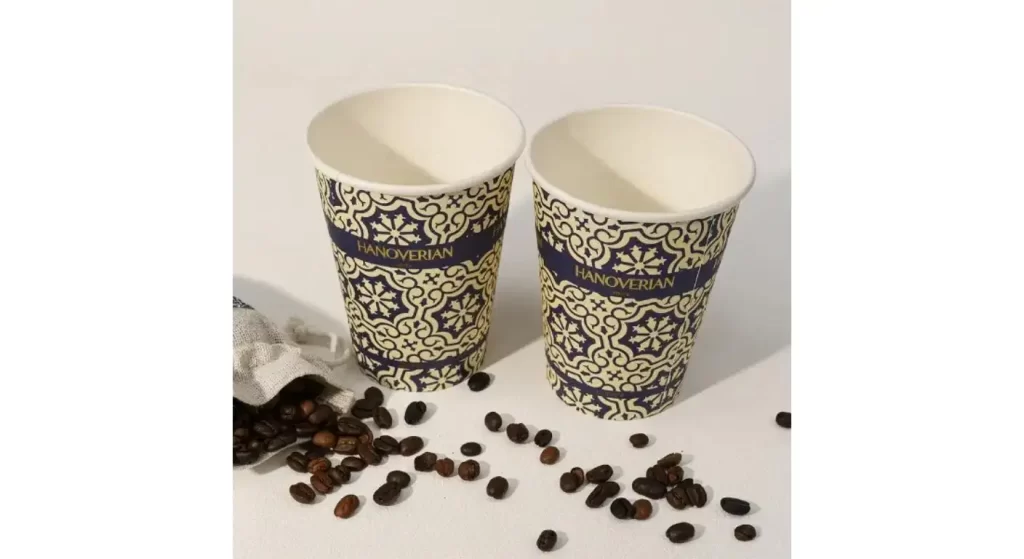
The ounce rating refers to the approximate liquid capacity of the cup. One US fluid ounce equals approximately 29.6 mL, but the nominal ounce size should not be treated as the exact beverage serving volume.
Filling a cup to the brim leaves insufficient space for a lid, foam, cream, toppings, or movement during takeaway service. Usable café capacity is therefore normally lower than nominal brim capacity.
Ask the supplier whether the stated volume is brim capacity or recommended serving capacity. Confirm the top diameter, bottom diameter, height, and compatible lid code rather than relying only on the ounce marking.
When Should You Use a 4 oz Coffee Cup?
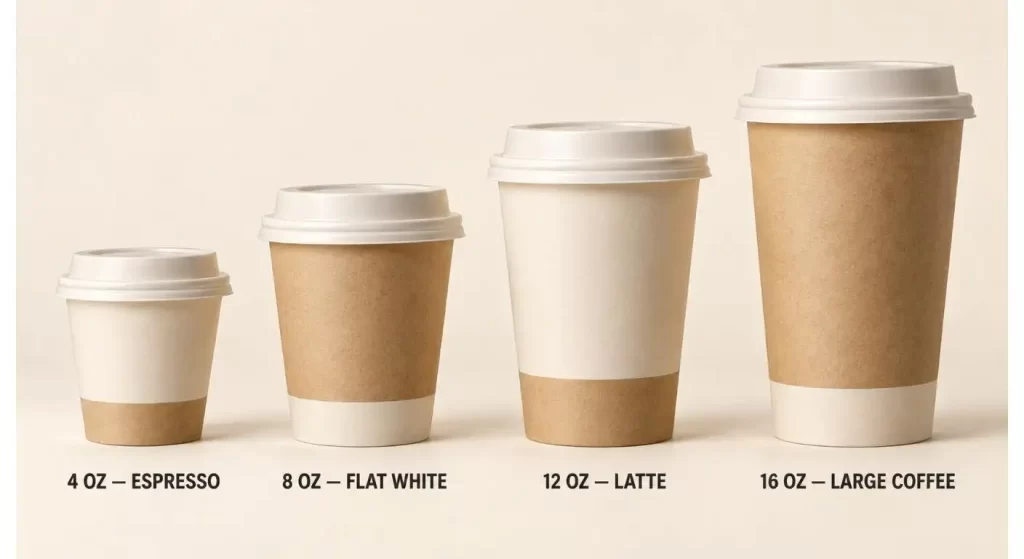
A 4 oz cup is suitable for espresso-based tastings, cortados, macchiatos, sample pours, and small event servings. It can also support cupping demonstrations and promotional coffee sampling.
This size helps control portions and reduce waste during tasting sessions, but it is too small for customers expecting a conventional takeaway coffee.
Check whether compatible sip lids are available, as the rim diameter may be smaller than that of larger cups. Do not assume that a lid designed for an 8 oz cup will fit.
When Should You Choose an 8 oz Cup?
An 8 oz paper cup works well for flat whites, small filter coffees, cappuccinos, hot chocolate, and short lattes. It provides enough space for milk-based recipes without overwhelming the espresso flavor.
It is a popular small size in specialty cafés because it supports a more controlled coffee-to-milk ratio. It is also easier to hold and carry than a larger cup.
YPAK custom paper cups are available in common 4 oz, 8 oz, 12 oz, and 16 oz formats, with single-wall or double-wall constructions and optional lids.
Why Is 12 oz a Common Takeaway Size?
A 12 oz cup is commonly used for medium lattes, Americanos, mochas, filter coffee, and tea. It provides a practical balance of beverage volume, handling, and printable branding area.
For many cafés, 12 oz is the main takeaway size because it can support several popular menu items. Using one core cup size can simplify staff training and inventory planning.
Recipe testing remains essential. Moving from an 8 oz to a 12 oz beverage without adjusting espresso, milk, syrup, or other ingredients can change flavor balance and cost per serving.
Will a 16 oz Cup Work for Every Café?
A 16 oz cup is suitable for large takeaway coffees, paper-cup iced drinks, long Americanos, flavored lattes, and beverages with whipped toppings.
It provides more printable space and meets demand for larger drinks, but it also increases ingredient use, storage requirements, and recipe cost.
A large cup containing a hot beverage must remain comfortable to hold. Consider a double-wall construction or an additional sleeve, especially when customers are likely to carry the drink for an extended period.
Single-Wall vs. Double-Wall Cups
A single-wall cup has one primary paperboard wall. It is lightweight and cost-effective but may require a sleeve for hot beverages.
A double-wall cup adds an outer paper layer for improved insulation and handling comfort. It may eliminate the need for a separate sleeve in some applications, but it uses more material and requires additional storage space.
The right construction depends on beverage temperature, handling time, budget, brand positioning, and disposal goals. YPAK offers disposable hot beverage cups in single-wall and double-wall formats across popular sizes.
Why Does Lid Diameter Matter?
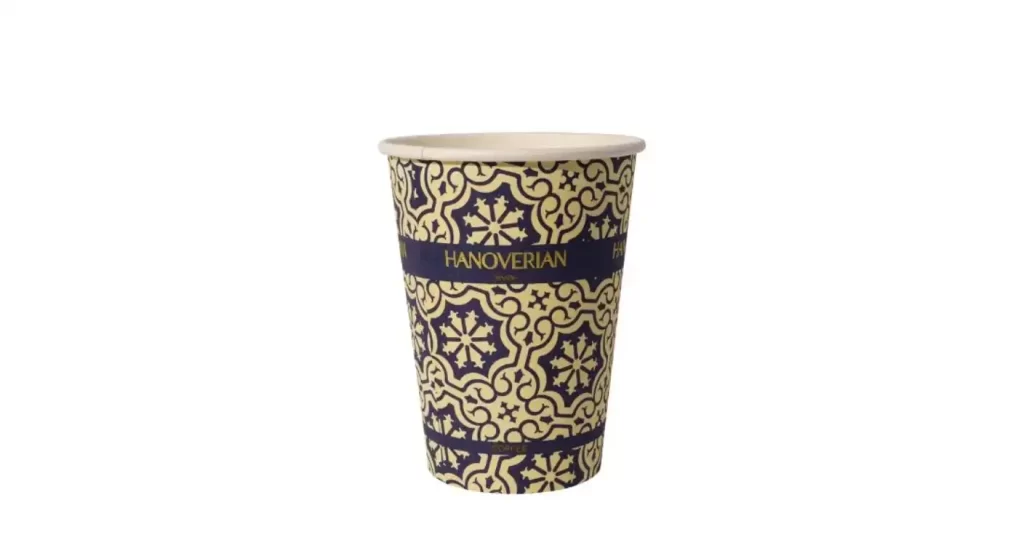
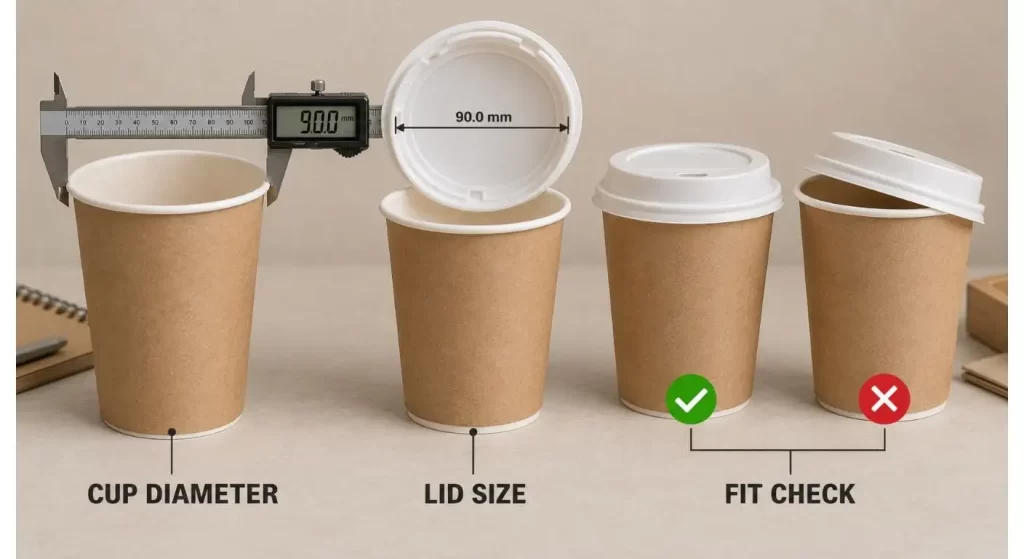
Two cups labeled 12 oz can have different rim diameters, so their lids may not be interchangeable.
Multiple rim sizes require staff to distinguish between more lid types and force cafés to stock additional inventory. A cup range that shares one lid diameter across several sizes can simplify ordering and reduce service errors.
Before ordering, test lids on filled cups. Check snap fit, rim engagement, drinking opening, leakage during movement, and resistance to accidental removal.
How Many Cup Sizes Does a Café Need?
A focused menu can often operate with two or three hot-cup sizes. For example, a café might use 4 oz for tastings, 8 oz for small milk drinks, and 12 oz for the main takeaway menu.
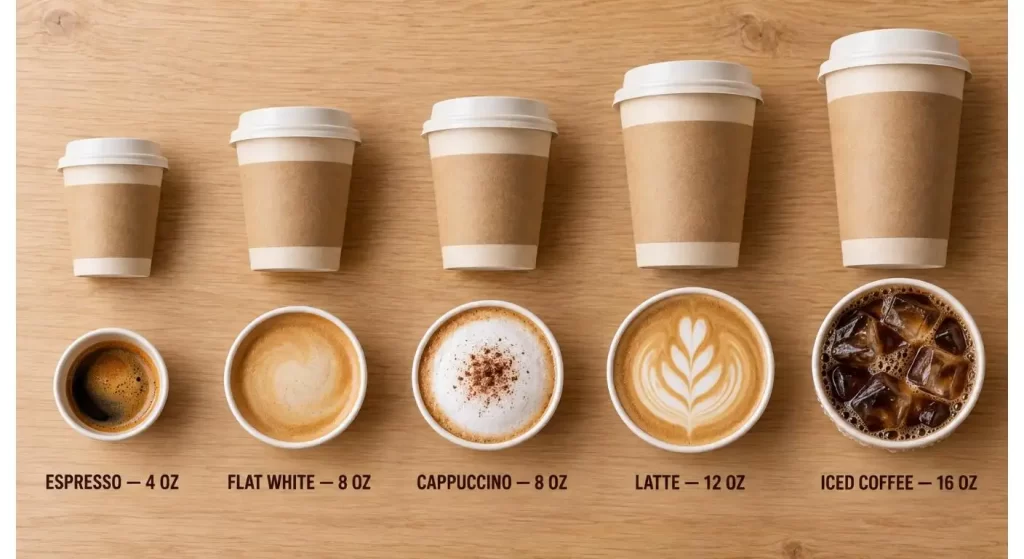
A business with strong demand for large flavored beverages may add 16 oz. A coffee cart with limited storage might standardize on only 8 oz and 12 oz.
Use actual sales data rather than copying another café's system. Too many cup sizes increase storage requirements, lid variations, staff errors, and slow-moving inventory.
| Menu drink | Planned serving size | Cup size to test | Lid required | Sleeve required |
| Espresso tasting | ||||
| Cortado or macchiato | ||||
| Flat white or cappuccino | ||||
| Latte or Americano | ||||
| Large flavored drink | ||||
| Filter coffee or tea |
How Should Cup Artwork Change Across Sizes?
Do not simply scale the same logo and artwork proportionally across every cup. A design that works on a 16 oz cup may appear cramped or illegible on a 4 oz cup.
Develop size-appropriate artwork within one visual system. Keep essential text away from the bottom taper, side seam, and rolled rim, and confirm that the smallest text remains readable on the smallest cup.
YPAK's UV matte paper cups demonstrate how selective printing effects can highlight a logo without overcrowding the overall cup design.
What Should Be Tested Before a Wholesale Order?
Request samples of every size you plan to use and test them with the intended drinks, lids, sleeves, cup holders, dispensers, and takeaway trays.
Check:
- Brim capacity and usable capacity
- Recipe volume
- Lid fit and leakage
- Rim comfort
- Side-seam and bottom-seal integrity
- Heat handling
- Cup stability
- Stacking and dispenser fit
- Artwork position
For more information on common sizes, materials, coatings, insulation, and printing options, consult YPAK's coffee paper cup selection guide.
Conclusion
The best coffee paper cup sizes support consistent recipes, fast service, comfortable handling, and efficient inventory. Cup selection should begin with the menu and operating process rather than appearance alone.
Before ordering, confirm usable capacity, cup dimensions, wall construction, lid compatibility, printable area, and carton quantity. Cafés and beverage brands can contact YPAK for cup specifications, custom printing, lids, samples, and wholesale requirements.
FAQ
Q1. What are the most common coffee paper cup sizes?
Common sizes include 4 oz, 8 oz, 12 oz, and 16 oz. Exact capacity and dimensions vary by manufacturer.
Q2. Which cup size is best for a latte?
An 8 oz cup suits a smaller drink with a stronger coffee-to-milk ratio, while 12 oz is common for a medium takeaway latte. The correct size depends on the café's recipe.
Q3. Does the stated cup size equal the serving capacity?
Not always. The stated size may represent brim capacity, while the usable serving volume must leave space for the lid, foam, toppings, and safe carrying.
Q4. Do 8 oz and 12 oz cups use the same lids?
Sometimes, but not always. Confirm the rim diameter and supplier lid code before ordering.
Q5. How many cup sizes should a new café stock?
Two or three sizes are often sufficient for a focused menu. Base the final selection on beverage sales, recipes, service method, and available storage.
Q6. What Is the Minimum Order Quantity?
The minimum order quantity is 5000 pieces. Final requirements may vary depending on the packaging size, material, structure, printing method, and customization specifications.
Written by
ypak.coffee
ypak
YPAK PACKAGING GROUP was established in 2011 and formed with 3 companies based on Hongkong, Dongguan and Foshan. We have become one of the largest coffee bag manufacturers in China. We use the best quality WIPF valves from Switzerland to keep your coffee fresh.
Conform to the plastic ban policy imposed to many different countries, we have researched and developed the sustainable packaging bags, such as RECYCLABLE and COMPOSTABLE pouches.
No minimum quantity, no color plates are required with our HP 25K INDIGO DIGITAL PRINTING service.
You are welcome to visit YPAK.