

Updated 3 months ago
Coffee Cardboard Box: Diagnose Strength Pre-Production.

ypak.coffee
YPAK PACKAGING GROUP was established in 2011 and formed with 3 companies based on Hongkong, Dongguan and Foshan. We have become one of the largest coffee bag manufacturers in China. We use the best quality WIPF valves from Switzerland to keep your coffee fresh.
Conform to the plastic ban policy imposed to many different countries, we have researched and developed the sustainable packaging bags, such as RECYCLABLE and COMPOSTABLE pouches.
No minimum quantity, no color plates are required with our HP 25K INDIGO DIGITAL PRINTING service.
You are welcome to visit YPAK.
coffee cardboard box
A coffee cardboard box is simple to enhance as soon as the buyer ceases to consider strength as a material adjective. Thick, premium, and heavy duty tell nothing about what occurs when an already filled pack should be stacked, carried, rubbed, dropped or opened. An effective specification starts with the failure that should not find its way to the customer.This method of diagnosis is appropriate in specialty coffee projects since the box usually encloses a nearly airtight package, drip sachets or a collection of gift. The inner package takes care of freshness, the cardboard structure takes care of the information, structure, and the contents, and is able to withstand the selected route.
Find an Opening Photograph of a Failure.
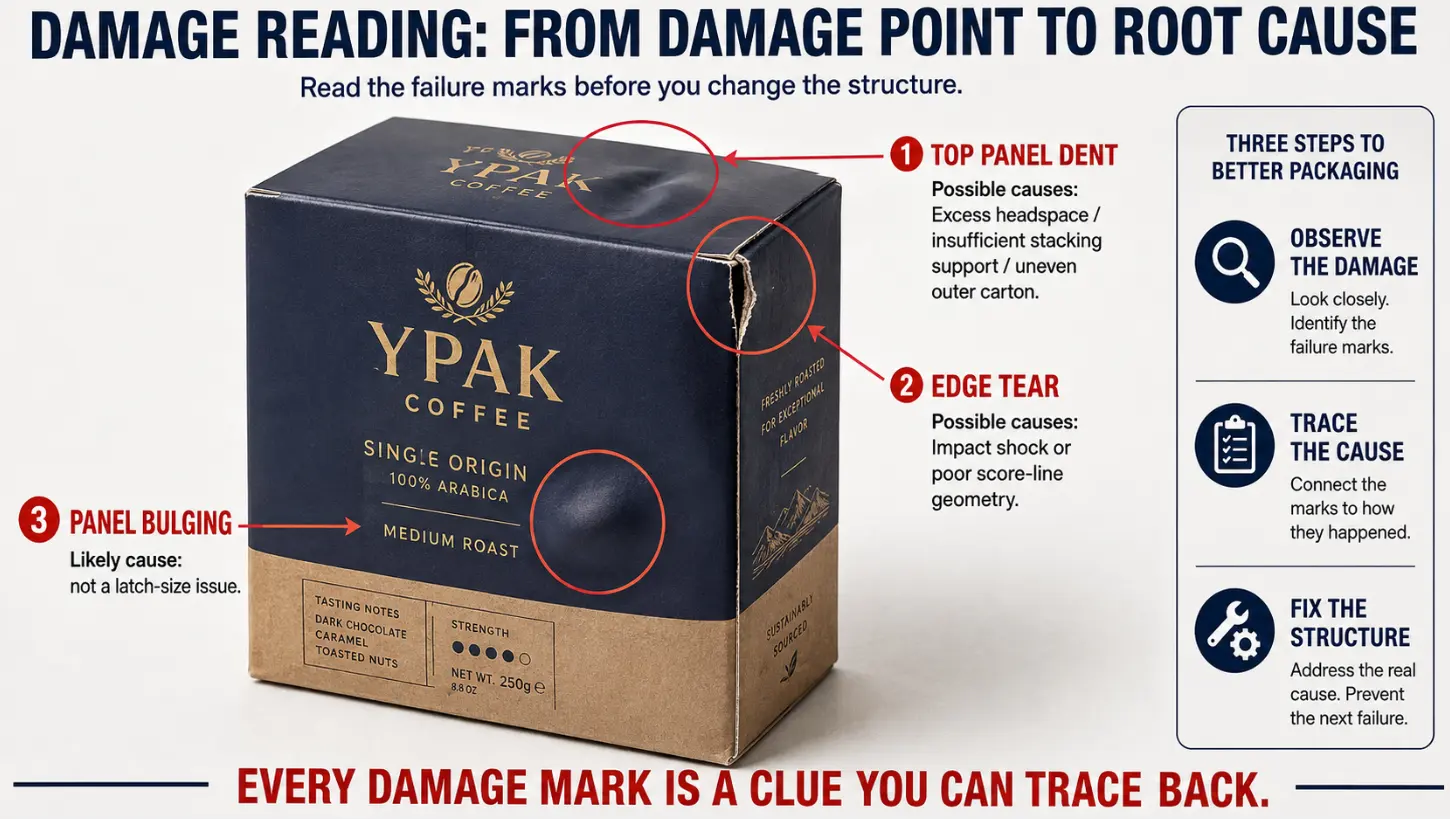
Prior to asking a new pack, gather evidence on the one at hand. Take a photo of the damaged item prior to removing its contents and capture the location of its discovery.
Read Damage Location.
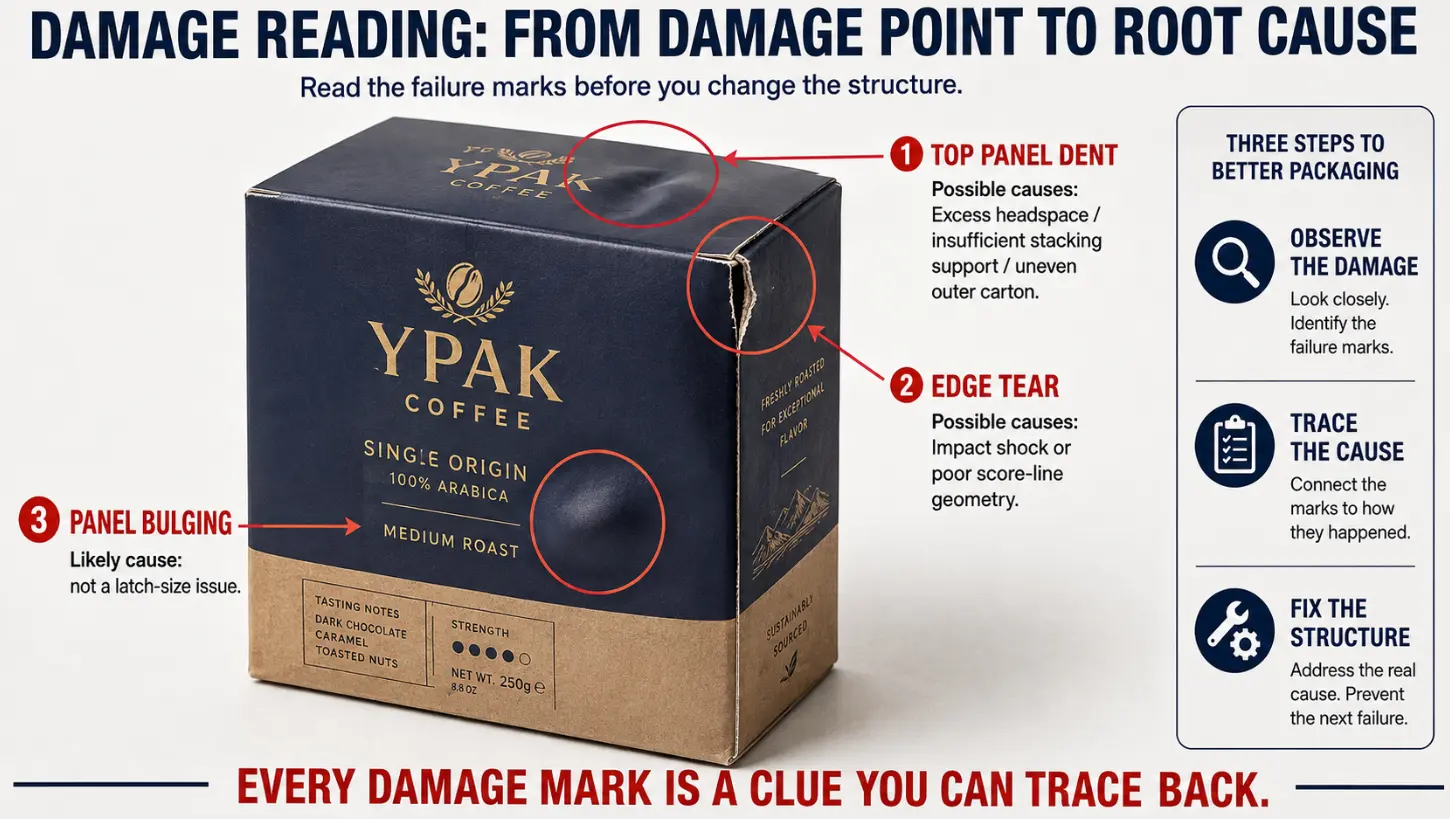
The top panel crushed can mean that the headspace is too large, the stacking support is too weak or the master case is not even. The edge of a tear implies an impact or bad score geometry. There can be a point on the panel bowing, not an undersized tab.
Single Cosmetic and Functional Failure.
Small rubbing can be tolerated on a carton of transportation but not on a high end gift box. Lack of functionality can be converted into a functional failure when it concerns the containment, opening, position of the product, barcode usage, or the sealed coffee package.
Track the Box along the Actual Path.
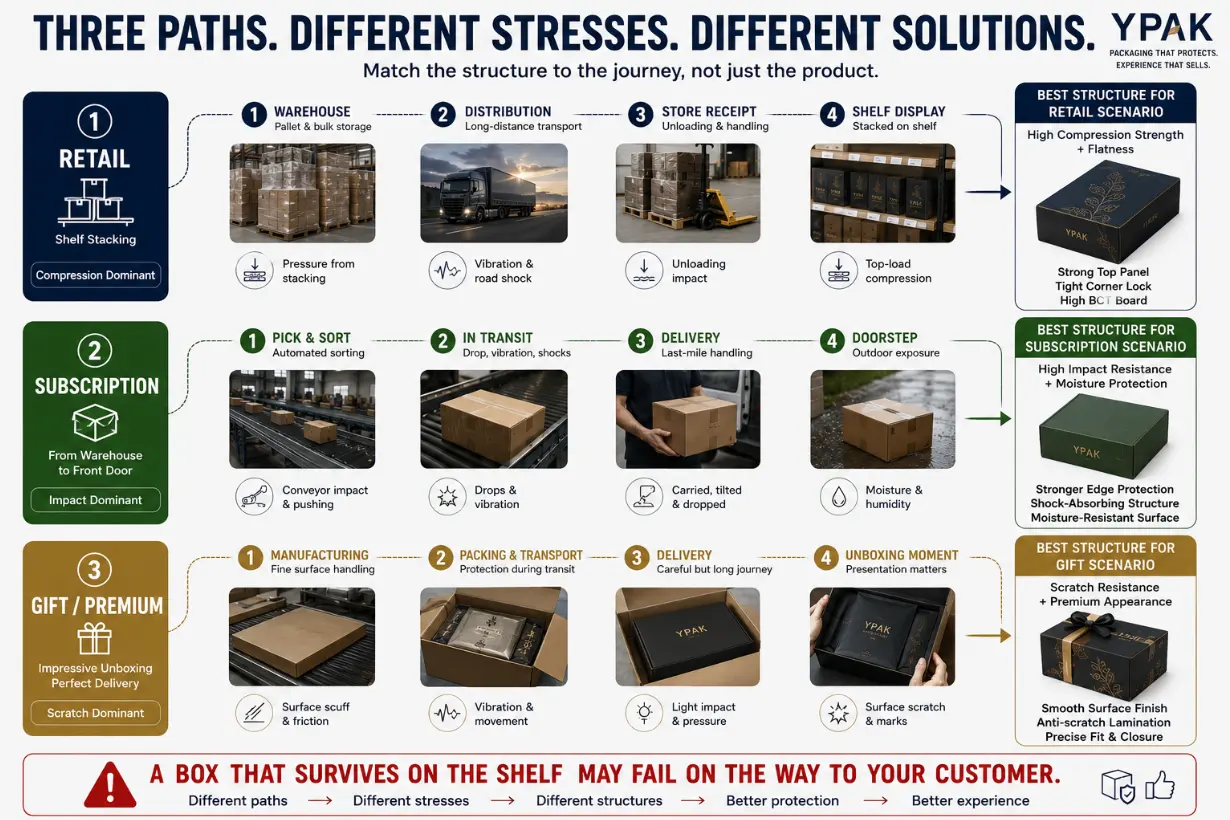
A box which works on a coffee shelf would flunk on parcel delivery. Retail unit with a case headquartered is largely stacked and shelved. A subscription pack comes in contact with drops, vibration, shipping tags and adjusting humidity. Gift format can come in pristine, but unsatisfactorily since the merchandise is not in place any longer.
Test the sample mixed in a bag with the packed sample. At each transfer, inquire about what the load is supported on and what can move, which will be the rubbing surface and who the next recipient of the package is. This observation identifies the use of a folding carton, corrugated mailer, wrapped rigid format, or a blend of several to use in the project.
Learn the meaning of cardboard.
Cardboard is a business generic handout. The proposed construction should be named in a quotation to ensure that the suppliers are dealing with the same object.
Folding Paperboard
This form is printed, die-cut, creased, glued and typically supplied in the flat form. It is efficient in storage and befits most retail packs yet performance is affected by the grain direction, panel size, and locks as well as proper forming.
Corrugated Construction
The line of separation between liners consists of a fluted medium. Flute profile and paper combination will determine rigidity, cushioning, edge behavior, and print appearance. The last mailer should be evaluated as a packed, rather than a loose board, sample.
Wrapped Rigid Board
A thick centre is blanketed with printing or pretty paper. The format has the ability of yielding a good presentation, but preassembled volume adds freight and storage. Corners, wrap alignment, adhesive and squareness must each have their acceptance checks.
Draft a Load Map.
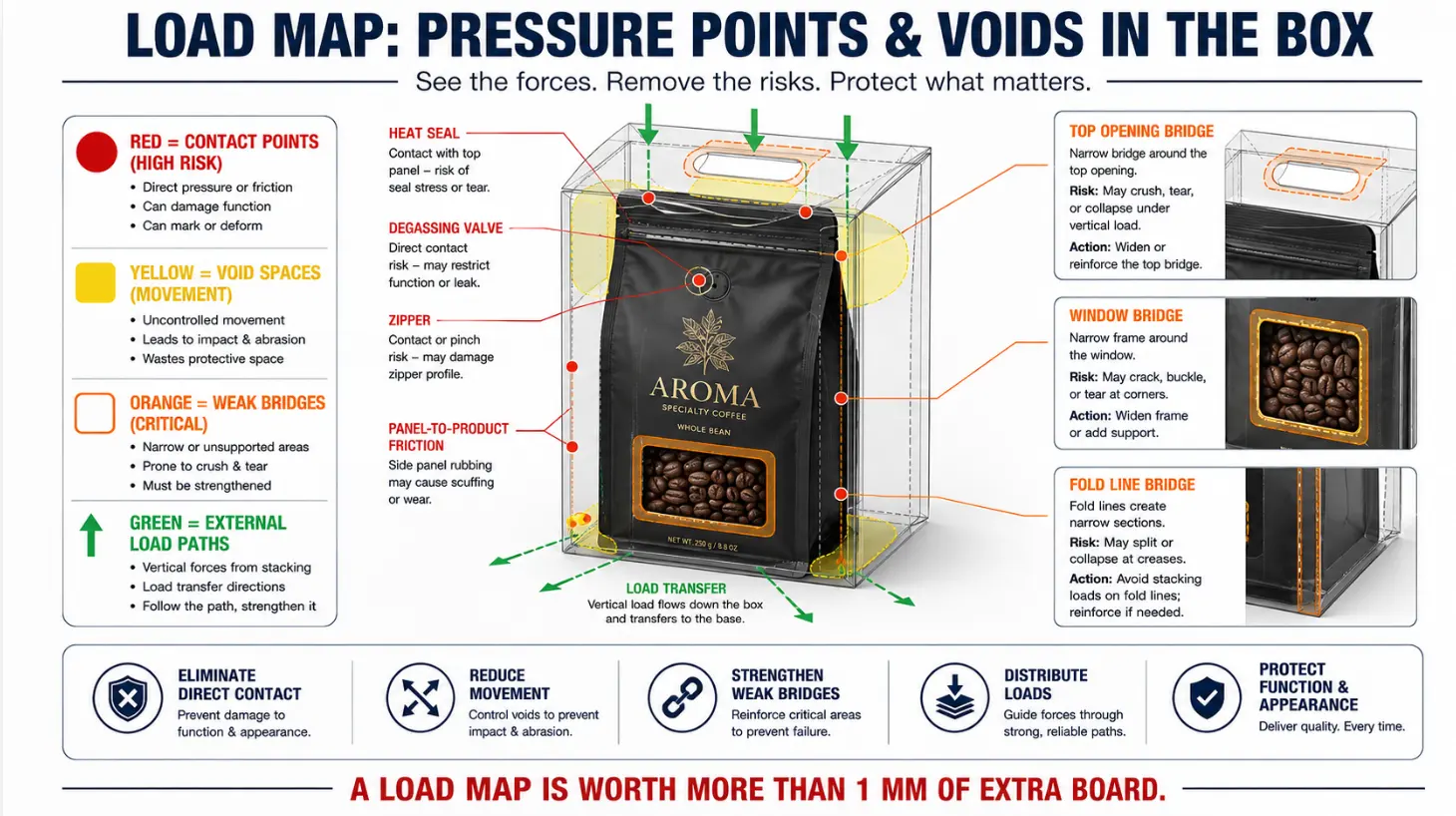
Insert the actual contents into some transparent mock-up or unprinted sample and check on all the contact points.
- Indicate the location where pouch seals, valves, zippers or sachet edges come into contact with a panel.
- Mark empty spaces that enable goods to be accelerated in movement.
- Find slender bridges of board about openings and windows.
- Indicate where vertical load in the master case is placed.
- Note weight filled and practical dimensional variation.
It is common to find that an insert or revised orientation, or reduced clearance, is more valuable than merely adding more board thickness, as seen in the load map.
Explore the Fold.
Even a sheet which is flat might appear perfect but the formed corner breaks or opens up. The junction is thus a testimony of material, tool, water, along with assemblage collaborating.
Simultaneously Compare Multiple Formed Samples.
sample an open or reform sample of the various positions in the batch. Examine the whitening, surface fracture, delamination, uneven scores, flaps memory and shrub assembly force. It is better to have repeated variation than a single sample of the presentation.
Challenge the Closure
Load the box, and impose the movement desired. Note tuck tabs, bottoms that are locked on, glued seams, tear strips, and labels on behalf of tampering. A closure that functions when empty can spring upon the bowing side panels.
Allow the Sample to get Approval.
Examination must be more and more lifelike. Any sample only has one job and must not be promoted just because it appears to be complete.
Start With an Undecorated Structure.
Prepare form and close a number of blank samples. Get stuck once folds break, locks start acting erratically or put up for assembly is relying on hand adjustments. These are structural problems; they will not be solved by artwork.
add the Real Contents.
Insert load representative pouches, sachets, inserts and accessories. Find dangerous pressure on valves or seals, excessive movement, unsteady standing and slow packing. Get the version of the configuration that passed.
Dress up the Decorated Pack.
Printing and finishing must not be considered until fit is considered stable. Checks codes, folds, glue areas, edges and areas that are in contact with other units. A decorated sample does not work when the coating peels off, a colour is washed off or a barcode becomes illegible.
Check Distribution Arrangement.
Install approved units into planned master case/parcel format. Note Crushing, damages done to closures, product flow, and the state of inner coffee packets. Do not sanction the next phase till every failure recorded has its corrective action that has been affixed.
Establish the Food-Safety Boundary.
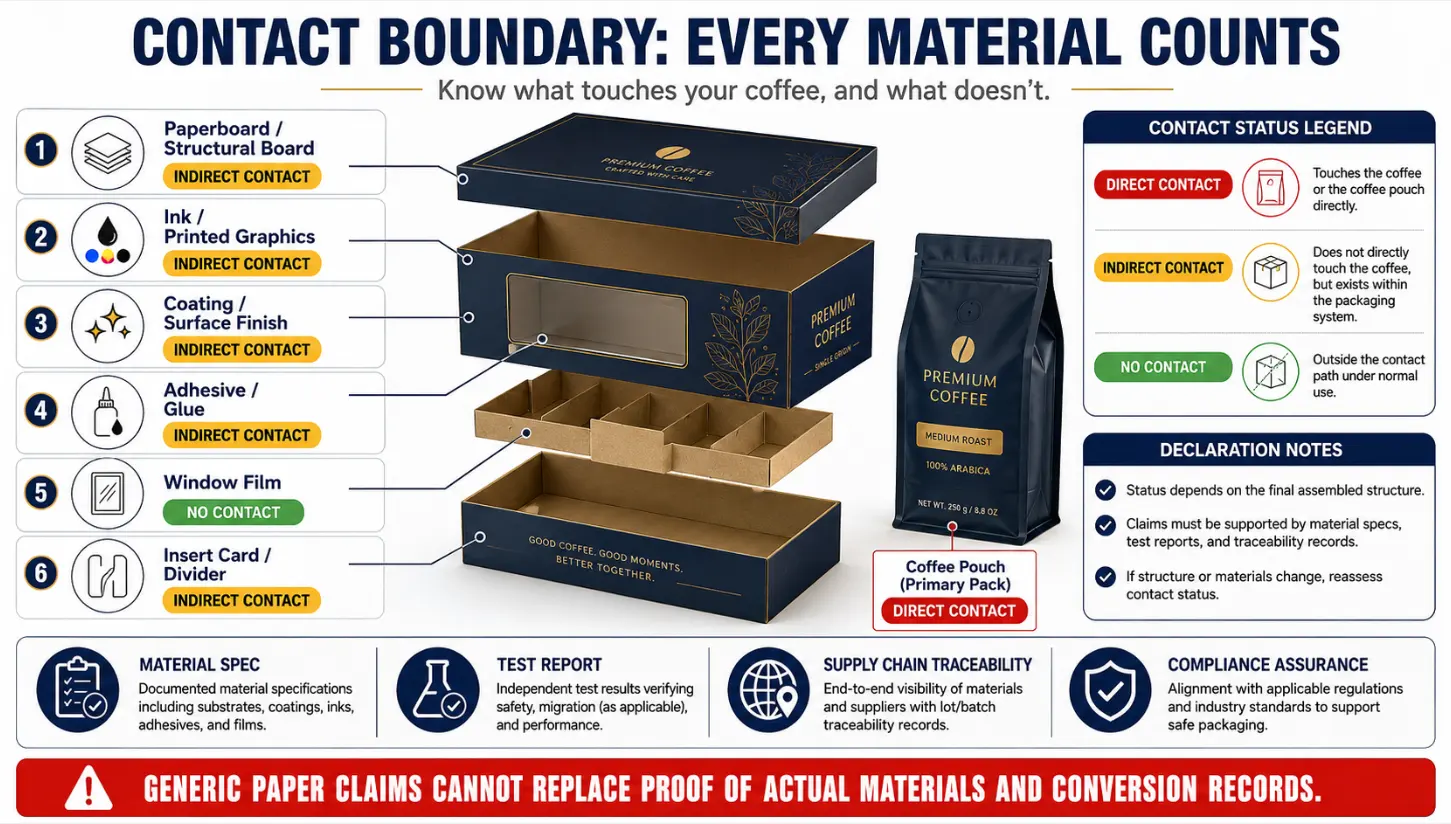
The moisture barrier and oxygen is usually supplied by the sealed pouch or sachet. Indicate the direct or indirect contact with coffee or brewing components of any cardboard, ink, coating, adhesive, window or insert.
Demand records that correspond to the provided construction, intended contact and destination market. An overall statement about paper cannot be used in place of the records of the actual board as well as transformation of materials.
Approve Look on the Real Surface.
Detail and color change of white paperboard, kraft liners, recycle fibers, and wrapped papers. Assess significant art on the suggested media and examine spots adjacent to cuts, creases, glued spots and corners covered.
This should be reviewed:
- color comparison and readability of barcodes;
- having a coating, being laminated, being covered with foil or embossed;
- fold cracking and exposures at the edges;
- rubbing between units;
- compatibility with the finish in adhesion.
Convert Findings into Control File.
Production requires a single controlled reference as opposed to emails scattered comments. Collect a file of the dieline revision, board construction, size, grain or flute direction, packed arrangement, approved artwork, finish specification, test record and signed sample.
Evidence can then be compared with deliveries in the process of incoming inspection. Inspect some cases and positions, drawings, creases, glues, location of prints, damage to surfaces, smell, quantity of packing bagged, case labels, and pallet condition.
Relate the Brief to YPAK.
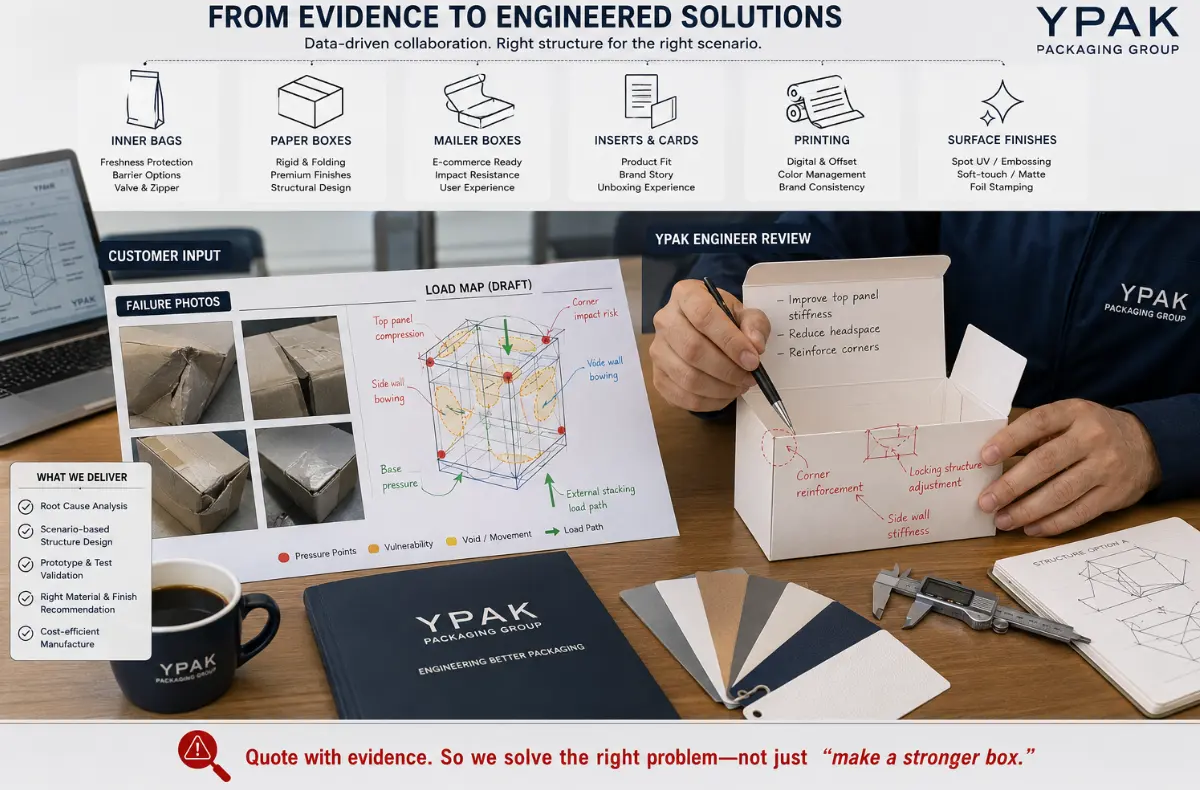
YPAK offers a unified coffee packaging solution, which consists of inner coffee packs, paper boxes, mailer format, inserts, printing and finishing. The helpful query ought to then reveal the entire contents, route profile, required state of supply, contact tribe and artwork status together with the necessary evidence.
Submission of the photograph of failure and load map with the request gives a more focused engineering objective to the supplier as compared to asking him to make a box that looks stronger.
Conclusion
Based on diagnosis, a trusted coffee cardboard box is chosen. The buyer watches the failure, establishes the route, naming the construction, and mapping the load, exploring folds and closures, and stepwise advances samples through evidence stages.It is a record-based approach that relates the appearance to quantifiable performance and provides an inspection of the production that can be repeated.
FAQ
Written by
ypak.coffee
ypak
YPAK PACKAGING GROUP was established in 2011 and formed with 3 companies based on Hongkong, Dongguan and Foshan. We have become one of the largest coffee bag manufacturers in China. We use the best quality WIPF valves from Switzerland to keep your coffee fresh.
Conform to the plastic ban policy imposed to many different countries, we have researched and developed the sustainable packaging bags, such as RECYCLABLE and COMPOSTABLE pouches.
No minimum quantity, no color plates are required with our HP 25K INDIGO DIGITAL PRINTING service.
You are welcome to visit YPAK.
Related Articles

YPAK at World of Coffee Panama 2026: Coffee Packaging for Short Runs and EU-Bound Lots

PPWR Recyclability Grades for Coffee Packaging: What Survives 2030, and What Survives 2038
Customized Coffee Packaging Solutions: From Product Ideas to Market-Ready Packaging