

How to Create Coffee Bags Custom Printed?
Branding in the current competitive coffee market is much more than the quality of your beans. Custom printed coffee bags could be considered one of the most effective tools to attract attention, create recognition, and make a purchase.
No matter what size your coffee company is, or what level of experience your cafe has, investing in a customized packaging can greatly boost your brand image and experience.
This guide will take you through all that you need to know in designing and producing custom coffee bags- and maximizing your packaging strategy to be visible, to get conversions, and in the long run grow.
What Are Custom Printed Coffee Bags?
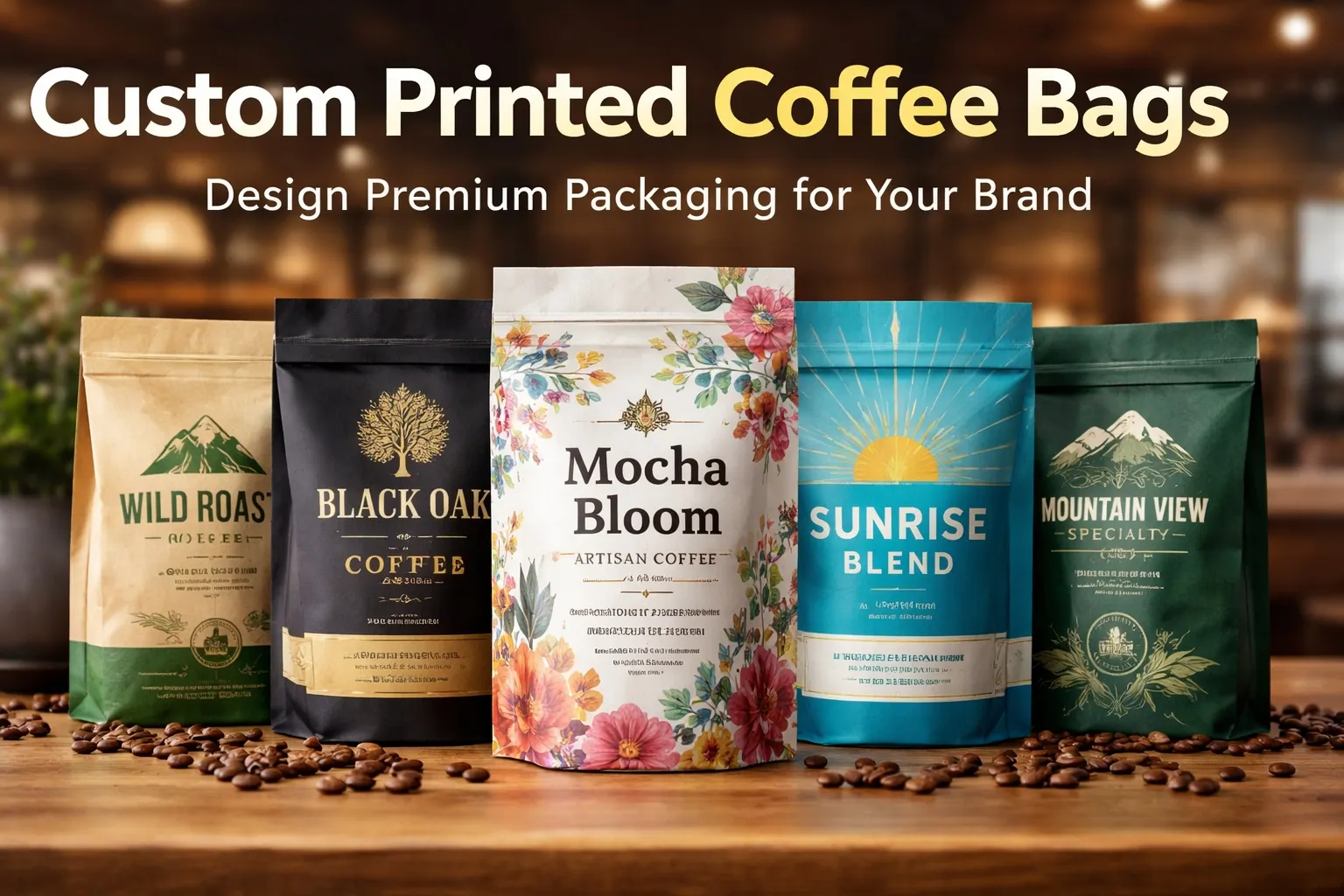
Packaging solutions that are specifically crafted to represent your brand are custom printed coffee bags. These bags are extremely personalized in design, material, size, and finish, enabling coffee businesses to shine in the cluttered shelves.
Coffee bags are not only containers, but also a marketing channel. They spread your story, values and quality of your products even before the customers get to taste your coffee. Research indicates that packaging design is a significant determinant of consumer buying behavior and as such, it is a critical element of business success.
Moreover, contemporary coffee packaging can be characterized by such features:
· One-way degassing valves
· Resealable zippers
· Multi-layer barrier materials
The elements are useful in maintaining freshness, enhancing usability and customer satisfaction.
The importance of Custom Coffee Packaging to Your Brand.
1. Strong First Impressions
Customers can see your product during its packaging before they have any interaction with it. The design of coffee bag conveys professionalism and quality whereas generic packaging might not be able to draw attention.
2. Brand Differentiation
There are numerous competitors in the coffee market. Unique packaging makes your brand easier to see and experience, easier to identify and recall by your customers.
3. Increased Sales Potential
The eye-catching packaging serves as a salesperson without saying. It makes customers want it, conveys value and can be worth premium prices.
4. Storytelling & Customer Connection
With custom coffee bags, you can narrate your brand story, whether it be about sourcing, roasting methods, or how you are sustainable, right on the bag.
How to make custom printed coffee bags step-by-step.
Step 1: Customize Your Coffee Bag Label.
This is the stage of design when your brand is brought to life. There are three options that you could make:
· DIY Design: Design tools such as Adobe Illustrator or other design tools.
· Templates:Ready-made designs to make things easier.
· Professional Designers: Best with premium branding.
In your design you must include:
· Logo and brand colors.
· Brand personality typography.
· Visual (illustrations, icons or patterns).
An effective design will make your packaging attractive and memorable.
Step 2: Select the Fitting Printing Partner.
All the suppliers of packaging are not of the same quality or flexibility. In choosing a printing provider, you should take into consideration:
· Material quality
· Printing technology
· Minimum order quantity (MOQ)
· Turnaround time
· Pricing
There are those companies whose production is fast and minimum order is low and those companies that specialize in large production. Select according to your business size and stage of growth.
Step 3: Choose Type of bag, Material and Finish.
Appearance and functionality are directly influenced by your packaging.
Favorite Coffee Bag styles:
· Stand-up pouches
· Flat-bottom bags
· Quad seal bags
· Lay-flat pouches
Both types have varying advantages with regard to shelf presence and storage.
Material Options:
· Kraft paper (green appearance)
· Foil-lined (maximum freshness protection)
· Clear or plastic (product visibility)
The choice of materials is very important as it influences the shelf life and freshness of the product.
Finish Options:
· Matte (premium, modern feel)
· Shiny (reflective and attractive).
· Soft-touch (luxury texture)
Step 4: Determine Quantity and Budget.
Decide the number of bags required depending on:
· Sales volume
· Budget
· Storage capacity
In the case of startups, it is not always necessary to begin large batches, or even to use labelled stock bags, before making large custom orders.
Best Practices to design high impact coffee bags.
1. Brand Identity with Design.
Your brand personality should be represented in your packaging. For example:
· Sparesome design → high-end, crafted touch.
· Vivid colors → vibrant, contemporary brand.
· Antique fonts → old fashioned, old-fashioned coffee.
Trust and recognition is created by consistency.
2. Streamline Color/Material Combinations.
Combination: Do not mix up and make it hard to read or look at. For example:
· The text on transparent bags can be difficult to read.
· Shiny surfaces with metallic text can be a hardship to the eye.
Striking a balance between aesthetics and functionality.
3. Provide Critical Product Information.
A professional coffee bag must have:
· Roast date
· Roast level
· Flavor notes
· Origin
· Brewing recommendations
· Whole bean or ground.
This information is also beneficial in terms of building credibility and enabling customers to make informed decisions.
Emerging Trends in Coffee Packaging (2025 and Beyond)
Coffee brands are following new trends in packaging: in order to remain competitive:
· Sparesity and visual narrative.
· Green materials and recyclable materials.
· Interactive packaging (AR experiences, QR codes)
· Premium feel printing with textures.
These innovations enhance both brand perception and customer engagement.
The most frequent errors to avoid.
· Too much text, congested design.
· Unsuitable material selection with regard to freshness.
· Ignoring sustainability trends
· Placing too much order in advance.
These mistakes can cost you a lot and damage your brand image, which can be avoided.
Conclusion
Custom printed coffee bags are not a mere packaging; it is a potent branding and promotional tool. The appropriate packaging strategy can influence your business greatly, whether it is customer attraction, maintenance of product quality, or both.
With its emphasis on design, materials, functionality and branding, you can develop coffee packaging that will not only be memorable in the shelf but also generate a sustainable customer loyalty.
Your packaging is not a component of your product, it is your brand in a competitive coffee market.

Written by
ypak.coffee
ypak
YPAK PACKAGING GROUP was established in 2011 and formed with 3 companies based on Hongkong, Dongguan and Foshan. We have become one of the largest coffee bag manufacturers in China. We use the best quality WIPF valves from Switzerland to keep your coffee fresh.
Conform to the plastic ban policy imposed to many different countries, we have researched and developed the sustainable packaging bags, such as RECYCLABLE and COMPOSTABLE pouches.
No minimum quantity, no color plates are required with our HP 25K INDIGO DIGITAL PRINTING service.
You are welcome to visit YPAK.
Related Articles
Two Gates on the Road to the EU: Reduction by Design and the Documentation Chain for Coffee Packaging

Recyclable Coffee Bags: How to Protect Freshness Without Compromising Sustainability

Your Brand, Perfectly Packaged: The YPAK Guide to Selecting a High-Quality Custom Coffee Bag