

Updated 2 months ago
Wholesale Coffee Paper Cups: Printing, Colors and Branding Options

ypak.coffee
YPAK PACKAGING GROUP was established in 2011 and formed with 3 companies based on Hongkong, Dongguan and Foshan. We have become one of the largest coffee bag manufacturers in China. We use the best quality WIPF valves from Switzerland to keep your coffee fresh.
Conform to the plastic ban policy imposed to many different countries, we have researched and developed the sustainable packaging bags, such as RECYCLABLE and COMPOSTABLE pouches.
No minimum quantity, no color plates are required with our HP 25K INDIGO DIGITAL PRINTING service.
You are welcome to visit YPAK.
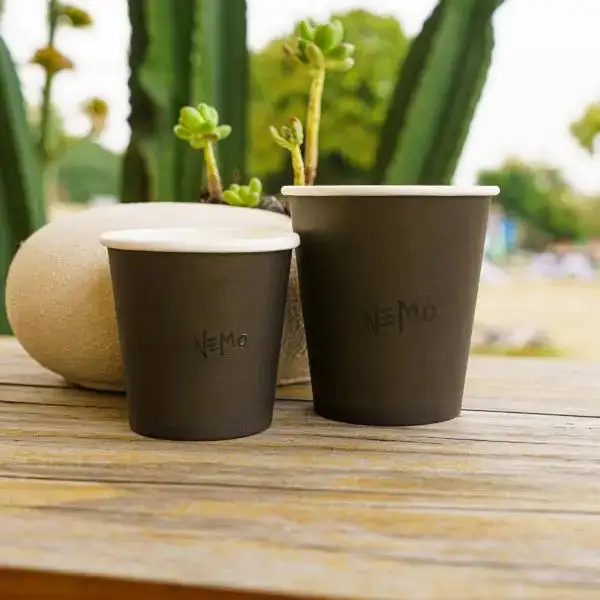
Coffee Paper Cups Wholesale
Coffee paper cups serve over the role of disposable drink containers. They also serve as takeaway packaging and mobile brand displays in cafés, offices, events and delivery services.
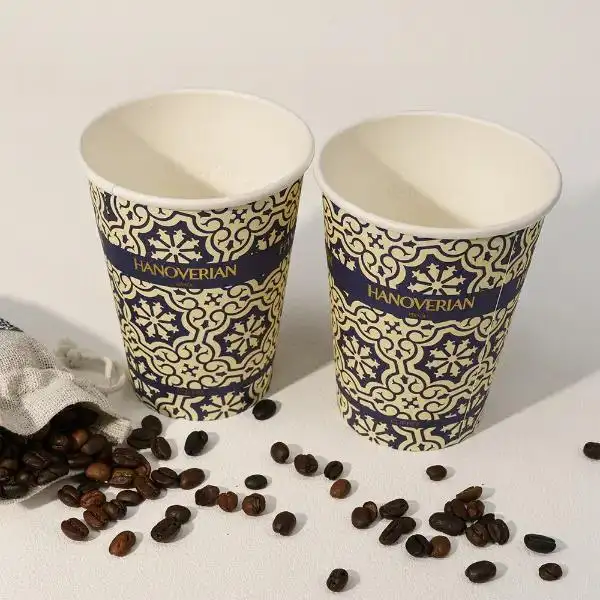
Buyers must ensure that the printing technique is suitable for the order quantity, check if the cups can be printed in the exact brand colors, and determine if cup construction is adequate for the serving temperature when sourcing Wholesale Coffee Paper Cups. Artwork must also be adjusted to the curved cup surface, while the level of customization should remain commercially practical.
Buyers should therefore evaluate printing, color control, cup construction, order quantity and packaging requirements as one complete specification.
What Can Be Customized on Coffee Paper Cups?
Customization extends beyond placing a logo on the front of a cup. A Wholesale Coffee Paper Cups project may involve cup capacity, wall construction, base color, artwork coverage, surface appearance and secondary packaging.
| Custom Feature | Common Options | What Buyers Should Confirm |
| Cup size | 4 oz, 8 oz, 12 oz, 16 oz and other capacities | Beverage volume and lid compatibility |
| Wall structure | Single-wall, double-wall or ripple-wall | Insulation requirements and budget |
| Base appearance | White, kraft or fully printed background | Brand style and color reproduction |
| Artwork | Logo, graphics, text or product information | Printable area and curved-surface distortion |
| Surface effect | Matte, gloss or selected visual finishes | Material and production compatibility |
| Packing | Standard cartons, divided packs or branded cartons | Distribution and store-delivery requirements |
The complete specification should be established before selecting a printing method. A detailed design cannot compensate for a cup structure that is unsuitable for the drink or service environment.
Coffee Paper Cup Printing Options
The best printing method depends on order quantity, design complexity, repeat-order frequency and the number of artwork versions required.
Flexographic Printing
Flexographic printing is commonly used for stable medium- and high-volume orders. It is particularly suitable for standardized designs with a limited number of colors.
Its main characteristics include:
•Printing plates are normally required.
•Unit printing cost becomes more efficient at higher quantities.
•It supports repeat production for established cup designs.
•It is suitable for café chains, distributors and ongoing supply programs.
Offset Printing
Offset printing achieves intricate graphics and highly precise color control. Consider this method for designs that contain fine lines and/or complex illustrations that require color gradations and/or extensive color coverage.
Final printing method suitability is determined by the paper structure, coatings, the cup-forming method, and the requirements of the intended use of the food packaging. Buyers must ensure they verify the entire production route rather than selecting offset printing solely based on the quality of the printed image.
Digital Printing
Digital printing is ideal for printing smaller orders and for projects that require changes to the artwork on a frequent basis. Digital printing is optimal for:
Promotional Events
•Unique designs for each store
•Product Launches
•Market Research
•Small quantity printing
•Designed to accommodate several Stock Keeping Units in the same buying program
Printing Method
| Flexographic | Offset | Digital |
| Medium to high | Medium to high | Small to medium |
| Required | Usually required | Usually not required |
| Moderate to good | Good | Good |
| Lower | Lower | Higher |
| Larger recurring orders | Depends on process and quantity | Short runs and multiple designs |
| Chains and long-term programs | Detailed branded graphics | Events, trials and limited editions |
Like many other products, the printing of Wholesale Coffee Paper Cups usually involves multiple options. For large volume orders, other printing techniques may be more cost effective. However, digital printing is the more flexible option for large volume orders.
Controlling Brand Colors on Custom Paper Cups
Colors do not always appear the same on each substrate. Different papers and backgrounds, as well as the coating and the inks, will affect the appearance.
Things to remember are:
1. CMYK Printing: This printing style is the most suitable for colored images with gradients.
2. Spot Colors: This is the best method to ensure a target brand color is met.
3. Material Background: Aesthetic differences and an overall different perception are given by craft paper and white background.
4. Digital Screens: Colors on digital screens are not to be trusted for the final color of printed cups.
5. Sampling: Digital proofs are considered final. It is critical to sample to confirm selection of materials and to test the colors.
6. Repeat Orders: Approved samples and color references will be maintained on file for future production runs.
YPAK will review artwork, color references and pre-production samples to help buyers understand how brand colors will appear on the selected paper structure. However, reasonable tolerances may still occur between paper, ink and production batches.
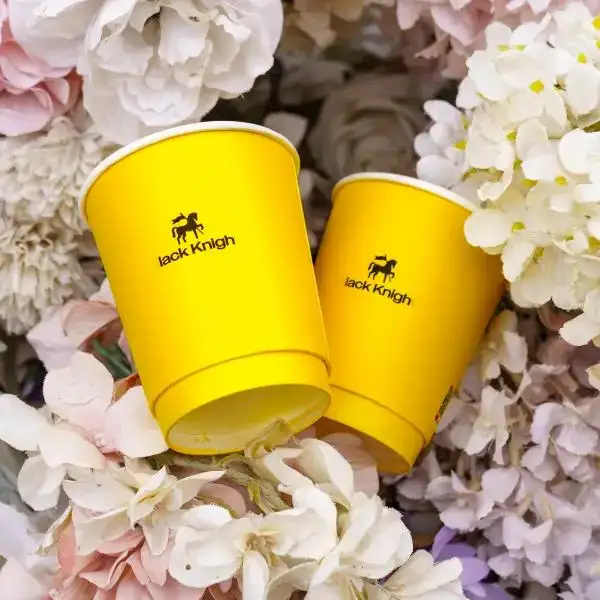
Single-Wall vs Double-Wall vs Ripple-Wall Cups
Selecting the correct wall construction is as important as selecting the printing method.
| Feature | Single-Wall Cup | Double-Wall Cup | Ripple-Wall Cup |
| Insulation | Lower | Higher | Higher |
| Sleeve requirement | Often needed for hot drinks | Less frequently required | Less frequently required |
| Printing surface | Smooth | Smooth outer wall | Depends on ripple design |
| Material use | Lower | Higher | Higher |
| Relative cost | Lower | Medium to high | Medium to high |
| Typical use | Cold drinks, warm drinks and short-use service | Hot coffee and branded café service | Hot drinks requiring insulation and grip |
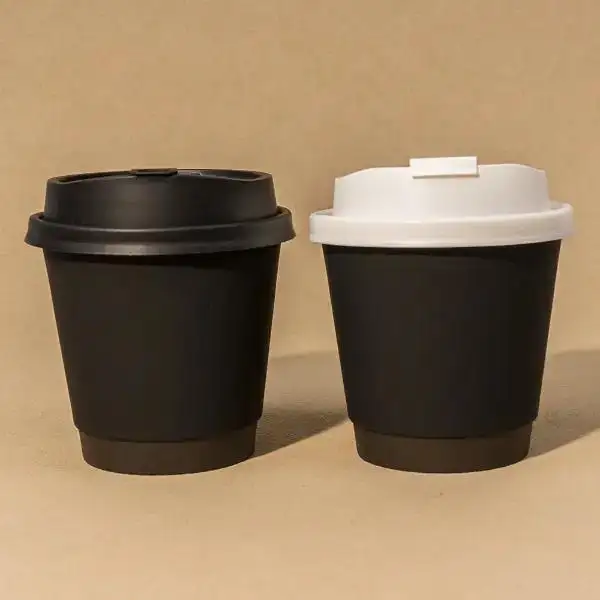
Single-wall cups can support cost control, compact storage and efficient stacking. Double-wall cups improve insulation while maintaining a relatively smooth exterior for printing. Ripple-wall cups provide additional separation between the hand and the hot beverage, although their textured construction may influence artwork presentation.
The thickest option is not automatically the best. Buyers of Wholesale Coffee Paper Cups should also assess carton volume, storage space, cup-dispenser compatibility and the price expectations of the final market.
From Basic Logo Printing to Full Brand Packaging
Customization can be developed at several levels.
| Customization Level | Basic | Standard Brand Program | Complete Packaging System |
| Cup design | Single-color logo | Multicolor or full-area design | Coordinated product series |
| Cup sizes | One size | Several common sizes | Multiple sizes and drink categories |
| Accessories | Generic or none | Lids, sleeves and stirrers | Cups, lids, sleeves, bags and takeaway boxes |
| Color management | Basic reference | Approved brand colors | Cross-product color coordination |
| Suitable buyers | Start-ups and event projects | Established coffee brands | Chains and packaging distributors |
| Management complexity | Low | Medium | High |
Basic logo printing is suitable when cost and speed are the main priorities. A standard brand program creates a more consistent appearance across several cup sizes. An integrated packaging solution consists of cups, coffee bags, sleeves, bags and boxes.
YPAK supports buyers who need to align paper cups with other coffee packaging. Working through a coordinated specification can help reduce differences in artwork, color references, packaging dimensions and delivery planning across multiple suppliers.
How to Prepare Artwork for Cup Printing
Paper cups are tapered rather than rectangular. Artwork placed on a flat template changes position when the cup is formed, so a standard rectangular design file should not be used without adjustment.
Buyers should prepare:
•Vector-format logos and graphics
•Outlined or embedded fonts
•Defined CMYK or spot-color references
•The correct cup template
•Bleed and safe areas
•Minimum barcode or QR-code dimensions
•Confirmed artwork positions near the side seam
•Separate files for each cup size
Important logos and text should remain away from the seam, cup rim and bottom-forming areas. A final artwork review should be completed before plate making or mass production.
YPAK's Strategic Approach to Wholesale Coffee Paper Cups
To decide the construction type for Wholesale Coffee Paper Cups (single-wall, double-wall, or ripple-wall), YPAK considers the type of beverage, cup size, the temperature at which it is served, and the sales channel.
The final step is checking the design for bleed, safety lines, and seam placements, as well as any distortions. The size of the order and how often it is placed determines which printing method will be most appropriate.
Samples of the proposed cups can be used to evaluate before the full run:
•Actual capacity
•Compatibility with lids
•Rigidity and grip
•Insulation
•Packing specs and how it fits with coffee bags
This makes a design ready for production and helps determine the specs for production.
Interested in Wholesale Coffee Paper Cups for your café or retail and distribution brands? Contact YPAK to help you determine cup size, wall type, printing, your brand colors, and the size of your order. Our team can help with reviewing your artwork and help you with sampling and coordination of coffee packaging prior to a production run.
FAQs
Q1. What is the preferred file format for custom printing?
We prefer vector format. This includes file types such as AI, EPS, and editable PDFs. Logos must be at a high resolution with outlined letters. Colors, bleeds, and safe areas must be indicated.
Q2. What sizes do the Wholesale Coffee Paper Cups come in?
4 oz, 8 oz, 12 oz and 16 oz sizes are the common offerings. The ideal cup size depends on the serving size, lid size, and method of serving as well as the target market.
Q3. What is the difference between single wall and double wall coffee cups?
Single wall cups use less material and are more easily stored, but may require the use of sleeves for hot beverages. Double wall cups are more insulating and comfortable to hold.
Q4. What is the best printing technique for custom coffee paper cups?
Flexography and offset printing methods are best for stable and larger volume orders. Digital is best for shorter runs, such as custom, seasonal, or varied artwork.
Q5. Can YPAK print custom logos and brand colors?
YPAK can print logos as well as full coverage and specific area printing in accordance to brand guidelines including CMYK and Pantone colors. Final colors may differ and should be checked with a proof or sample.
Written by
ypak.coffee
ypak
YPAK PACKAGING GROUP was established in 2011 and formed with 3 companies based on Hongkong, Dongguan and Foshan. We have become one of the largest coffee bag manufacturers in China. We use the best quality WIPF valves from Switzerland to keep your coffee fresh.
Conform to the plastic ban policy imposed to many different countries, we have researched and developed the sustainable packaging bags, such as RECYCLABLE and COMPOSTABLE pouches.
No minimum quantity, no color plates are required with our HP 25K INDIGO DIGITAL PRINTING service.
You are welcome to visit YPAK.
Related Articles
Two Gates on the Road to the EU: Reduction by Design and the Documentation Chain for Coffee Packaging

Recyclable Coffee Bags: How to Protect Freshness Without Compromising Sustainability

Your Brand, Perfectly Packaged: The YPAK Guide to Selecting a High-Quality Custom Coffee Bag