

Updated 2 months ago
How PFAS-Free Coffee Bags Balance Grease Resistance and Recyclability

ypak.coffee
YPAK PACKAGING GROUP was established in 2011 and formed with 3 companies based on Hongkong, Dongguan and Foshan. We have become one of the largest coffee bag manufacturers in China. We use the best quality WIPF valves from Switzerland to keep your coffee fresh.
Conform to the plastic ban policy imposed to many different countries, we have researched and developed the sustainable packaging bags, such as RECYCLABLE and COMPOSTABLE pouches.
No minimum quantity, no color plates are required with our HP 25K INDIGO DIGITAL PRINTING service.
You are welcome to visit YPAK.
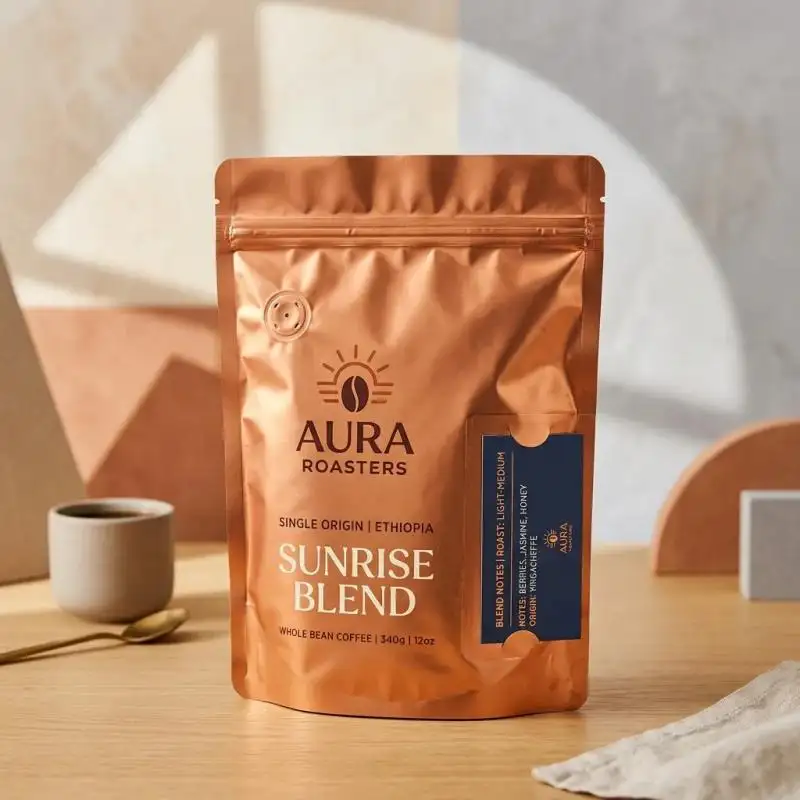
PFAS Free Coffee Bags
During roasting, coffee beans release even more volatile oils. Migrating oils can create surface stains on packaging, an unappealing feature to customers. These stains are an indication of the compromised integrity of the packaging. Fluorinated packaging has a surface barrier to resist oil and moisture penetration. However, the use of PFAS in coffee bags is becoming increasingly restricted due to new legislation and buyer demand.
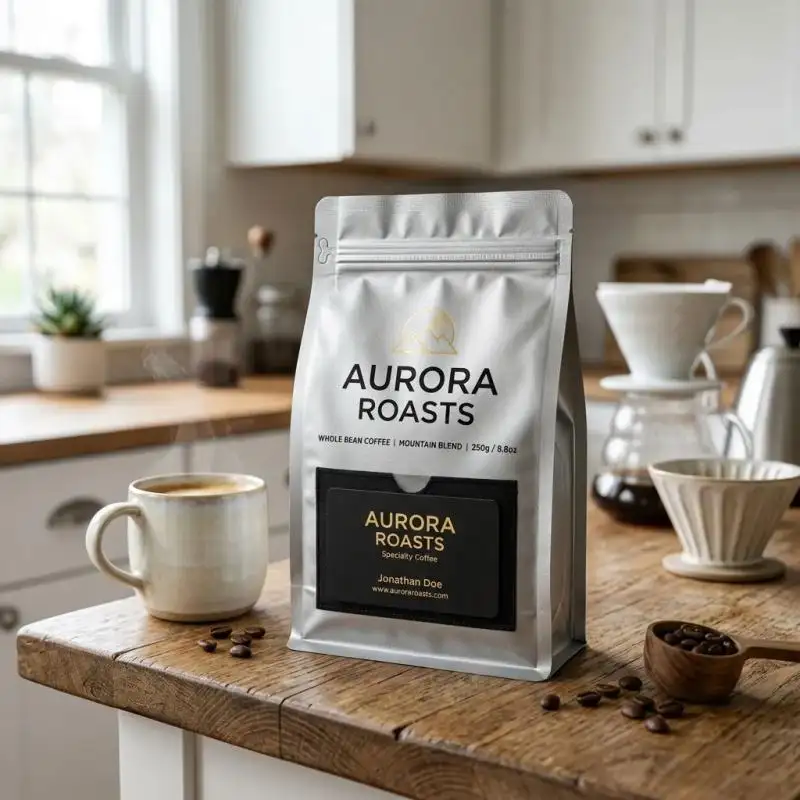
One solution is to create a barrier with a water-based coating. Once a water-based coating is applied, a thin film forms to resist both oil and moisture penetration, but this solution does not provide PFAS or fluorine grease resistance. Like all solutions, the ability of a water-based barrier to resist grease and the recyclability of the packaging depends on the entire packaging structure.
The coatings, paper, barriers, seals, and interior components in the structure must work together to achieve optimal design in the packaging of coffee bags.
What is a Water-based Barrier Coating?
Water-based barrier coatings are those where water is the transporting medium for the polymer film-forming materials. During the coating and drying process, the water evaporates while the functional materials remain on the paper surface.
The dried coating can fill or cover some of the microscopic spaces between paper fibers. This slows the movement of coffee oil, moisture and other substances into the paper.
Water-based coatings may be applied to kraft paper, white paper or other fibre-based substrates used in PFAS Free Coffee Bags. However, "water-based" does not automatically mean:
• Plastic-free
• Bio-based
• Compostable
• Repulpable
• Recyclable in every market
Each claim should be evaluated separately based on the complete bag structure.
Typical packaging structure:
Coffee → Inner Barrier → Coated Paper → Printing Surface
This structure shows that grease protection comes from several coordinated layers rather than the outer paper alone.
How Do Water-Based Coatings Provide Grease Resistance Without PFAS?
Creating a Continuous Surface Film
After water-based coatings dry, they bond to paper as a continuous film. This film decreases paper-coffee oil contact, delaying the migration of coffee oil on paper.
Reducing Surface Porosity
As a thorough barrier coating bonds to paper, it reduces the number and size of surface pores of paper. This decreases the paper's absorbency and increases the effectiveness of grease-resistant coffee bags.
Controlling Surface Wetting
A few formulations of fluorine-free coatings change the spreading and wetting behavior of oils on paper surfaces. As a result, oil prefers to reside on the surface of paper. These formulations allow the packaging to better prevent oil migration.
Applying Multiple Thin Coats
Better uniformity can be achieved through several controlled coatings as opposed to a single heavy coating. This technique can improve coverage by reducing pinholes and creating a more even surface, though it can at the same time increase the use of materials, the time required for drying, and the overall complexity of the process.
The final grease resistance of PFAS Free Coffee Bags depends on:
• Coating chemistry and coating weight
• Paper smoothness and fiber density
• Drying temperature and curing conditions
• Folding, creasing and bag-making processes
• Coffee roast level and surface oil content
• Storage temperature and contact duration
A PFAS-free coating should therefore be described as grease-resistant, not as completely oil-proof under every condition.
Are Coffee Bags with Water-Based Coatings Recyclable?
Simply using a coating that is deemed recyclable does not make a coffee bag recyclable.
The recycling ability of PFAS Free Coffee Bags looks at the entire bag:
• Paper content: Recycling ability of paper can be determined by the percentage and the grade of the fiber.
• Inner barrier: Recycling pathway can be determined by the combination of aluminum, PET, PE, PP, and EVOH.
• Laminating Adhesives: The type of laminating adhesive denotes the level of impact on the recyclability of the other materials and the separability of the fibers during recycling.
• Printing Inks: The coverage of printing inks can make the repulping and deinking process difficult.
• Zippers: The zipper, ideally, should be in the same recycling stream as the coffee bag.
• Degassing valves: Valve material can affect compatibility with mono-material structures.
Local infrastructure: A technically recyclable bag may not be collected or processed in every market.
For this reason, YPAK approaches PFAS-free packaging as a complete structural design project rather than focusing only on the external coating.
Water-Based Coatings vs. Other Coffee Bag Barrier Options
| Packaging Option | PFAS Status | Grease Resistance | Oxygen and Moisture Barrier | Recycling Consideration | Typical Application |
| Water-based coated paper | Can be PFAS-free | Medium to high | Depends on inner layer | Paper, coating and film ratio must be assessed | Paper-look coffee packaging |
| Fluorinated grease-resistant paper | May contain PFAS | High | Often requires another barrier | Regulatory and disposal concerns | Traditional grease-resistant packs |
| PE-coated paper laminate | Usually PFAS-free | High | Medium | Paper-plastic separation may be difficult | Moisture- and grease-resistant bags |
| Mono-PE or mono-PP bag | Can be PFAS-free | High | Medium to high | Suitable for some flexible-plastic streams | Retail coffee beans and grounds |
| Aluminum laminate bag | Can be PFAS-free | Very high | Very high | Multilayer structure is difficult to recycle | Long shelf life and export |
| Compostable multilayer bag | Can be PFAS-free | Medium to high | Structure-dependent | Requires certification and composting access | Certified compostable projects |
Water-based coatings are attractive when brands want a paper appearance, fluorine-free grease resistance and potential compatibility with fibre recovery.
Mono-PE or mono-PP bags may provide a clearer route for flexible-plastic recycling. Aluminum laminates deliver strong oxygen, moisture and light protection but are more difficult to process after use.
Coffee packaging must control grease, oxygen, water vapor, aroma, and sometimes light. Therefore, selecting PFAS Free Coffee Bags only by grease resistance can lead to insufficient freshness protection.
Comparing Different Performance Levels of Water-Based PFAS Free Coffee Bags
| Performance Level | Typical Structure | Grease Protection | Freshness Protection | Recycling Complexity | Recommended Use |
| Basic | Coated paper with simple sealant | Basic | Basic | Low | Samples and short-term use |
| Medium Barrier | Coated paper with thin barrier layer | Medium to high | Medium | Medium | Local retail and moderate turnover |
| High Barrier | Coated paper with oxygen and moisture barrier | High | High | Higher | Specialty coffee and longer shelf life |
| System-Optimized | Matched coating, barrier, adhesive, zipper and valve | Application-specific | Test-defined | Controlled through design | Long-term branded programmes |
Performance also varies according to coating uniformity, paper weight, crease resistance, sealing temperature, printing coverage and the materials used for the valve and zipper.
For example, a coating may perform well on a flat sheet but crack during folding. Coffee bags should therefore be tested after printing, lamination and bag conversion—not only at the raw-material stage.
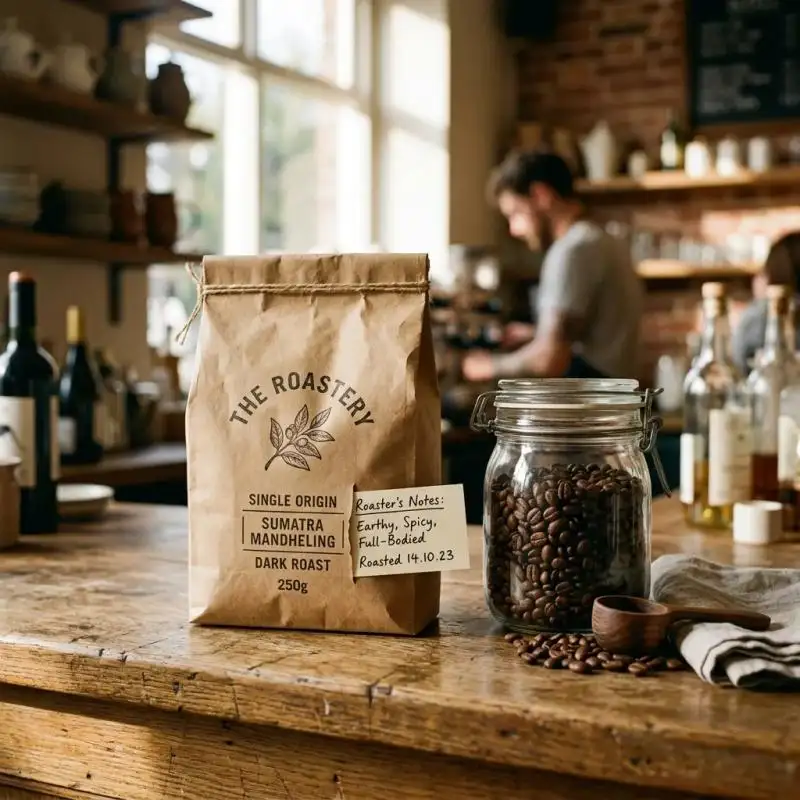
YPAK's Approach to PFAS-Free Coffee Packaging
YPAK evaluates water-based coatings as one part of the complete coffee packaging structure. Material selection begins with the coffee format, filling weight, roast level, shelf-life target, sales channel and end-market recycling requirements.
Available structures can be compared across coated paper, recyclable mono-material films and conventional high-barrier laminates. YPAK can also support flat-bottom bags, stand-up pouches, side-gusset bags, zippers, windows, tear notches and one-way degassing valves.
Sampling is used to review filling capacity, sealing, fold performance, grease resistance and accessory compatibility before mass production. Where required, the bag body, inks, adhesives, zipper and valve can be assessed together rather than treating recyclability as a claim based on one material layer.
Conclusion: Balance Barrier Performance at the Bag Level
Water-based barrier coatings can improve grease resistance without relying on PFAS, but they do not automatically make coffee packaging recyclable. The correct structure depends on coffee oil content, oxygen and moisture protection, shelf life, accessories and local recovery systems.
Buyers developing PFAS Free Coffee Bags can work with YPAK to compare coating systems, barrier layers, valves and bag formats before approving the final packaging specification.
FAQs
Q1. What are PFAS Free Coffee Bags?
Coffee bags that are PFAS Free are produced without the use of per- and polyfluoroalkyl substances in their manufacturing. Grease resistance in PFAS Free Coffee Bags are most likely derived from water-based coatings or alternative polymers or barrier films.
Q2. Why is grease resistance needed in coffee packaging?
Grease resistance is necessary in coffee packaging to maintain the integrity of the packaging. If the packaging is insufficient in grease resistance, coffee oils can seep through and impact the appearance of the packaging and the strength.
Q3. How do coatings resist coffee oil?
Coatings that are water-based create a thin continuous layer, that, when dry, are over paper. This helps resist coffee oil and moisture from moving into the paper.
Q4. Are all PFAS Free Coffee Bags recyclable?
PFAS Free indicates a that a substance is free of the identified compounds, but does not indicate the substance's recyclability. Recyclability is also dependent on the packaging paper, inner layer, barrier, adhesive, ink, zipper, valve and the local recycling infrastructure.
Q5. Can PFAS Free Coffee Bags protect coffee freshness?
Yes, this is possible if the entire structure has appropriate barriers. A shelf stable coffee also requires a grease-resistant outer coating in conjunction with oxygen and moisture barrier.
Written by
ypak.coffee
ypak
YPAK PACKAGING GROUP was established in 2011 and formed with 3 companies based on Hongkong, Dongguan and Foshan. We have become one of the largest coffee bag manufacturers in China. We use the best quality WIPF valves from Switzerland to keep your coffee fresh.
Conform to the plastic ban policy imposed to many different countries, we have researched and developed the sustainable packaging bags, such as RECYCLABLE and COMPOSTABLE pouches.
No minimum quantity, no color plates are required with our HP 25K INDIGO DIGITAL PRINTING service.
You are welcome to visit YPAK.
Related Articles
Two Gates on the Road to the EU: Reduction by Design and the Documentation Chain for Coffee Packaging

Recyclable Coffee Bags: How to Protect Freshness Without Compromising Sustainability

Your Brand, Perfectly Packaged: The YPAK Guide to Selecting a High-Quality Custom Coffee Bag