

Updated 6 months ago
What Is Sachet Packaging: Complete Guide for Modern Brands
ypak.coffee
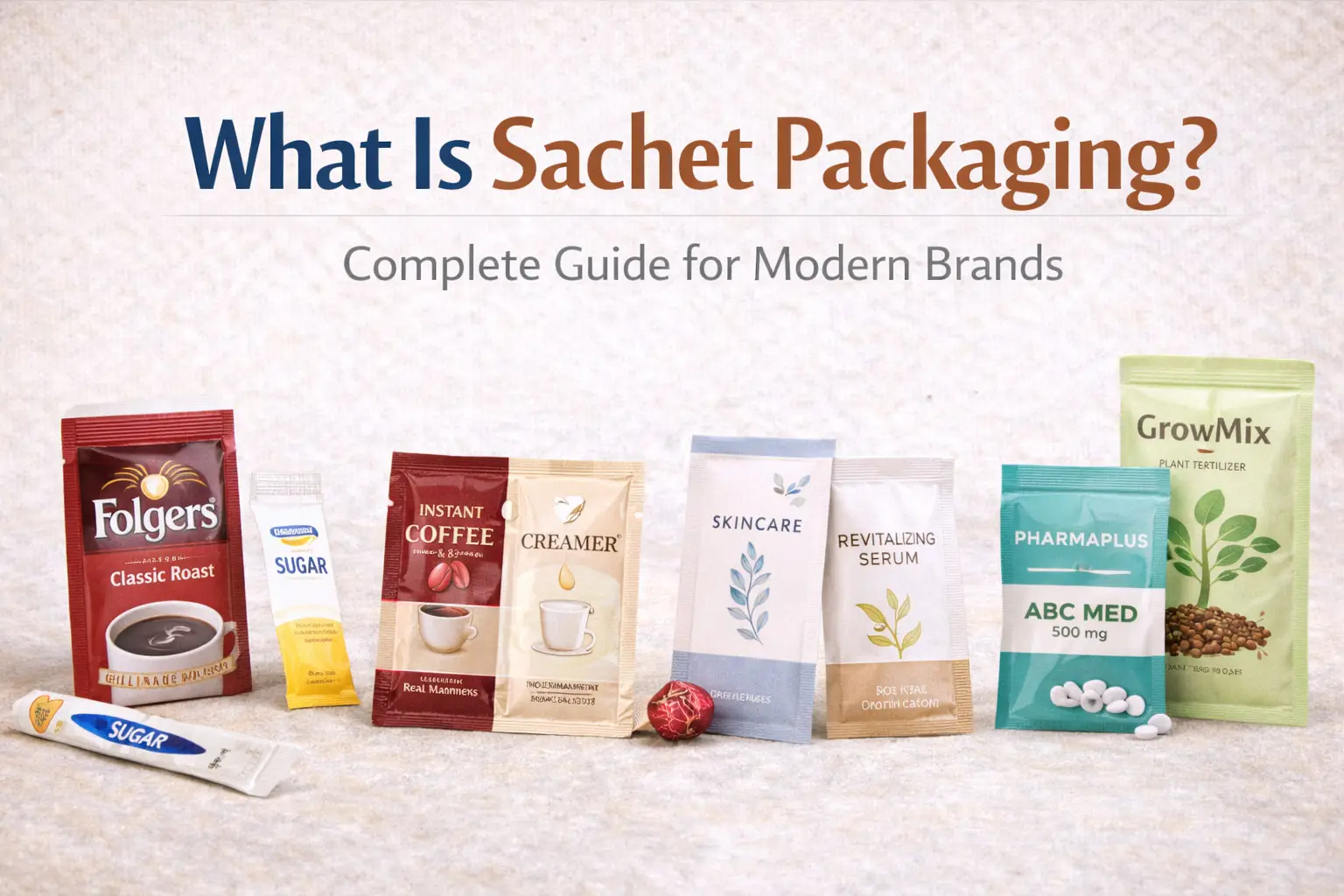
What Is Sachet Packaging: Complete Guide for Modern Brands
The sachet packaging is now one of the most widespread and efficient methods of packaging products in the fast-paced consumer environment in one-use, transportable, and convenience-oriented versions. Sachets are a versatile and cost-effective solution to help brands connect with modern consumers and ensure maximum protection of the product and improved logistics (instant coffee and seasoning, skincare samples, pharmaceuticals, etc.).
In this stepwise manual, we shall be discussing all you need to know about sachet packaging; what it is, why it is so popular, where it is used, the main pros and cons of the packaging materials, the design process, and how it all happens with the help of sachet packaging machines.
🧠 What Is Sachet Packaging?
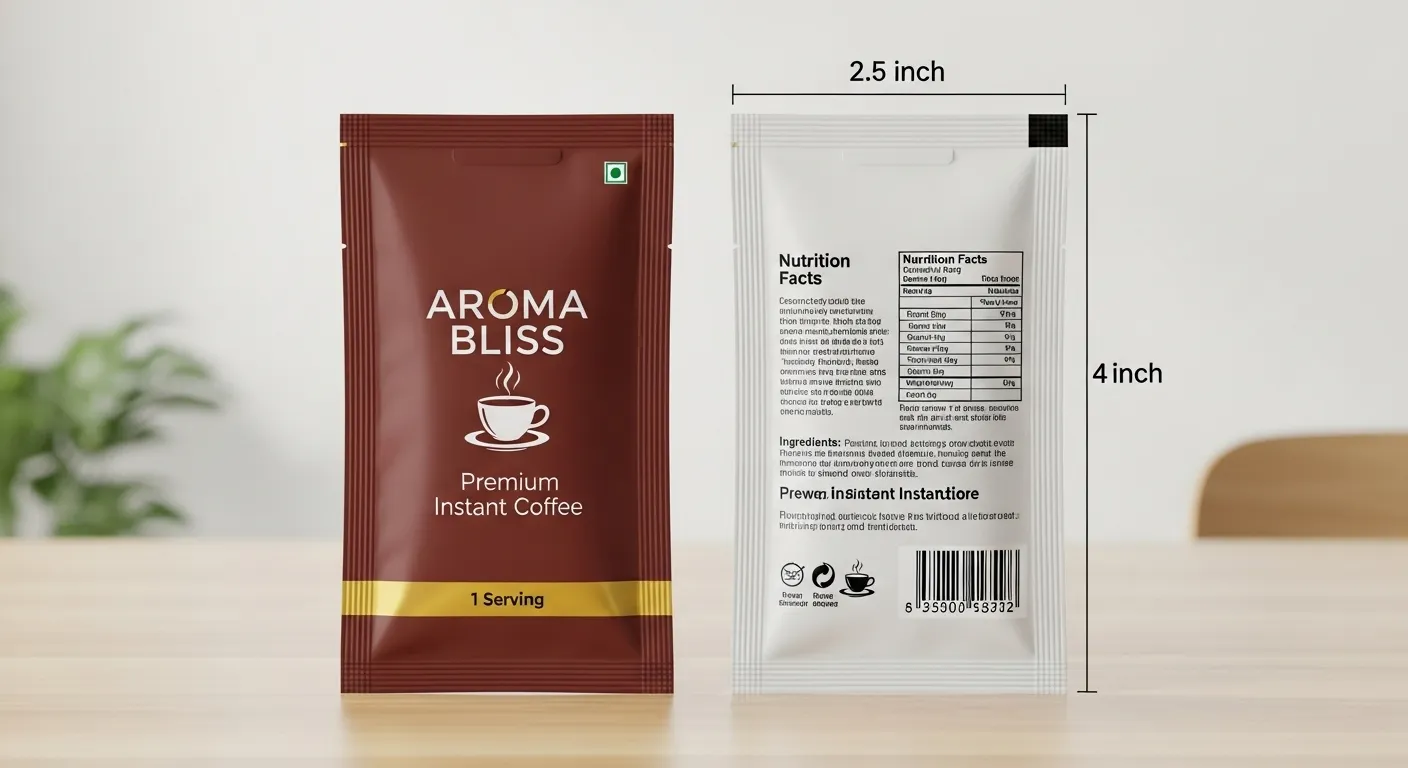
A sachet is a small, sealed packet or pouch designed to hold a precise amount of product — typically single-use or portion-controlled quantities. These packets are usually made from flexible materials like plastic films, aluminum foil, paper laminates, or combinations of these, and are sealed on three or four sides to create an airtight pouch.
Liquids, powders, granules, gels, and even small solid objects that use sachet packaging are often commonplace in most industries and thus this solution is versatile. Its small size, portability, and convenient design has transformed sachets into a major part of daily packages.
📊 Core Features of Sachets
Single-use or small-serve capacity — Typically ranging from 1 ml to 100 ml — sachets are intended for one-time use, ideal for trial packs, sampling campaigns, or on-the-go consumption.
Hermetic sealing — The three- or four-side seal provides excellent protection against contaminants, moisture, and oxidation — crucial for maintaining product freshness and quality.
Flexible materials — Sachets can be produced with a variety of flexible films, aluminum foil, kraft paper, or multilayer laminates, depending on the product’s barrier and strength requirements.
Portable and lightweight — Because sachets are small and light, they’re easy to store, ship, and distribute — a major advantage in global supply chains and high-volume consumer environments.
📦 Common Types of Sachets
Manufacturers can produce sachets in multiple styles based on product need and application:
🟦 Three- or Four-Side Seal Sachets
These are the most common sachet formats — sealed on three or four edges — perfect for liquids, powders, or granules.
📏 Strip/Stick Sachets
Long, narrow sachets often used for sugar, drink mixes, or single-serve enhancers. Small perforations let consumers tear off one portion at a time.
🔗 Twin / Multi-Sachet Packs
Two or more sachets are joined together in a strip — ideal for paired products like shampoo + conditioner or coffee + creamer.
🧪 Custom/Unique Shapes
Brands can design sachets with custom shapes or branding elements to capture attention and reinforce identity.
🔁 Bag-in-Bag
For sensitive products, a sachet can be nested inside another for double protection, often used in specialized chemical or pharmaceutical applications.
🏭 Industry Applications
Thanks to their versatility, sachets are used in a wide range of industries:
🍫 Food & Beverage
Sachets are ubiquitous in the food industry — from instant coffee and tea mixes to condiments like ketchup, sugar, and seasonings. They enable portion control, reduce waste, and make products convenient for consumers.
💊 Pharmaceuticals & Healthcare
In the healthcare sector, sachets are used for single-dose medicines, supplements, and topical gels where precision and hygiene are crucial.
💅 Cosmetics & Personal Care
Beauty and personal care brands use sachets for sample-size skincare, shampoos, lotions, and other travel-friendly items.
🌿 Agriculture
Sachet packaging is also used for seeds, fertilizers, pesticides, and nutrient powders, helping farmers measure and use products accurately.
🏃 Fast-Moving Consumer Goods (FMCG)
Single-use sachets are ideal for travel toiletries, wipes, sanitizers, and instant consumables, catering to on-the-go lifestyles.
📈 Key Advantages of Sachet Packaging
Sachet packaging continues to grow in popularity due to several important benefits:
💰 Cost-Effective Production
Sachets use minimal material, and automated packaging machines can produce thousands of units quickly and at low cost — a major advantage for high-volume brands.
🏃♂️ Portability and Convenience
The compact, lightweight nature of sachets makes them perfect for travel, sampling, or single-serve applications.
🛡️ Portion Control & Quality Protection
Sachets offer precise dosing and excellent barrier properties, keeping contents fresh and safe until use.
🎨 Customization for Branding
Sachets are easy to print with brand colors, logos, and marketing messages — turning packaging into a lightweight billboard.
🚚 Lower Logistics Costs
Because they are flat and light, sachets reduce storage and shipping expenses compared to larger formats like bottles or jars.
⚠️ Limitations of Sachet Packaging
While sachets excel in convenience and portability, they have a few drawbacks:
-
Single-Use Design — Most sachets aren’t resealable, so leftover contents must be used immediately or wasted.
-
Waste and Recycling Issues — Traditional multilayer films can be difficult to recycle unless compostable or mono-material options are used.
-
Limited Volume — Sachets are ideal for small portions but not suitable for larger quantities or frequent use products.
🧩 How Sachet Packaging Machines Work
Modern sachet packaging machines are high-speed, automated solutions that handle sachet production, filling, sealing, and cutting. The most common type is the Form-Fill-Seal (FFS) machine, which takes a roll of film, forms the sachet shape, fills it with product, and then heat-seals and cuts it in one streamlined process.
There are two major variants:
🔄 Vertical Form Fill Seal (VFFS)
Material is formed vertically — ideal for powders, granules, and some liquids.
↔ Horizontal Form Fill Seal (HFFS)
Material is shaped horizontally — best for delicate solids, wet wipes, and products that require careful handling.
Choosing the right machine depends on product type, production speed, and desired output volume.
🎨 Designing Effective Sachet Packaging
To create sachets that resonate with customers, brands should focus on:
🖌️ Visual Appeal
Use impactful colors, clean fonts, and compelling imagery to catch the eye and communicate brand value clearly.
📏 Essential Information
Include key details like ingredients, usage instructions, expiration dates, and safety info — all presented legibly despite the small size.
🧪 Material Selection
Choose barrier films that protect product quality, preserve freshness, and enhance shelf life — from aluminum foils to high-barrier laminates depending on product needs.
🔁 Sustainability
Consider recyclable, mono-material or compostable materials where possible to reduce environmental impact.
🧠 Sachet vs. Other Packaging
Sachets differ from other flexible packaging like pouches and stick packs:
-
Sachets are typically smaller, sealed on three or four sides, and designed for single use.
-
Pouches often include features like resealable zippers or stand-up bases and can be used multiple times.
Choosing between these formats depends on your product’s volume, user experience goals, and branding strategy.
🏁 Conclusion: Why Sachets Matter Today
The sachet packaging has also revolutionized the process of offering products to the customers, not only in terms of convenience, accurate portioning and branding with low costs but also in a lightweight and cost-effective format. Sachets have been used in packaging food and cosmetics, pharmaceuticals, and travel accessories to emerge as one of the pillars of modern-day packaging practices across the globe.
Sachet packaging is going to keep on evolving as the technology improves and sustainability becomes more valuable and provide new solutions that are easy to use, perform and environmental friendly.
To promote a new product or consider how to make it user-friendly and increase the market expansion, sachet packaging can be given a close consideration as a rather adaptable and effective solution.
Related Articles

2030 PCR Mandate: Why Your Brand’s Supply Chain Integrity Must Be Audit-Proof by August 12
The 1% Risk: Is Your Degassing Valve a Compliance Time Bomb?
Raúl Rodas (2012 World Barista Champion)—When Specialty Coffee Began Listening to Origin