

Updated 2 months ago
The 1% Risk: Is Your Degassing Valve a Compliance Time Bomb?
ypak.coffee
YPAK PACKAGING GROUP was established in 2011 and formed with 3 companies based on Hongkong, Dongguan and Foshan. We have become one of the largest coffee bag manufacturers in China. We use the best quality WIPF valves from Switzerland to keep your coffee fresh.
Conform to the plastic ban policy imposed to many different countries, we have researched and developed the sustainable packaging bags, such as RECYCLABLE and COMPOSTABLE pouches.
No minimum quantity, no color plates are required with our HP 25K INDIGO DIGITAL PRINTING service.
You are welcome to visit YPAK.
EU PPWR packaging
Decoding PFAS Liabilities and Polymer Harmonization in Coffee Packaging Accessories Under EU PPWR
Executive Summary
In the urgent race toward EU PPWR (Packaging and Packaging Waste Regulation) compliance, most coffee roasters focus 100% of their auditing on the primary laminate film. However, a catastrophic regulatory gap often lies in a component representing less than 1% of the total packaging weight: the one-way degassing valve. This whitepaper exposes the hidden PFAS risks in valve lubricants and the material compatibility traps that can downgrade a roaster's recyclability rating from Grade A to Grade D, resulting in severe "Plastic Tax" penalties and market exclusion.
Section 1: The Smallest Component, The Greatest Liability
For specialty coffee brands, the transition to sustainable packaging is a chain where every link must hold. Under the upcoming August 12, 2026 PFAS ban, EU customs authorities will implement a "Total Pouch Audit" protocol. This means that even if your film is verified PFAS-free, a single non-compliant accessory can render the entire shipment illegal.
Why Accessories are the New Compliance Frontier
Historically, components like valves and zippers were sourced as generic commodities. However, under the PPWR framework, these accessories are now audited for both chemical purity and circular economy compatibility. Ignorance of these micro-details is no longer a legal defense—it is a regulatory liability.
Section 2: PFAS in Valves – The Hidden "Forever Chemicals"
The primary misconception is that dry coffee beans do not require grease-proofing chemicals. However, the one-way degassing valve is a precision mechanical device with invisible chemical risks.
1. The Lubricant and Diaphragm Trap
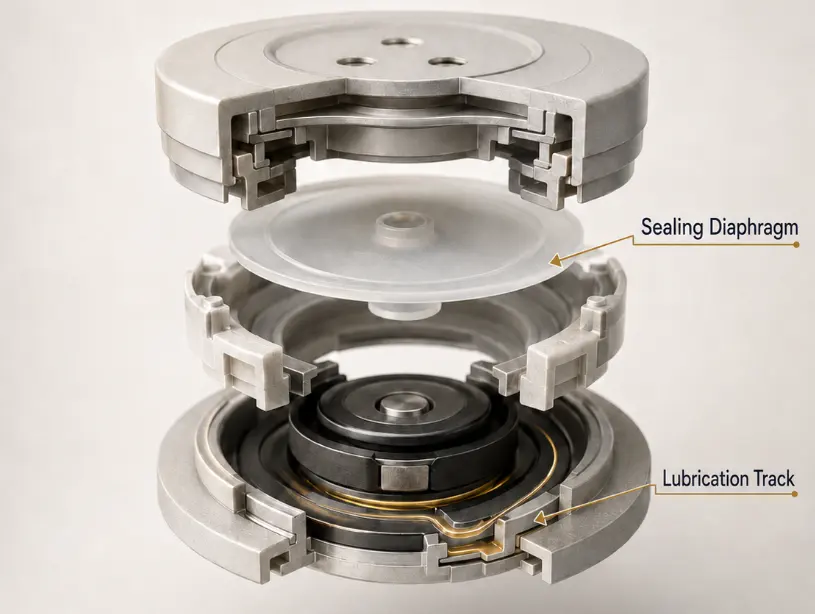
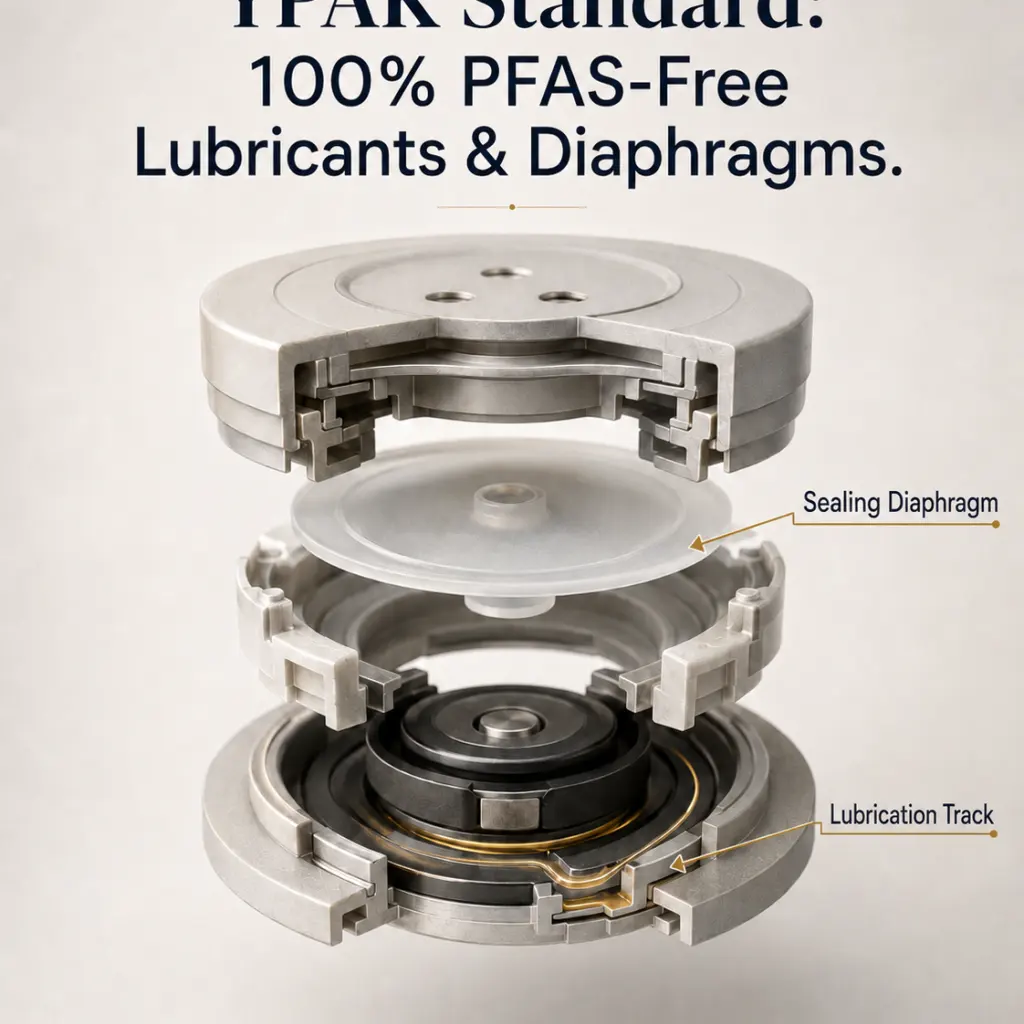
To ensure consistent mechanical opening and to prevent the valve from sticking due to coffee oils (lipids), many low-end valve manufacturers utilize fluorinated lubricants or fluoroelastomer diaphragms that contain PFAS. These substances ensure smooth operation but trigger "Positive" results in high-sensitivity EU laboratory screenings.
2. YPAK’s SGS 430-Substance Screening Protocol
YPAK’s 2026 compliance standard is absolute. Our verification process (SGS Report No: CANEC24020551301) extends beyond the 9-layer co-extruded film to include every sub-component of the valve and zipper. We ensure that our entire assembly achieves "Non-Detected" (ND) status at the 0.01 mg/kg limit, providing a total safety net for your brand.
Section 3: The Recyclability Paradox – Polymer Harmonization
Circular economy compliance is determined by Polymer Compatibility. Even a PFAS-free valve can be a "Recycling Contaminant" if it belongs to the wrong material family.
1. The PE-Film/PP-Valve Conflict
A common industry error is welding a Polypropylene (PP) valve onto a Recyclable Mono-PE pouch.
The NIR Sorting Failure: In European Near-Infrared (NIR) automated sorting facilities, the presence of a foreign polymer (PP) on a PE pouch creates "Signal Interference." The sensor flags the package as a multi-material composite, routing it directly to incineration rather than recycling.
The DfR Grade Downgrade: This material mismatch can drop your Design for Recycling (DfR) rating from Grade A to Grade D, triggering significantly higher eco-modulated EPR fees and eroding your retail margins.
2. YPAK’s "Single-Stream" Solution
To preserve your Grade A status, YPAK standardizes the use of PE-Compatible components. By synchronizing the molecular family of the bag, the valve, and the zipper, the entire pouch remains a "Single-Stream" asset that can be processed without manual separation.
Section 4: The WIPF Standard – Engineering for Sensory and Compliance
Why has YPAK chosen to standardize Swiss-made WICOVALVE® (WIPF) for its 2026 compliance series? The answer lies in the intersection of molecular safety and sensory integrity.
1. Mechanical Precision and VOC Retention
Specialty coffee's value is built on its Volatile Organic Compounds (VOCs). An inferior valve with inconsistent opening pressure can either cause "Bag Bloating" (retaining too much CO2) or allow "Oxygen Backflow" (staling the beans).
3-5 mbar Threshold: WIPF valves open at a precise pressure differential of 3-5 millibars. This surgical accuracy ensures that the coffee "breathes" exactly when necessary, while the patented liquid seal prevents any ingress of atmospheric oxygen, guarding the delicate floral and acidic notes of champion-level lots.
2. The European "Gold Standard" Proof
WICOVALVE® is the only system with a comprehensive EU compliance trail:
Full compliance with (EC) No 1935/2004 food-contact mandates.
Official certification from Interseroh (Germany) for material compatibility within the PE recycling stream.Total PFAS-Free legal declarations provided by Swiss engineering.
Section 5: Roaster’s Audit Checklist: How to Verify Your Accessories
We advise roasters preparing for the 2026 deadline to demand three specific technical disclosures from their packaging partners:
Request the SDS for Valve Lubricants: Ensure no fluorinated additives are listed.
Verify Polymer Base Compatibility: Confirm the valve body belongs to the same polymer family as the pouch film (e.g., PE-to-PE).
Audit the Pressure Differential: Demand data showing an opening pressure variance of less than 1.5 mbar across a production batch.
Conclusion: Future-Proofing Through Micro-Details
The EU PPWR is not merely an environmental law; it is a quality filter. Brands that overlook the 1% risk of their accessories will face the 100% risk of market rejection. Partnering with YPAK means securing a supply chain where the smallest component is engineered to meet the highest global standards.Don't let an accessory be your compliance bottleneck.
Many traditional one-way degassing valves utilize fluorinated lubricants or fluoroelastomer diaphragms to ensure smooth mechanical operation and resistance to coffee oils. These sub-components often contain PFAS (forever chemicals). Under the EU PPWR mandate effective August 12, 2026, even trace amounts of PFAS in a valve can render the entire pouch non-compliant and subject to market bans.
If you weld a standard Polypropylene (PP) valve onto a Recyclable Mono-PE bag, it creates a material conflict. In automated Near-Infrared (NIR) sorting facilities across Europe, this mismatch creates signal interference, causing the entire package to be rejected from the recycling stream. This results in a lower DfR Grade (typically D or E) and significantly higher EPR (Extended Producer Responsibility) plastic taxes for the roaster.
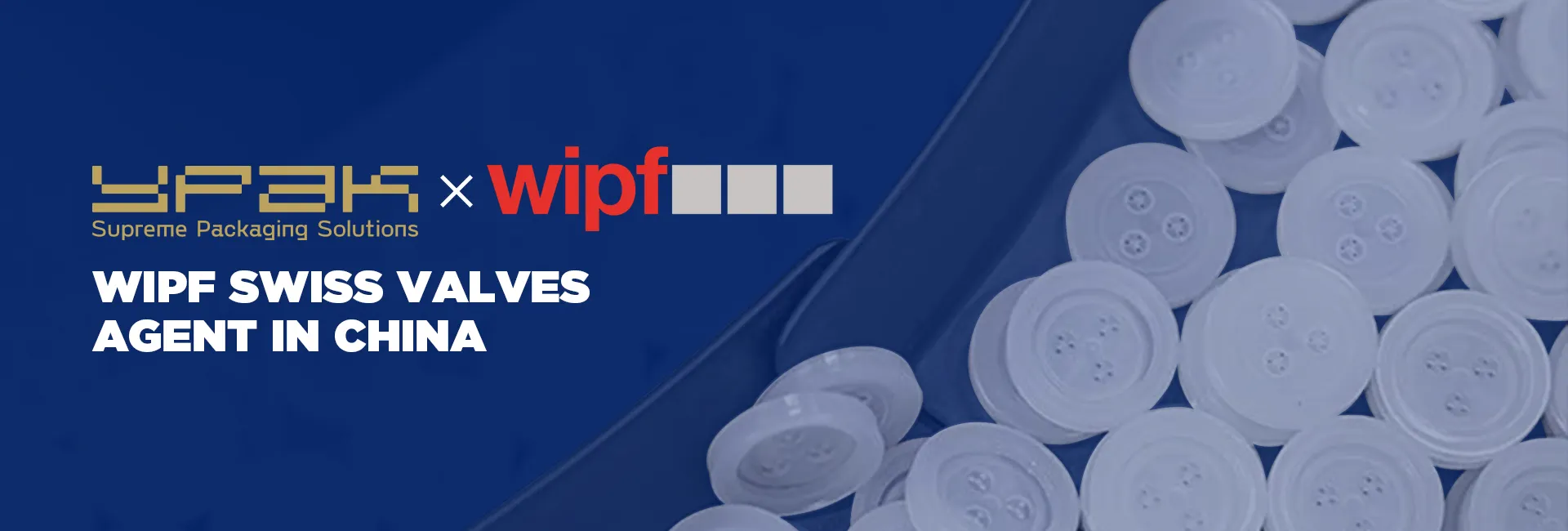
WIPF valves are engineered for both chemical purity and circular economy compatibility. They are 100% verified PFAS-free and are available in PE-compatible versions that synchronize perfectly with Mono-PE pouch recycling streams. Beyond safety, they offer superior sensory protection with a precise 3-5 mbar opening pressure that guards the coffee's aromatic VOCs while preventing oxygen backflow.
Yes. YPAK’s 2026 compliance series is backed by a "Total Assembly Audit." This includes SGS laboratory screenings (testing for 430 distinct PFAS substances) that cover the film, the valve, and the zipper. Additionally, we provide the official Material Compatibility certificates (such as those from Interseroh) for our WIPF-equipped solutions.
Not if you use YPAK’s synchronized solution. Our PE-compatible valves and zippers are designed to be recycled alongside the Mono-PE bag body in a "Single-Stream" process. This eliminates the need for consumer separation, ensures the pouch meets Grade A recyclability standards, and helps your brand avoid the "hard-to-recycle" surcharges implemented by EU member states.
Written by
ypak.coffee
ypak
YPAK PACKAGING GROUP was established in 2011 and formed with 3 companies based on Hongkong, Dongguan and Foshan. We have become one of the largest coffee bag manufacturers in China. We use the best quality WIPF valves from Switzerland to keep your coffee fresh.
Conform to the plastic ban policy imposed to many different countries, we have researched and developed the sustainable packaging bags, such as RECYCLABLE and COMPOSTABLE pouches.
No minimum quantity, no color plates are required with our HP 25K INDIGO DIGITAL PRINTING service.
You are welcome to visit YPAK.
Related Articles
Two Gates on the Road to the EU: Reduction by Design and the Documentation Chain for Coffee Packaging

Recyclable Coffee Bags: How to Protect Freshness Without Compromising Sustainability

Your Brand, Perfectly Packaged: The YPAK Guide to Selecting a High-Quality Custom Coffee Bag