

Updated 2 months ago
PCR Coffee Bag Manufacturer: Balancing Barrier Performance and Recycled Content

ypak.coffee
YPAK PACKAGING GROUP was established in 2011 and formed with 3 companies based on Hongkong, Dongguan and Foshan. We have become one of the largest coffee bag manufacturers in China. We use the best quality WIPF valves from Switzerland to keep your coffee fresh.
Conform to the plastic ban policy imposed to many different countries, we have researched and developed the sustainable packaging bags, such as RECYCLABLE and COMPOSTABLE pouches.
No minimum quantity, no color plates are required with our HP 25K INDIGO DIGITAL PRINTING service.
You are welcome to visit YPAK.
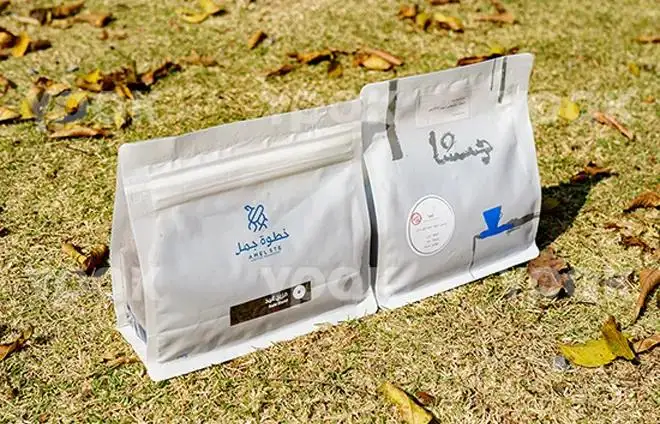
PCR Coffee Bags Manufacturer
Why PCR Content and Barrier Performance Should Be Evaluated Together?
Coffee is sensitive to oxygen, moisture, light, aroma loss and oil migration. Increasing PCR content can reduce virgin-plastic use, but it may also affect film consistency, color, odor, sealability and strength.
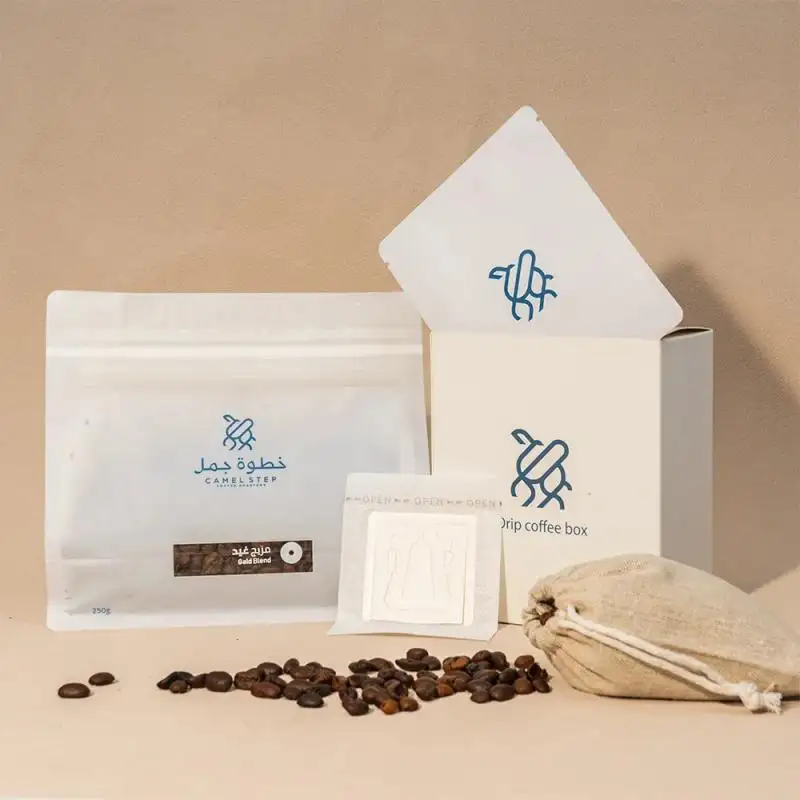
Buyers should therefore ask more than, "What percentage of PCR does the bag contain?" They should confirm where the PCR layer sits, what function it performs and how the full structure protects the coffee. A qualified PCR Coffee Bag Manufacturer should understand both recycled-material sourcing and high-barrier coffee packaging.
What Does PCR Content Mean in Coffee Bag Manufacturing?
PCR resin comes from plastic products that have been used, collected, cleaned and reprocessed. PIR instead comes from factory scrap.
A "50% PCR coffee bag" may mean one layer contains 50% PCR or that PCR represents 50% of the total plastic weight. Buyers should ask a PCR Coffee Bag Manufacturer to define the calculation method, identify the relevant layers and provide traceability documents.
| Item | PCR | PIR | Virgin Plastic |
| Source | Post-consumer waste | Factory scrap | New resin |
| Stability | Needs tighter control | Relatively stable | Usually most stable |
| Main value | Reduces consumer waste | Reduces production waste | Consistent processing |
| Buyer focus | Source, odor, migration and content | Source and percentage | Resin grade and performance |
Why Coffee Bags Require More Than a Recycled Material Claim
Coffee packaging must manage several risks. Oxygen barrier affects oxidation and aroma retention. Water-vapor resistance limits moisture uptake. Light protection is especially relevant for dark roasts and oily beans.
The sealant layer must remain stable during filling, sealing, storage and shipping. A one-way degassing valve must also match the laminate and sealing area.
PCR content is only one parameter. It cannot replace OTR, WVTR, seal-strength or shelf-life testing. A responsible PCR Coffee Bag Manufacturer should evaluate the complete package, not only the recycled-content claim.
PCR Coffee Bags vs Other Packaging Routes
Coffee brands should horizontally compare PCR coffee bags with other sustainable and conventional packaging routes.
| Packaging Route | Main Advantage | Main Limitation | Barrier Level | Suitable Use |
| PCR laminate | Reduces virgin-plastic use | Recyclability depends on the full structure | Medium-high to high | Balancing content and protection |
| Virgin laminate | Stable converting and barrier | Higher virgin-plastic use | High | Long shelf life and export |
| Mono-PE bag | Better PE recycling compatibility | Barrier and heat resistance need verification | Medium to medium-high | Markets with PE collection |
| Compostable bag | Supports a composting route | Cost, shelf life and disposal conditions vary | Structure-dependent | Markets with composting systems |
No route is universally best. PCR reduces virgin material, Mono-PE supports recycling compatibility, and compostable packaging follows another disposal path. Selection should reflect shelf life, market and local infrastructure.
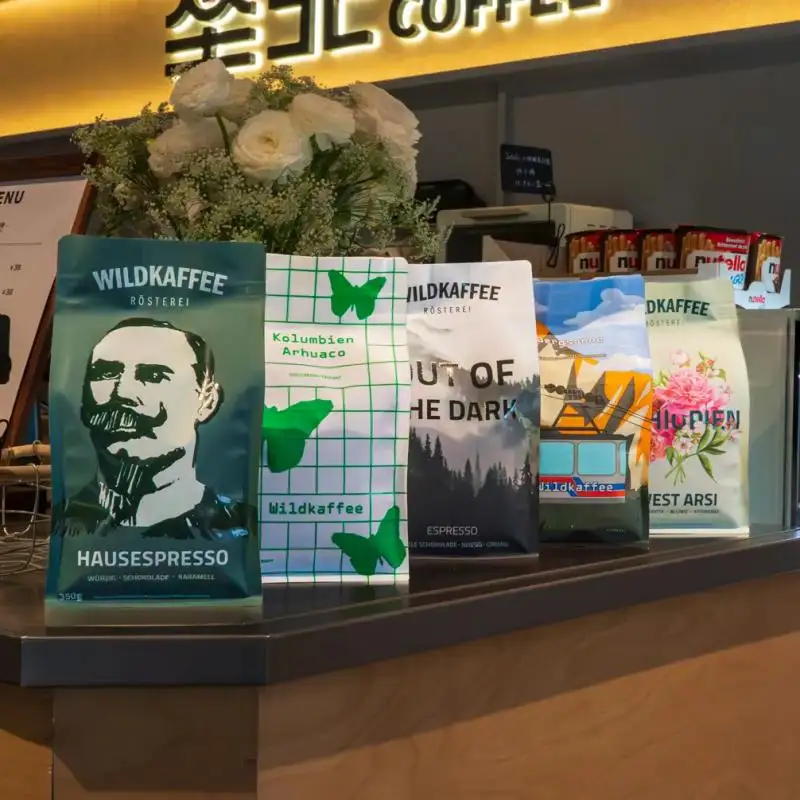
How Different PCR Content Levels Affect Performance
After selecting PCR coffee packaging, buyers should vertically compare different recycled-content levels.
| PCR Content | Potential Benefit | Main Challenge | Typical Application |
| 10%–30% | Easier processing and appearance control | Lower reduction in virgin resin | First PCR trials |
| 30%–50% | Balanced content and performance | Odor, color and consistency control | Retail and subscription coffee |
| 50%–70% | Greater virgin-material reduction | More demanding sealing, printing and strength | Projects with established testing |
| Above 70% | High recycled-content claim | Food-contact, supply and mechanical consistency | Selected or non-contact layers |
More PCR is not automatically more sustainable. If a high-PCR structure requires thicker films, creates more waste, reduces shelf life, increases transport damage or cannot enter the local recycling system, its overall benefit may decline.
A suitable PCR percentage should therefore be based on measurable packaging performance rather than the highest possible recycled-content claim.
Where PCR Material Should Be Used in the Bag Structure?
The position of the PCR material can affect printing, barrier performance, sealing and food-contact requirements.
| PCR Position | Advantage | Point to Verify |
| Outer layer | Reduces virgin content and can show a recycled appearance | Print adhesion, color and surface consistency |
| Middle layer | Hides color variation | Lamination strength |
| Inner layer | Raises total PCR percentage | Food-contact and heat-seal performance |
| Non-contact component | Lower development risk | Smaller contribution to total content |
Buyers should compare complete structures rather than resin names. Results vary with the barrier layer, adhesive, sealant and film orientation.
Using PCR in the outer or middle layer may provide a more practical starting point for brands that want recycled content without immediately changing the direct food-contact layer.
The Influence of Bag Designs on the Performance of PCR Packaging
Different designs of bags influence the behavior of materials in respect to the sealing process and how stress is distributed.
• Flat-Bottom Bags: Although these bags can be used for an attractive display on shelves, sealing is problematic as these bags have multiple folds.
• Stand Up Pouches: These bags are easy to design and are good for small retail/e-commerce bags.
• Side Gusset Bags: These bags can be used for bigger volumes through the assessment of the side seams and bottom strength.
• Quad seal bags: Good stability for retail; however, more difficult to convert.
The same PCR structure may perform differently across formats. A PCR Coffee Bag Manufacturer should therefore confirm the bag style before finalizing the material specification.
Barrier Structure Options for PCR Coffee Bags
A few structures are available for developing coffee bags with recycled content.
1. PCR Outer Layer, High-Barrier Middle Layer and Food-Grade Inner Layer
This structure is flexible enough to fit retail, export, and even some longer shelf-life applications. Each layer plays its part either in protection or in processing.
2. PCR-PE and High-Barrier PE Structure
This option allows for a more PE-compatible material pathway. However, barrier coatings, sealing ranges and recyclability claims must still be verified for the destination market.
3. PCR Outer Layer with VMPET or Aluminum
VMPET and aluminum can provide strong oxygen and light protection. However, the final package is normally a multilayer structure rather than a mono-material bag.
4. PCR in Non-Direct-Food-Contact Layers
This approach reduces development risk and can be suitable for brands introducing PCR coffee packaging for the first time.
A capable PCR Coffee Bag Manufacturer should start with the coffee type, shelf-life target and distribution route before defining the PCR level and barrier structure.
Which Tests Should Buyers Require Prior to Mass Production?
The following tests should be requested by buyers prior to giving approval to commence bulk production.
• OTR Test: Determines oxygen transmission rates for the packaging.
• WVTR Test: Determines water-vapor transmission rates for the packaging.
• Migration Test: Assesses the suitability of packaging for food contact.
• Odor Test: Detects possible odor emissions due to use of recycled resins.
• Heat-Seal Test: Determines the strength and the temperature range of a seal.
• Drop and Compression Test: Determines the robustness of packaging for shipping.
• Valve Test: Determines the integrity of surrounding seals and the performance of the valving for degassing.
• Filling Trials: Evaluate the capacity, appearance and the sealing performance.
• Batch Consistency Test: Determines the variation in post-consumer recycled (PCR) resins.
Do not approve only an empty bag. Test with the actual coffee, filling weight and sealing equipment before scale-up.
YPAK: A Trusted PCR Coffee Packaging Manufacturer
YPAK is a China PCR Coffee Bag Manufacturer. Structures can be compared by coffee type, shelf life, bag format and market.
YPAK supports flat bottom bags, stand-up pouches and side gusset bags. While Barrier Films, Zippers, PCR Layers, Sealants, and One-Way Valves may seem like many individual packaging components, they can actually be considered as one complete packaging system.
Short run and variable printing, for example, can be combined with HP Indigo digital printing to create a packaging system for multiple SKUs and market testing. Quality management for food packaging systems can be achieved through the BRCGS and ISO 22000 systems while WIPF valves provide controlled gas release for freshly roasted coffee.
Prior to undertaking a full-scale production run, the final specifications must be validated by means of documentation for materials, physical samples, filling trials, and testing of the heat seals.
Closing Words
Balance recycled content with proven coffee protection. Share your coffee type, target shelf life, bag format and preferred PCR percentage with YPAK. Compare suitable structures, test barrier and sealing performance, and confirm the final specification before mass production.
FAQs
Q1. What is PCR material, and how is it utilized in coffee packaging?
PCR stands for post-consumer recycled material. PCR is plastic that is reclaimed from a used consumer good, cleansed, and reformed into resin for new packaging use.
Q2. Are PCR coffee bags safe to use for food?
They may be safe for food use, but it relies on the specific PCR grade, where it is placed in the laminate, and the regulations for food-contact migration established.
Q3. What percent PCR is acceptable in coffee bags?
Most brands use PCR at concentrations of 10% to 30% as starting points, while 30% to 50% PCR content may improve packaging appearance and functionality while maintaining a good level of recycled content.
Q4. Does the use of PCR materials result in a loss of barrier performance?
It does not inherently hinder barrier performance. The laminate as a whole and the PCR layer, barrier film, adhesive, and sealant along with their thickness also factor in barrier performance.
Q5. In what layers of coffee bags may PCR materials be utilized?
Depending on safety and performance criteria, PCR materials may be used in the outer layer, middle layer, and inner sealant layer, as well as other non-food-contact layers.
Written by
ypak.coffee
ypak
YPAK PACKAGING GROUP was established in 2011 and formed with 3 companies based on Hongkong, Dongguan and Foshan. We have become one of the largest coffee bag manufacturers in China. We use the best quality WIPF valves from Switzerland to keep your coffee fresh.
Conform to the plastic ban policy imposed to many different countries, we have researched and developed the sustainable packaging bags, such as RECYCLABLE and COMPOSTABLE pouches.
No minimum quantity, no color plates are required with our HP 25K INDIGO DIGITAL PRINTING service.
You are welcome to visit YPAK.
Related Articles
Two Gates on the Road to the EU: Reduction by Design and the Documentation Chain for Coffee Packaging

Recyclable Coffee Bags: How to Protect Freshness Without Compromising Sustainability

Your Brand, Perfectly Packaged: The YPAK Guide to Selecting a High-Quality Custom Coffee Bag