

Updated 2 months ago
Mono PE Coffee Bags: What Is Required to Build a Real Recycling Loop?

ypak.coffee
YPAK PACKAGING GROUP was established in 2011 and formed with 3 companies based on Hongkong, Dongguan and Foshan. We have become one of the largest coffee bag manufacturers in China. We use the best quality WIPF valves from Switzerland to keep your coffee fresh.
Conform to the plastic ban policy imposed to many different countries, we have researched and developed the sustainable packaging bags, such as RECYCLABLE and COMPOSTABLE pouches.
No minimum quantity, no color plates are required with our HP 25K INDIGO DIGITAL PRINTING service.
You are welcome to visit YPAK.
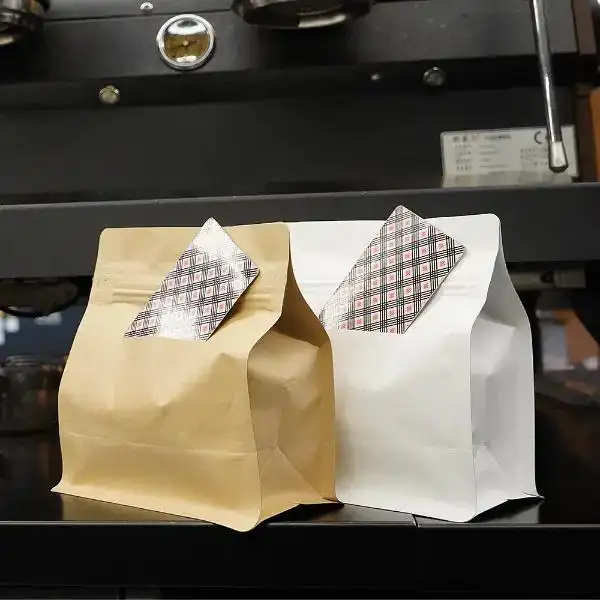
Mono PE Coffee Bags
Why "Recyclable" Does Not Always Mean "Recycled"
Coffee bags must control oxygen, moisture, aroma loss and oil migration. Conventional high-barrier packaging often combines PET, aluminum, paper and PE, but these materials are difficult to separate in standard mechanical recycling. Mono PE Coffee Bags simplify the structure by keeping most layers and components within a polyethylene-based material family.
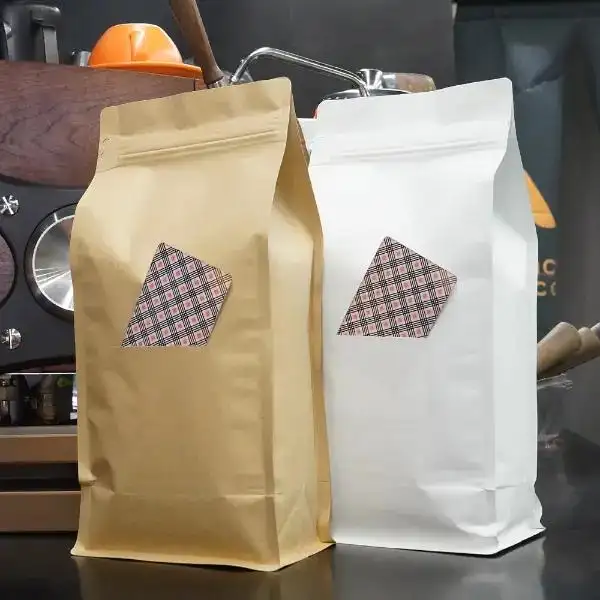
However, recyclable coffee packaging is not automatically recycled. Actual recovery also depends on local collection, flexible-plastic sorting, compatible inks and adhesives, suitable zippers and valves, reprocessing capacity and demand for recycled resin. Closed-loop coffee packaging, therefore, requires three connected conditions: adequate product protection, compatibility with a defined recycling stream and infrastructure capable of collecting and processing the used bag.
What Does a Closed Loop Mean for Coffee Packaging?
| Concept | Meaning | Buyer Check |
| Recyclable by Design | Technically suitable for a defined recycling process | Does it follow local design guidance? |
| Collected for Recycling | Consumers have access to an accepted collection route | Are flexible PE bags accepted? |
| Actually Recycled | Sorted and converted into marketable recycled PE | Is there processing capacity and end demand? |
Designing Mono PE Coffee Bags for recycling is only the starting point. If a bag is landfilled, incinerated or rejected during sorting, no loop is created. If the recovered PE only enters low-value products, material recovery has occurred, but it is not a bag-to-bag loop.
CEFLEX likewise treats collection, sorting and reprocessing as connected parts of circular flexible packaging rather than assuming that recyclable design alone will produce a closed loop.
Mono PE vs Other Coffee Packaging Routes
No packaging route is universally better. Buyers should compare shelf life, local recycling infrastructure, stiffness, sealing range, print quality, transport conditions, cost and order volume.
| Packaging Route | Barrier Potential | Recovery Route | Main Advantage | Main Limitation |
| Mono PE Coffee Bags | Medium-high to high | Flexible PE stream | Simplified material family | Depends on film collection |
| Mono PP Bags | Medium-high to high | Flexible PP stream | Good stiffness and heat resistance | Collection varies by market |
| PET/AL/PE Bags | High | Difficult in standard mechanical recycling | Strong light and oxygen protection | Layers are difficult to separate |
| Compostable Bags | Structure-dependent | Industrial or home composting | Fits selected organic-waste systems | Requires suitable facilities |
| PCR Coffee Bags | Structure-dependent | Depends on the complete pack | Reduces virgin-plastic use | PCR content does not ensure recyclability |
CEFLEX recommends mono-PE and mono-PP structures where possible because polyolefin mono-material formats are generally easier to recycle than mixed-material laminates.
The correct option therefore depends on the coffee's shelf-life target and the end-of-life system available in the destination market. A high-barrier multilayer bag may provide strong protection but present recycling difficulties, while Mono PE Coffee Bags may improve recycling compatibility where flexible PE collection and processing are available.
How Are Mono PE Coffee Bags Constructed?
"Mono-material" does not equate to "single-layer." Mono PE Coffee Bags can lend themselves to multiple PE-based films or layers, each with a distinct purpose.
•Outer layer: Is responsible for printability, is resistant to abrasion, and is stiffer.
•Barrier layer: Regulates the flow of oxygen and moisture along with the diffusion of aromas.
•Sealant layer: Increases the ability of the packaging to be heat-sealed.
•Functional components: Zipper, easy-open feature, and degassing valve.
•Print system: Comprises various inks, coatings, primers and laminating adhesives.
YPAK offers PE/EVOHPE coffee-bag structures with optional PCR materials, flat-bottom formats, transparent windows and matte finishes. These options demonstrate that Mono PE Coffee Bags can combine retail presentation with coffee protection rather than being limited to simple transparent pouches.
Barrier percentages and tie layers still matter. EVOH has been evaluated for compatibility with PE-film recycling, but buyers should verify the complete construction against the current design guidelines used in each destination market.
The Seven Steps from a Coffee Bag to Recycled PE
1. Design for Recycling
The main films, sealant, zipper, valve, labels, inks and adhesives should be compatible with the intended PE recycling stream.
2. Provide Clear Disposal Instructions
Brands should use market-specific disposal guidance instead of relying only on a generic recycling symbol.
3. Collect the Bag
Flexible plastics must be accepted through curbside collection, store-drop programs, or specialist collection systems.
4. Sort the Material
Sorting equipment must identify and retain PE film instead of losing small or lightweight coffee pouches as residual waste.
5. Wash and Reprocess
To avoid the contamination of recycled materials with coffee oils, product residue, adhesives and inks, the odor, color and purity of the recycled material will be affected.
6. Produce Recycled Resin
Cleaned PE film is melted, filtered and pelletized into recycled plastic resin.
7. Create an End Market
The recycled PE needs a stable application. It may enter transport film, refuse sacks, non-food packaging or approved layers in new packaging.
A real recycling loop fails when any stage is missing. Designing sortable and recyclable packaging is important, but suitable collection, processing infrastructure and end markets must also exist.
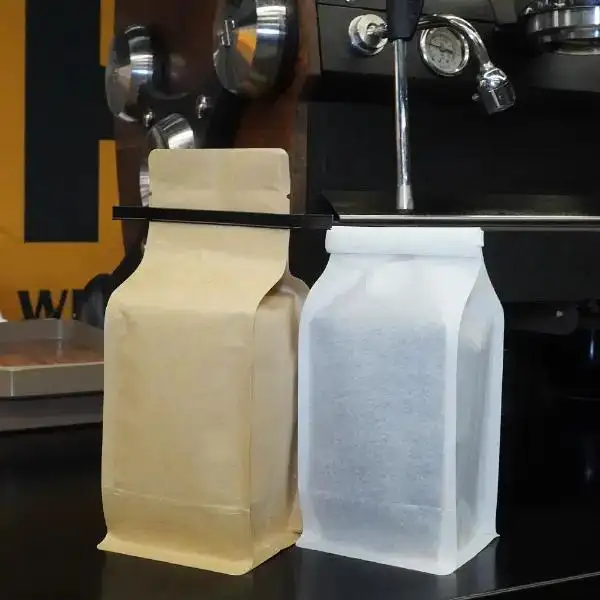
How Different Mono PE Coffee Bags Perform
Not all Mono PE Coffee Bags deliver the same barrier, stiffness or production performance.
Comparison by Material Structure
| Mono PE Structure | Best Use | Key Verification |
| Standard PE | Short-to-medium shelf-life products | Oxygen barrier and stiffness |
| High-Barrier PE | Specialty coffee and long-distance distribution | Barrier ratio and recycling compatibility |
| MDO-PE | High-quality printing and retail display | Puncture and heat-seal performance |
| PCR-Integrated Mono PE | Lower virgin-plastic targets | PCR source, odor, color and consistency |
Comparison by Bag Format
| Bag Format | Main Strength | Typical Application |
| Stand-Up Pouch | Efficient and flexible format | Small packs and e-commerce |
| Flat-Bottom Bag | Strong display and filling stability | Specialty retail coffee |
| Side-Gusset Bag | Familiar format and bulk efficiency | Wholesale and large packs |
| Flat Pouch | Low material use for small sizes | Samples and single-serve products |
For an accurate vertical comparison, buyers should measure:
•Bag weight at the same filling capacity
•Oxygen and moisture barrier performance
•Seal strength and sealing window
•Drop and compression resistance
•Packaging stiffness
•Degassing-valve compatibility
•Number of bags per shipping carton
•Packaging material used per kilogram of coffee
A heavier flat-bottom bag may provide better shelf presentation, while a stand-up pouch or flat pouch may reduce material use. The optimum format depends on filling equipment, distribution conditions and branding requirements.
Why Some Mono PE Coffee Bags Still Fail to Be Recycled
Several factors can prevent technically recyclable bags from entering a recycling loop:
•No local film collection: The bag goes to the landfill.
•Incorrect disposal: Customers leave residue and/or use the wrong bin.
•Incompatible components: Material purity is affected by non-PE zippers, valves and large labels.
•Small dimensions: Pouches may be lost in the sorting process due to their lightweight.
•Coffee oil contamination: Making the bag odorless and the removal of the oil becomes a more difficult process.
•Heavy dark printing: Effect the sorting process and the color of the recycled-resin.
•Weak end demand: Reprocessing may not be commercially sustainable.
•Food-contact restrictions: Recycled PE may not qualify for direct-contact layers.
These issues show why design for recyclability should include the whole package rather than only the main film. CEFLEX guidance also considers material selection, sortability and the compatibility of different packaging components.
Design the Bag and the Recycling Path Together
Define your coffee type, shelf-life target, bag format, destination market and disposal route before production. Work with YPAK to test sealing, barrier performance, filling and transport durability—then develop Mono PE Coffee Bags that protect freshness and support a realistic recycling pathway.
FAQs
Q1. What are Mono PE Coffee Bags?
Mono PE Coffee Bags comprise layers with polyethylene. Flexible packing solutions with Mono PE construction provide the benefits of printability, stiffness, protective barrier, heat-seal and some other functions in a cohesive material system.
Q2. Are Mono PE Coffee Bags fully recyclable?
Yes, Mono PE Coffee Bags are fully recyclable if the flexible PE packaging is accepted in the locality. In fact, the recyclability of the bags depends on the entire structure, including barrier layers, adhesives, zippers, valves, inks and the local systems for collection.
Q3. What is the difference between recyclable and actually recycled?
Recyclable refers to the ability of the packaging to be considered for a recycling process. Actually recycled refers to the process of collection, sorting, cleaning, and reprocessing to obtain a commercially viable recycled material.
Q4. Can Mono PE Coffee Bags provide a high oxygen barrier?
Yes, Mono PE Coffee Bags can provide high oxygen barrier. However, Buyers are encouraged to check the required coffee shelf life before evaluating the barrier transmission rate.
Q5. Is EVOH compatible with Mono PE recycling?
Yes, EVOH is compatible with Mono PE recycling when used in limits, along with adequate tie layers. However, it is recommended to verify compatibility with the recycling guidelines of the target market.
Written by
ypak.coffee
ypak
YPAK PACKAGING GROUP was established in 2011 and formed with 3 companies based on Hongkong, Dongguan and Foshan. We have become one of the largest coffee bag manufacturers in China. We use the best quality WIPF valves from Switzerland to keep your coffee fresh.
Conform to the plastic ban policy imposed to many different countries, we have researched and developed the sustainable packaging bags, such as RECYCLABLE and COMPOSTABLE pouches.
No minimum quantity, no color plates are required with our HP 25K INDIGO DIGITAL PRINTING service.
You are welcome to visit YPAK.
Related Articles
Two Gates on the Road to the EU: Reduction by Design and the Documentation Chain for Coffee Packaging

Recyclable Coffee Bags: How to Protect Freshness Without Compromising Sustainability

Your Brand, Perfectly Packaged: The YPAK Guide to Selecting a High-Quality Custom Coffee Bag