


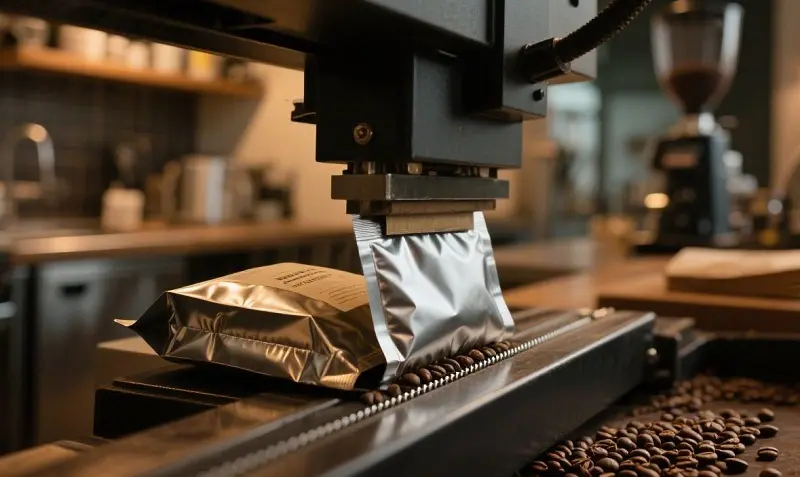
how to seal coffee bags?
You are a coffee lover and you must already have heard that it is all about freshness. The richness of aroma, multi-dimensional flavor and smoothness of coffee all rely on how your coffee beans are kept. Vacuum sealing coffee beans is one of the most widely used techniques nowadays, but is it effective?
Here, we are going to discuss the impact of vacuum sealing on coffee freshness, the shelf life of beans, and whether or not it is the most effective method of storing your cup-of-the-day.
What Is Vacuum Sealing Coffee Beans?
Vacuum sealing is a food preservation technique that involves the removal of air in a container or bag and then tightly sealing it. Air being one of the primary factors that make coffee stale, therefore, removing it helps to delay the process.
Due to the presence of oxygen, coffee beans oxidize and lose their flavor and aroma gradually. Vacuum sealing can go a long way in minimizing this exposure, so as to preserve the necessary oils and flavor profile of the beans.
The reason why Coffee Beans go stale.
It is crucial to have a glimpse of what makes coffee lose its freshness before getting deeper into the subject. The top four enemies of coffee beans are:
· Oxygen (oxidation)
· Moisture
· Heat
· Light
Coffee, even at optimum conditions, starts to decay once it has been roasted. Vacuum sealing will prevent one of the greatest enemies oxygen, but it does not completely prevent the aging process.
Benefits of Vacuum Sealing Coffee Beans
1. Extends Shelf Life
Vacuum sealing can greatly increase the duration of time within which coffee beans remain fresh as opposed to other storage methods. Coffee stored under vacuum, and unopened, can last between 6 months and 1 year, depending on the conditions in the storage.
In other instances, well-packed vacuum-sealed coffee can last as long as two years, but its taste would deteriorate with time.
2. Preserves Flavor and Aroma
By reducing oxygen exposure, vacuum sealing helps maintain the delicate aromatic compounds that give coffee its unique taste. This is more so because of specialty coffee beans whose flavor notes are complicated.
3. Resistant to Moisture and Odors.
Coffee beans are porous and can be easily moistened and soaked with other odor. Vacuum sealing is a barrier that helps to avoid contamination by external factors.
4. Perfect as a Bulk Storage.
Vacuum sealing is one of the most appropriate methods of splitting beans into smaller sections and storing them longer without losing much quality in case you purchase coffee in bulk.
What is the shelf life of Vacuum-Sealed Coffee Beans?
The vacuum-packaged coffee life is determined by various factors such as opening the package or not, the whole beans or grounded beans and the type of whole beans used.
Unopened Vacuum-Sealed Coffee
· Whole beans: 6-12 months (optimal quality period)
· Ground coffee: 3–6 months
With optimum conditions (cool, dark storage), unopened coffee can take even longer but the taste fades away.
Opened Vacuum-Sealed Coffee
The vacuum environment is lost as soon as it is opened.
· Whole beans: ~1 month of good freshness
· Ground coffee: 1–2 weeks
This is the reason why it is important to resal or transfer to airtight containers after opening.
Are Vacuum Sealing and Coffee Fresh Eternal?
No--vacuum sealing retards, but not prevents, staling.
Naturally, coffee beans release carbon dioxide subsequent to the roasting procedure (a procedure known as degassing) and the transformation proceeds as time goes by. Flavour deterioration even under a vacuum sealed condition is unavoidable.
Indeed, numerous professionals suggest drinking coffee within 2-4 weeks of the roasting process as the most tasting, no matter how it is stored.
Vacuum Sealing vs. other storage.
Vacuum Sealing vs Airtight Containers
· Vacuum sealing: Long storage.
· Airtight containers: More convenient and to be used on a daily basis.
Airtight container with a high quality might be more feasible to the common coffee drinkers.
Freezing vs Vacuum Sealing.
Coffee beans can be frozen to further lengthen the shelf life, but only when properly done.
· Prior to freezing, vacuum sealing prevents moisture and freezer burn.
· When well packaged, frozen beans can take several months to years.
Repeated thawing and refreezing however, may harm flavor.
Vacuum Sealing Coffee Beans Best Practices.
In order to achieve the maximum of vacuum sealing, consider the following:
1.First use Fresh Beans.
Always start with freshly roasted beans. Vacuum sealing will not make stale coffee better, it only helps to maintain the existing quality.
2. Break into Small Bits.
Always seal coffee in small portions so that it is not exposed to the air on opening them.
3. Keep in a Cool Dark Place.
Vacuum-packed coffee must be stored in absence of heat and sunlight.
4. Avoid Moisture
Do not store vacuum-sealed coffee in damp places. Even when seals are compromised moisture can still penetrate.
5. Long-term storage: Freezing.
To store longer than a few months, use a combination of vacuum sealing and freezing as a means of preserving the food as fresh as possible.
Errors to be avoided.
· Sealing beans that have just been roasted (they should first be degassed).
· Keeping close to warm places such as ovens or windows.
· Repeatedly opening large batches.
· Vacuum bags of poor quality that leak air.
These errors can be avoided, and it may greatly enhance your coffee experience.
Should you Vacuum Seal Coffee?
Vacuum sealing is certainly worth it when:
· You purchase coffee in large quantities.
· You wish to add shelf life.
· You keep beans weeks or months.
Nonetheless, when your coffee intake is rapid (within 1-2 weeks), the use of more basic methods of storage (such as airtight containers) can be adequate.
Final Thoughts
One of the best methods to preserve freshness and preserve flavor, particularly when it comes to long-term storage, is to vacuum seal coffee beans. It will not prevent completely the aging of coffee but it will slow down the aging of coffee by a huge margin.
To achieve optimal outcomes, vacuum sealing should be used in tandem with adequate storage procedures: storing the beans in cool, dark, dry, and hopefully within their optimal period of freshness.
When it comes to great coffee, it is important to begin with fresh beans at the end of the day and the way in which you store them will matter it all.

Written by
ypak.coffee
ypak
YPAK PACKAGING GROUP was established in 2011 and formed with 3 companies based on Hongkong, Dongguan and Foshan. We have become one of the largest coffee bag manufacturers in China. We use the best quality WIPF valves from Switzerland to keep your coffee fresh.
Conform to the plastic ban policy imposed to many different countries, we have researched and developed the sustainable packaging bags, such as RECYCLABLE and COMPOSTABLE pouches.
No minimum quantity, no color plates are required with our HP 25K INDIGO DIGITAL PRINTING service.
You are welcome to visit YPAK.
Related Articles
Two Gates on the Road to the EU: Reduction by Design and the Documentation Chain for Coffee Packaging

Recyclable Coffee Bags: How to Protect Freshness Without Compromising Sustainability

Your Brand, Perfectly Packaged: The YPAK Guide to Selecting a High-Quality Custom Coffee Bag