


Updated 5 months ago
how long does a bag of coffee beans stay fresh?

ypak.coffee
YPAK PACKAGING GROUP was established in 2011 and formed with 3 companies based on Hongkong, Dongguan and Foshan. We have become one of the largest coffee bag manufacturers in China. We use the best quality WIPF valves from Switzerland to keep your coffee fresh.
Conform to the plastic ban policy imposed to many different countries, we have researched and developed the sustainable packaging bags, such as RECYCLABLE and COMPOSTABLE pouches.
No minimum quantity, no color plates are required with our HP 25K INDIGO DIGITAL PRINTING service.
You are welcome to visit YPAK.
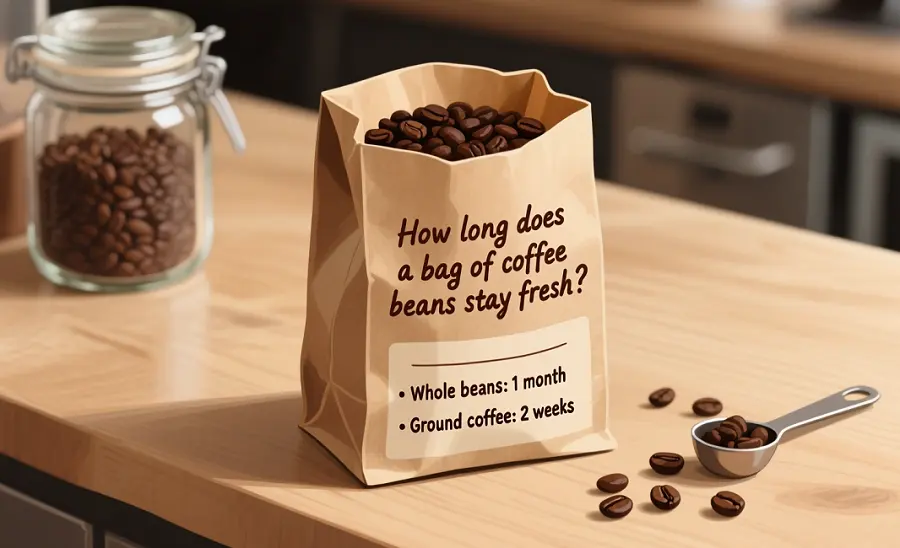
how long does a bag of coffee beans stay fresh?
One of the questions that coffee lovers tend to pose is not that complicated, yet quite important: how long do coffee beans stay in a closed bag? The response is not as clear as an expiration date on the package. Rather, it relies upon date of roast, type of packaging, storage, and definition of freshness.
In this full guide we will deconstruct the actual shelf life of coffee beans, how sealing influences freshness and how to store coffee beans to enjoy the best flavor. Regardless of whether you are a home brewer or coffee lover, knowledge of coffee freshness can radically change your cup of coffee.
Coffee Bean Freshness In a Nutshell.
Coffee beans are a perishable agricultural commodity that is natural. Once roasted, they start to emit gases (primarily carbon dioxide) and gradually oxidize. This process interacts with aroma, flavor and body with time.
Coffee beans even when kept in a closed bag are not totally resistant to ageing. Nevertheless, packaging has a great influence in preserving the flavor, which is lost much slower.
The major coffee adversaries of coffee freshness are:
· Oxygen (causes oxidation)
· Light (breaks down aromatic compounds)
· Heat (accelerates staling)
· Humidity (destroys flavor)
Due to this, sealed packaging is a very important aspect of maintaining quality.
How Long Do Coffee Beans Last in a Sealed Bag?
Generally, the unopened sealed bag of coffee beans may last:
· When at optimum freshness: 2-6 weeks post roasting.
· High quality: 3-6 months.
· Still edible: 12 months or longer.
The research carried out in the industry and coffee professionals says that even without opening, properly stored unopened roasted beans can be used within a year, but the taste will be worse than on the first day of use.
It should be noted though that there is a difference between:
· Optimum freshness (optimal taste and aroma)
· Edible shelf life (still edible but less tasty)
An airtight bag retards oxidation, but does not prevent it.
Will Sealed Packaging Keep Coffee Fresh?
Yes--but not beyond a certain degree.
The majority of quality coffee bags have used:
· One-way degassing valves
· Nitrogen flushing
· Airtight heat sealing
These characteristics enable the escape of carbon dioxide and inhibit the entry of oxygen which aids in the preservation of taste.
However, even in sealed packaging:
· Coffee goes on with the inside job.
· Aromatic compounds slowly degrade
· Natural oils start to deteriorate.
And so sealed packaging does not stop the time of coffee, it only increases the shelf life.
Whole Beans vs Ground Coffee in Sealed Bags.
The next huge determinant of freshness is the type of coffee i.e. whole bean or ground.
Whole Coffee Beans
Whole beans are also fresher due to their outer shell that safeguards the internal oils.
· Until 6-12 months (optimal 3-6 months) in unopened sealed bag.
· Storage: refrigerated refrigeration 2-4 weeks after opening.
Ground Coffee
Staling is accelerated dramatically by exposing surface area to oxygen, which is aided by grinding.
· Sealed bag when not opened: 3-5 months.
· Upon opening: 1-2 weeks to optimal flavor.
This is why coffee experts would always advise grinding immediately before brewing.
What Becomes of Coffee With Time?
Coffee in a closed bag undergoes changes gradually:
1. Loss of Aroma
Fresh coffee is floral, fruity or nutty. With time these decay.
2. Flavor Flattening
Complex flavors are bland or generic.
3. Oil Degradation
Natural oils oxidise and make them less rich and body.
4. Stale Taste Development
Stale coffee can be woody, bitter or flat.
Notably, expired coffee is not generally harmful, merely less pleasant.
The influence of Roast Date on Shelf Life.
Most individuals are misled by concentrating on expiry dates and instead coffee freshness is gauged on the roast date rather than the packaging date.
· Light roast: has a longer lasting flavor.
· Dark roast: wears out more quickly because of surface oils.
· Fresh coffee: requires 3-7 days of degassing to optimum brewing.
To ensure optimal outcome the roast date should be checked at all times as opposed to using merely the best before labels.
How to Store Coffee Beans the Best Ways at Home.
Although in sealed packaging, it is important to store well after opening.
Ideal storage conditions:
· Cool environment (room temperature)
· Dark place (avoid sunlight)
· No moisture (dry climate).
· Airtight container after opening
Avoid:
· Refrigerators (damp + odor absorbance)
· Close to heat, open kitchen counters.
· Light transparent jars.
Research shows that air, heat, moisture, and light are the main causes of coffee degradation.
Should Coffee Beans be Frozen?
Freezing coffee is a controversial practice.
Pros:
· Shelf life is 1-2 years.
· Slows oxidation significantly
Cons:
· Possible damage of condensation.
· May cause loss of flavor unless kept well.
In case of freezing:
· Vacuum-sealed airtight bags should be used.
· Break into portions.
· Do not thaw and refreeze.
Otherwise, daily use is typically best at room temperature storage.
Indications Your Coffee Beans are no longer Fresh.
You can tell when coffee is stale by just basic sensory examination:
· Weak or no aroma
· Flat or dull taste
· Dry or dry brittle grounds.
· Lack of crema in espresso
· Cardboard-like or bitter taste.
Fresh coffee will not make you sick, but it will significantly decrease the quality of your brew.
Maximizing the Freshness of Coffee.
To achieve maximum flavour in your beans:
· Purchase smaller orders more frequently.
· Select beans with a definite roast date.
· Store beans until required.
· Grind just what you require.
· Store in airtight containers after opening
These little habits will make a significant change to your coffee experience.
Final Decision: The Life span of Coffee beans.
To summarize:
· Unopened bag: best 2 to 6 weeks, good 6 months, can be used 12 months.
· Opened whole beans: last 2-4 weeks.
· Ground coffee: lasts best 12 weeks.
Finally, coffee does not go out of date, it just begins to lose its flavor nuances with time.
In the event that you are concerned with taste then the ultimate aim is not to have a long storage, but to have as much as possible of freshness at the point of brewing.
Written by
ypak.coffee
ypak
YPAK PACKAGING GROUP was established in 2011 and formed with 3 companies based on Hongkong, Dongguan and Foshan. We have become one of the largest coffee bag manufacturers in China. We use the best quality WIPF valves from Switzerland to keep your coffee fresh.
Conform to the plastic ban policy imposed to many different countries, we have researched and developed the sustainable packaging bags, such as RECYCLABLE and COMPOSTABLE pouches.
No minimum quantity, no color plates are required with our HP 25K INDIGO DIGITAL PRINTING service.
You are welcome to visit YPAK.
Related Articles
Two Gates on the Road to the EU: Reduction by Design and the Documentation Chain for Coffee Packaging

Recyclable Coffee Bags: How to Protect Freshness Without Compromising Sustainability

Your Brand, Perfectly Packaged: The YPAK Guide to Selecting a High-Quality Custom Coffee Bag