

Updated 7 months ago
12oz Coffee Bag Packaging: How to Choose the Right Materials for Cost, Freshness, and Brand Impact

ypak.coffee
YPAK PACKAGING GROUP was established in 2011 and formed with 3 companies based on Hongkong, Dongguan and Foshan. We have become one of the largest coffee bag manufacturers in China. We use the best quality WIPF valves from Switzerland to keep your coffee fresh.
Conform to the plastic ban policy imposed to many different countries, we have researched and developed the sustainable packaging bags, such as RECYCLABLE and COMPOSTABLE pouches.
No minimum quantity, no color plates are required with our HP 25K INDIGO DIGITAL PRINTING service.
You are welcome to visit YPAK.
12oz Coffee Bag Packaging: How to Choose the Right Materials for Cost, Freshness, and Brand Impact
Coffee bags of 12 oz (340g) render one of the most frequent and at the same time the most competitive package types in the market of specialty coffee. The 12oz is a comparatively small volume relative to the large format, and this implies that roasters have to consume more packaging materials with every batch of roast. Consequently, the selection of the appropriate packaging is essential to strike the right balance between cost-efficiency, freshness of the coffee, sustainability, as well as the branding.
The importance of 12oz Coffee Packaging.
In the case of specialty and small-scale coffee roasters, packaging is much more than merely a container, and the initial point of contact between the brand and the consumer. A 12oz coffee bag is commonly placed on the shelves of the retail areas, at the counters of the cafe, or on the websites, where the material, the structure and the visual design of this object significantly influence the buying process.
Due to the reduced net weight, poor material selections may also be very cost-per-unit intensive, which is slowly marginalizing the margins. This is why the consideration of the packaging choice is critical in ensuring sustainable profitability.
Popular Packaging Materials of 12oz Coffee Bags.
Another solution that is considered one of the most popular and efficient in the case of packaging 12oz coffee is a multi-layered laminated structure, which usually includes:
· PET (Polyethylene Terephthalate): Strong and durable as well as high quality prints.
· Aluminum foil: Provides better protection against oxygen, light and moisture.
· PE (Polyethylene): This is the inner coating that is recognized to be safe in food and reliable in heat sealing.
This is a fantastic balance of coffee protection and cost control as it is like a gold-rush in the specialty coffee market where freshness is not a bargain.
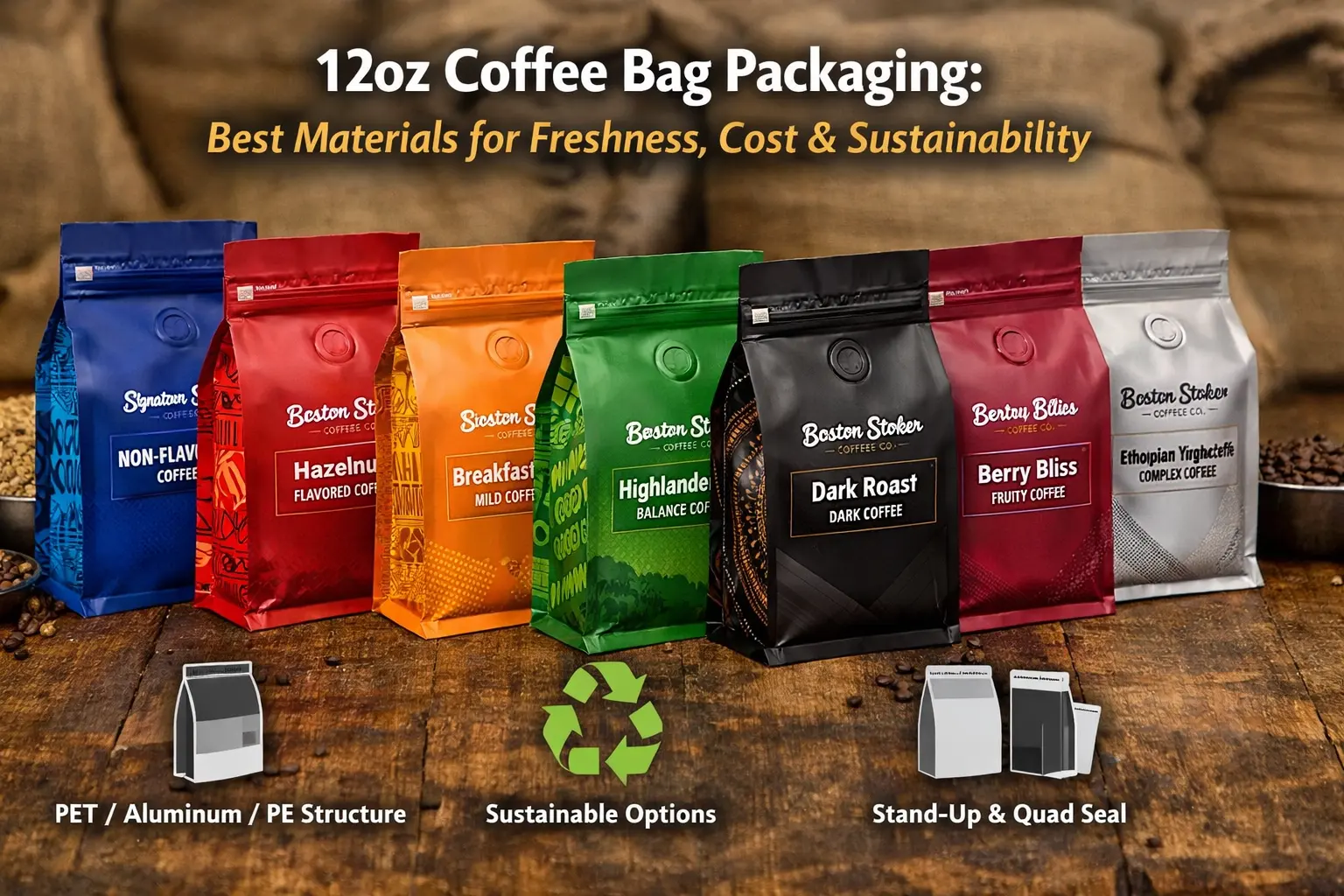
The case of Boston Stoker Coffee Co., took a long time to consider the options of packaging and only decided on a PET / aluminum/ PE structure. They also have one-way degassing valves and resealable recyclable zippers on their bags. Degassing valve is used to release carbon dioxide produced after the roasting process and avoid the entry of oxygen which is used to extend shelf life and preserve flavor.
The correct structure of bags to choose.
Regarding the structure, the two most popular choices of 12oz coffee bags are:
· Stand-up pouches (SUPs): cheap, light, and suitable to retail and online selling.
· Quad seal-pouch: More upscale, and the side panels can be further branded and told a story.
A structure differs on the materials it utilizes and the unit cost, shelf presence and perceived value. The roasters must make a choice depending on sales channels, brand positioning, and budget.
The Story of a Brand with Color and Design.
Good coffee packaging is not just a way of preserving the product, but it conveys identity. To make it possible to learn the tastes of customers quickly, Boston Stoker Coffee Co. designs its labeling system with a color code:
· Blue: Non-flavored coffees
· Red: Flavored coffees
· Orange: Mild coffees
· Green: Balanced coffees
· Black: Dark roasts
· Maroon: Fruity coffees
· Silver: Complex coffees
Moreover, some of their signature coffee bags have unique side patterns that symbolize the various decades of the history of the company. This is a clever design solution that makes the packaging a narrative device, which builds emotional resonance with the customers and brand recognition.
A Sustainable Coffee Packaging: An Emerging Concern.
Sustainable coffee packaging has been a requirement, not a favor, as the concern of consumers about environmental factors grows. Increasing coffee brands are shifting towards:
· Recyclable coffee bags
· Biodegradable or compostable substances.
· Renewable resource packaging.
These solutions can be used to lessen the effect on the environment and sustain the ability to keep freshly roasted coffee intact with the barricading qualities that need to be achieved. Simultaneously, they increase the brand equity and attract eco-friendly people.
Beyond Coffee Bags: eco-friendly Takeaway Cups.
Packaging options do not end with coffee beans. Another major extension of brand identity is takeaway coffee cups. Recycled kraft paper cups with eco-friendly PLA linings are becoming more popular because they offer performance and sustainability.
Single-wall and two-wall cups are also offered as well as compostable cup sleeve and recyclable designs. The size of the common sizes is between 4 oz and 8 oz up to 12 oz, 16 oz, 22 oz and 24 oz meaning that cafes can satisfy a great diversity of customers.
Final Thoughts
It is not just a matter of material in selecting the appropriate 12oz coffee bag packaging. It is a strategic move that influences the cost effectiveness, product freshness, brand image and environment. The coffee brands can find their way out of the crowded market by choosing the high-performance material structures, combining them with the appropriate bag format, and investing in the well-thought-out, storytelling design.
A close collaboration with an established supplier of packaging options to create a customized solution to roast coffee and to-go beverages can be a highly productive investment a coffee company can make in the present and the future.
Written by
ypak.coffee
ypak
YPAK PACKAGING GROUP was established in 2011 and formed with 3 companies based on Hongkong, Dongguan and Foshan. We have become one of the largest coffee bag manufacturers in China. We use the best quality WIPF valves from Switzerland to keep your coffee fresh.
Conform to the plastic ban policy imposed to many different countries, we have researched and developed the sustainable packaging bags, such as RECYCLABLE and COMPOSTABLE pouches.
No minimum quantity, no color plates are required with our HP 25K INDIGO DIGITAL PRINTING service.
You are welcome to visit YPAK.
Related Articles
Two Gates on the Road to the EU: Reduction by Design and the Documentation Chain for Coffee Packaging

Recyclable Coffee Bags: How to Protect Freshness Without Compromising Sustainability

Your Brand, Perfectly Packaged: The YPAK Guide to Selecting a High-Quality Custom Coffee Bag