

Updated 2 weeks ago
Eco Friendly Coffee Paper Cups: Start With the Bin, Not the Cup

ypak.coffee
YPAK PACKAGING GROUP was established in 2011 and formed with 3 companies based on Hongkong, Dongguan and Foshan. We have become one of the largest coffee bag manufacturers in China. We use the best quality WIPF valves from Switzerland to keep your coffee fresh.
Conform to the plastic ban policy imposed to many different countries, we have researched and developed the sustainable packaging bags, such as RECYCLABLE and COMPOSTABLE pouches.
No minimum quantity, no color plates are required with our HP 25K INDIGO DIGITAL PRINTING service.
You are welcome to visit YPAK.
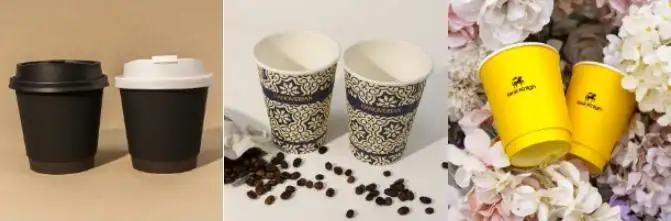
eco friendly coffee paper cups
Brown kraft cup is a sustainable cup.
This doesn't necessarily mean it's the best sustainable cup for your company.
The real test is once the coffee has been consumed. Which container will the customer use for the cup? What do you think will happen to the lid? Is the material's choice the right one for the local collection? And would the cup have functioned well enough for staff not to have to double cup hot drinks?
When it comes to eco friendly coffee paper cups, sustainability is better when you approach the end of the cup's life and work your way back.
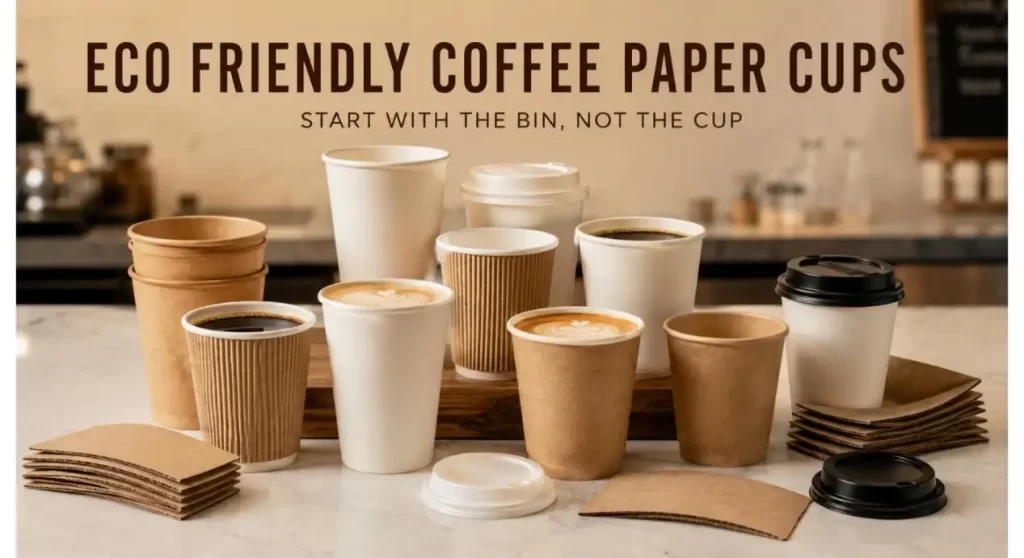
Begin by thinking about where the used cup will be going once used.
Let's get one thing out of the way before we start comparing finishes:
Which of the following will this cup fall into?
A café within an office campus could have a completely different waste management to that of a takeaway kiosk, hotel or street facing coffee shop.
That's important, because the term recyclable and compostable refer to a material path, not necessarily what you can do with every used cup, in every place.
YPAK's full Eco Friendly Coffee Paper Cups guide can help you understand the directions for the materials. Your procurement brief should take the next step and link that decision with the reality of the market that your cup will occupy.
It all begins with what are the facts about disposal. Next decide on the material.
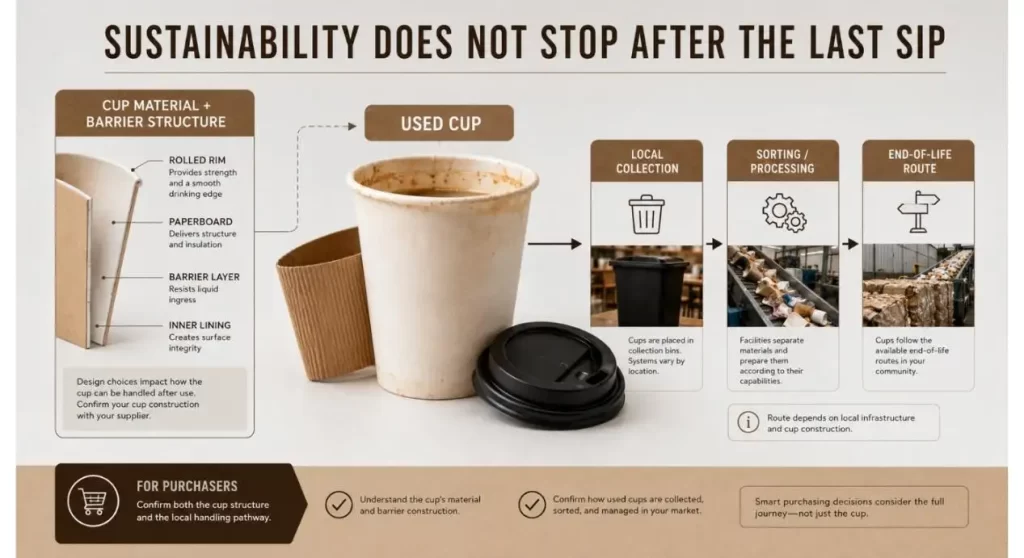
The Barrier Layer is the part of the product that customers don't see.
When paper has fluid inside, it is in need of support.When paper contains fluid, it requires help.
So the concealed barrier is one of the initial factors a buyer should be familiar with.
Don't view the outer paper color when comparing YPAK's Coffee Paper Cups. Questions for the supplier to ask include what the full cup structure is, what the intended beverage is and what end-of-life path the supplier finds this structure to go down.
Two cups can be virtually identical in appearance over an entire café counter, but be constructed in different ways.
Hence the description “paper cup” is used as a starting description, not as a complete material specification.
The Doctor Gets the Last Word
Bad service performance will not sustain a poorly-designed cup.
Staff can top up with additional cup. Customers can request sleeves which were not planned. A poorly-fitting lid can create a waste on its own.
The structure of cups should therefore be in line with the drink.
Custom Single Wall Paper Cups could be a simple format for light day-to-day use. Extended or hotter drinks/bath times may be a element in convincing a potential consumer to choose another wall structure.
Avoid selecting single wall, double wall or ripple wall as the better-sounding wall.
Add the real beverage and taste.
Never, ever eco-optimize the cup and forget about everything else!
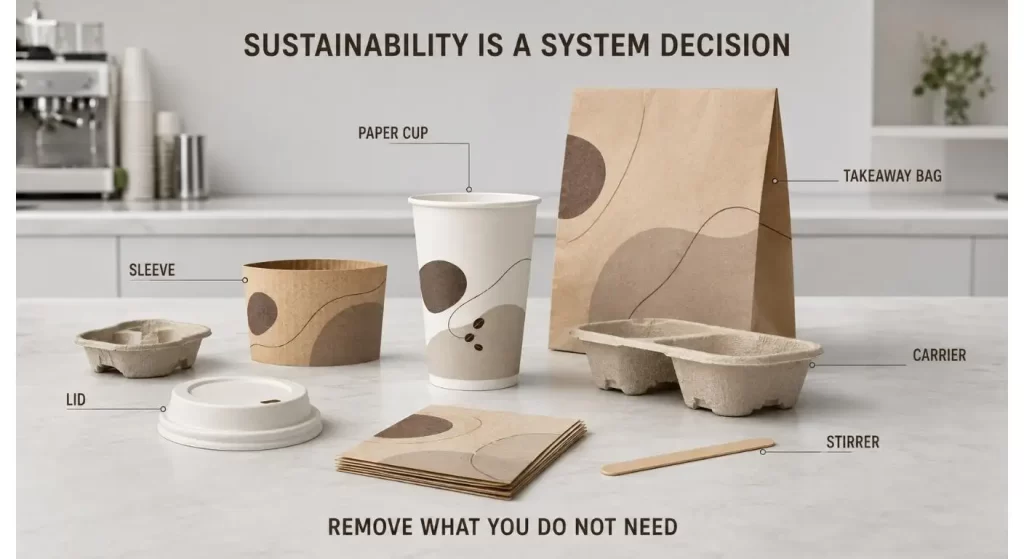
It's rarely just a cup and the customer doesn't walk away at all.
A lid, sleeve, stirrer, napkin and carrier and take away bag may also be present.
This puts sustainability in the hands of packaging systems.
YPAK's Coffee Branding Product range is linking up cups with other categories of coffee-service and retail packaging. It's helpful for cafés looking for a more comprehensive approach toward takeaway packaging improvement that they aren't just looking to change one thing and leave the other five as is.
Sometimes it's not the cup that needs to be changed.
It's taking something out that is not needed.
Place the Branding on the cup without getting it too green!
It's a cup that the customer sees many times before he gets to the bin.
It's a valuable brand space you can leverage.
However, eco-positioning is more effective if it addresses a meaningful message rather than leaves the cup full of leaves, recycling logos and generic environmental words.
If a custom graphic is desired, this can be achieved using custom printed product like YPAK's Custom Printed Paper Cups, but be sure to reserve space for product and disposal information where applicable.
A sustainability claim should be easily understood, within a few seconds.
If it requires a lengthy explanation in small print of what the cup would be, the message likely needs some work.
Read and discuss this article from the Los Angeles Times
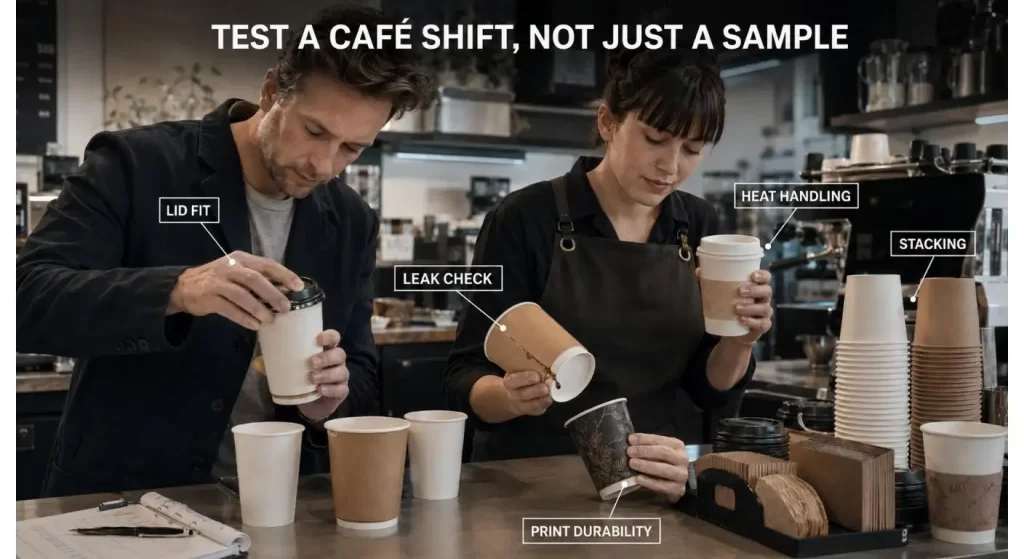
The volume of information you can gain from a sample on a meeting room table is limited.
Place it out of the way of the counter.
Check lid fit. Stack it. Pour the beverage into the container. Hand it to staff. Take it for 20 minutes. Determine if the print surface is still looking correct and if workers automatically add an extra sleeve/cup.
This type of trial can often find out that there are any real issues with the specification much faster than another sheet.
What's a minor problem becomes a problem when it happens hundreds of times a day for a busy coffee shop.
| Test Item | Practical Check |
| Lid Fit | Secure fit without excessive force |
| Leak Check | Bottom and side seam during normal use |
| Heat Handling | Comfortable real-service handling |
| Stacking | Smooth dispensing behind the counter |
| Print Surface | Appearance after filling and handling |
| Takeaway Set | Cup, lid, sleeve and carrier compatibility |
Provide Customers with a definite conclusion.
The last design question is:
After the customer uses this cup, what would you like them to do with it?
Only make claims to the extent that the answer is dependent on a certain disposal direction and communicate it clearly; if the answer is dependent on a certain disposal direction, only make the answer claims as described in the actual cup dispensed.
That little nugget of information is a link between procurement and actual consumer action.
But, if it isn't it, an environmentally considered cup can still end its journey in the wrong place.
Conclusion
Not all coffee paper cups are the most convincing eco friendly cups, but the one that looks natural.
They fit the drink. They operate lids and perform service operations. They have the material structure that also corresponds to the desired sustainability strategy and the customers can understand what they can do with them afterwards.
So before asking:
Which cup is the most environmentally friendly?
Ask:
Which cup is the most logical to pour the first cup to the last cup?
It's a much more powerful procurement question.
FAQs
Q1. Why coffee paper cups are environmentally friendly?
There is more to the outside of the paper – look beyond. Take into account the actual materials configuration, unneeded components, and the end of life path of the cup in the market it will end up.
Q2. But are coffee cups that are made of kraft paper always more sustainable?
Not necessarily. The appearance of Kraft does not entirely reflect the overall cup structure and/or its usage after use.
Q3. Which paper cups (single wall or double wall) should cafés use?
It involves holding time, temperatures of the beverage and handling by the customer. Taste! Taste! Taste! before picking the wall structure.
Q4. Is it possible to customize the eco-friendly coffee cups?
Yes. As an option, branding can be applied, but sustainability message should be true, simple and in sync with the real cup specification.
Q5. What tests do I want to do before I place and order for paper cups on the bulk?
Test the compatibility of drinks, lid fit and leakage, handling comfort, stacking, and ability to print the entire take away set through regular café operations.
Written by
ypak.coffee
ypak
YPAK PACKAGING GROUP was established in 2011 and formed with 3 companies based on Hongkong, Dongguan and Foshan. We have become one of the largest coffee bag manufacturers in China. We use the best quality WIPF valves from Switzerland to keep your coffee fresh.
Conform to the plastic ban policy imposed to many different countries, we have researched and developed the sustainable packaging bags, such as RECYCLABLE and COMPOSTABLE pouches.
No minimum quantity, no color plates are required with our HP 25K INDIGO DIGITAL PRINTING service.
You are welcome to visit YPAK.