

Updated 4 months ago
Flat Bottom Bags vs Stand Up Pouches: Guide to Choosing the Right Flexible Packaging

ypak.coffee
YPAK PACKAGING GROUP was established in 2011 and formed with 3 companies based on Hongkong, Dongguan and Foshan. We have become one of the largest coffee bag manufacturers in China. We use the best quality WIPF valves from Switzerland to keep your coffee fresh.
Conform to the plastic ban policy imposed to many different countries, we have researched and developed the sustainable packaging bags, such as RECYCLABLE and COMPOSTABLE pouches.
No minimum quantity, no color plates are required with our HP 25K INDIGO DIGITAL PRINTING service.
You are welcome to visit YPAK.
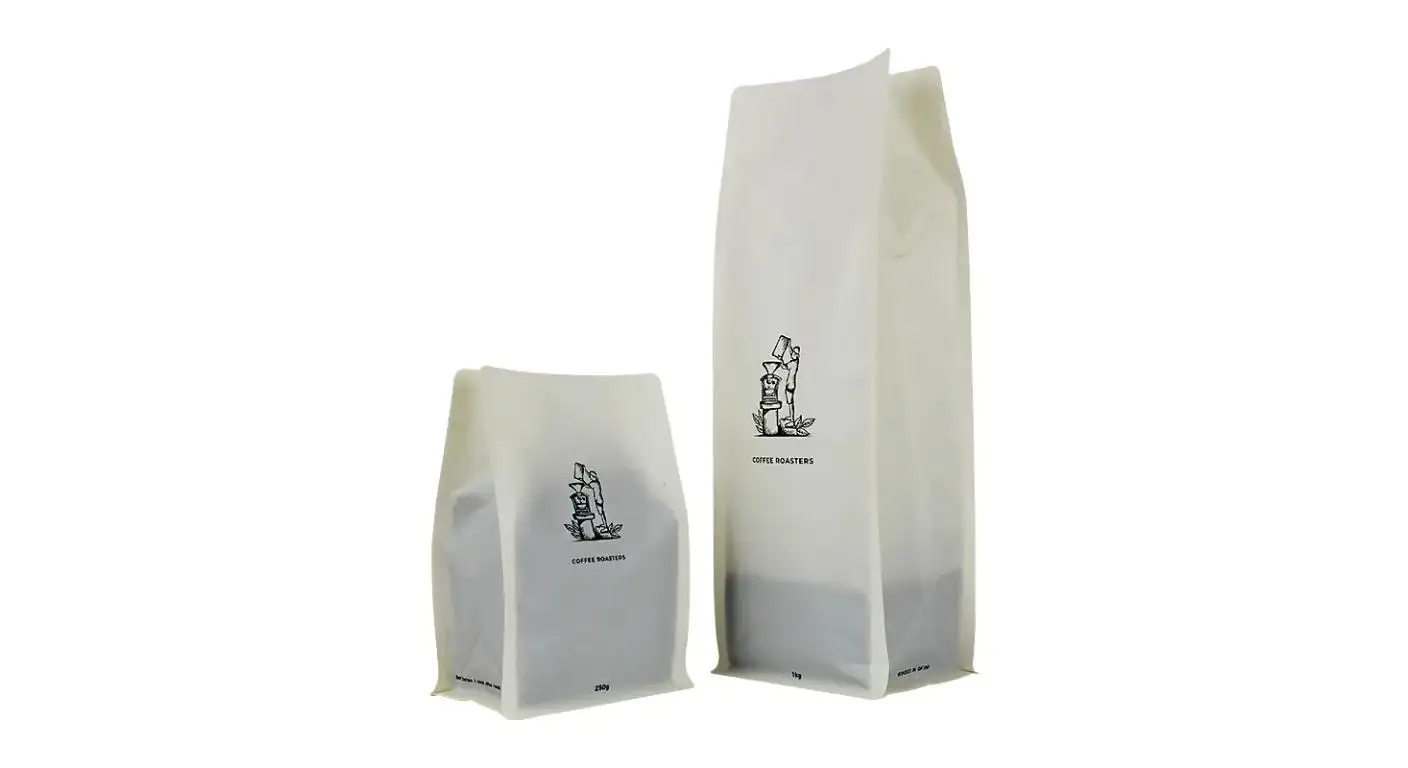
Flat Bottom Bags Vs Stand Up Pouches
Flexible packaging continues its popularity boom with the entry of two highly favored options: flat bottom bags and stand up pouches. Compared to rigid containers, these flexible options are lighter, cheaper to ship, and require much less material. With the ability to transport a maximum of 10 times as many units per shipment, all containers can take up major space in storage and shipment, but pouches can be sent flat. So in the battle of Flat Bottom Bags Vs Stand Up Pouches, which is best for your goods? This guide evaluates their key differences to assist your choice.
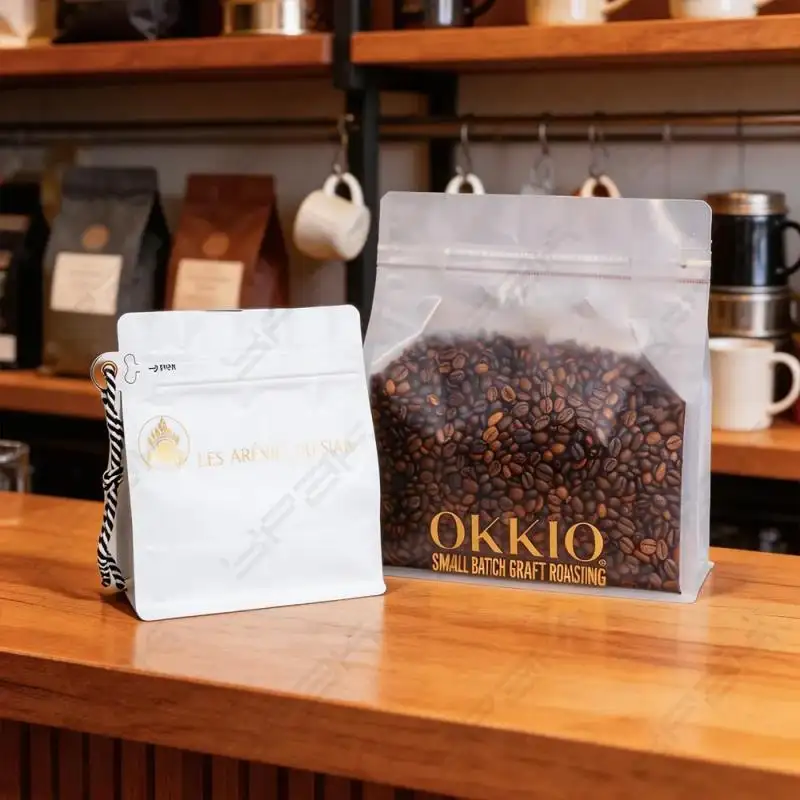
1. Different Structures
Let's examine the basic difference in their construction.
Flat Bottom Bags (also known as box pouches):
• Shape: As the name indicates, flat bottom bags have a rectangular bottom and a flat bottom that is rectangular and flexible.
• Construction: These bags have five panels (front, back, two side folds, and a bottom piece) and are more expensive due to the complicated construction.
• Look and feel: This five panel design gives the bags a premium and sturdy, but a more boxy and stiff.
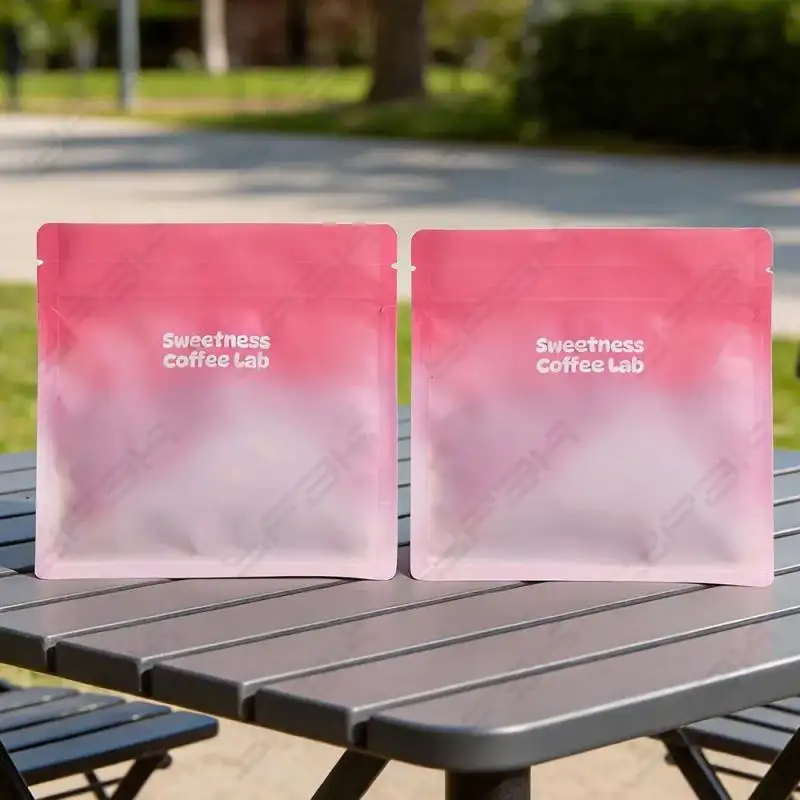
Stand Up Pouches (also known as Doypack bags):
• Shape: These bags have a bottom that is rounded and flexible which allows the bag to pop open.
• Construction: These bags are simpler to construct as they have two or three flexible panels.
• Look and feel: Providing flexible bottoms create a softer and more casual appearance on shelves.
• Production: Their ubiquity is an effect of speed and cheaper production seen in anything from snack chips to pet treats.
2. Which Bag Stands Up Better on the Shelf?
If you sell in retail stores, stability matters a lot. Here's how the two compare.
Flat Bottom Bags:
• Stand perfectly upright even when the bag is only 30% full – no leaning or tipping.
• Keep their shape from the first day to the last, so they always look neat.
• Never "slouch" or fall over, even if customers pick them up and put them back.
• Create a strong "brand block" on the shelf – all your bags line up like little boxes, grabbing attention.
• Give a high-end impression that makes shoppers think your product is worth more.
Stand Up Pouches:
• Need to be at least 40-50% full to stand up reliably – below that, they may tip.
• Can lean or fall over when they are nearly empty, which looks messy.
• Have a rounded bottom that gives a casual, friendly look – but less structured.
• The bottom flexes with the weight, so every bag might sit a little differently.
�� Simple rule: If your product will sit on a shelf for weeks and may be partially used, flat bottom bags stay looking great much longer.
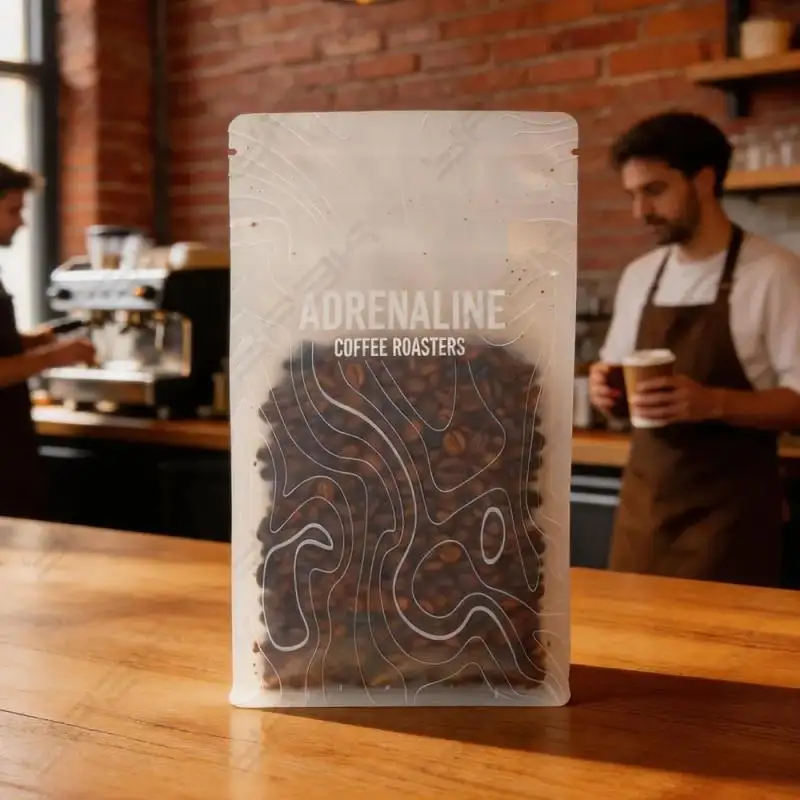
3. How Much Product Can Each Bag Hold?
Surprisingly, the outside size isn't everything. Flat bottom bags pack in more product for the same dimensions.
Flat Bottom Bags:
• Hold 15-25% more than a stand up pouch of the same width and height.
• Example: A bag that is 130mm wide, 230mm tall, and 75mm deep can hold 500g of coffee or snacks; the same-sized stand up pouch only holds 400g – that's a big difference.
• Use space very efficiently – they fill 85-95% of their internal volume.
• Can handle big weights, even up to 10kg or more (perfect for bulk pet food).
Stand Up Pouches:
• Hold less – about 70-80% of the space is used, the rest is wasted.
• Work well for lighter products up to about 5kg.
If you need to pack the same weight, you'll need a bigger stand up pouch, which costs more material.
4. Which One Gives You More Room for Branding?
Your package is your billboard. The more space you have, the more you can tell your story.
Flat Bottom Bags:
• Give you five printable panels: front, back, two sides, and even the bottom.
• Let you put nutrition facts, usage instructions, QR codes, and eye-catching graphics all over.
• The boxy shape makes your brand look more premium and trustworthy.
Stand-Up Pouches:
• Very limited options for surfaces to print on because they only have 2 or 3 sides that you can print on. This results in a number of printing options for the design and the information either being limited or restricted.
• You have to choose what to leave out, which can be a challenge for complex products.
• The curved bottom isn't printable, so that space is wasted.
�� Bottom line: If you want maximum marketing real estate, flat bottom bags win hands down.
5. Are They Eco-Friendly?
• Both are much greener than rigid plastic or glass containers, but there are small differences.
• Both use far less material than jars or cans, which means less waste and lower carbon footprint.
Because they ship flat, one truck can carry 10 times more pouches than rigid containers – saving fuel and emissions.
Flat bottom bags reportedly use less film per gram of product (because they hold more), so they can be slightly more material-efficient.
Many suppliers now offer recyclable mono-material pouches (all one type of plastic) or compostable options for both styles.
Both can meet new EU, UK, and North American plastic regulations if you choose the right materials.
6. Which Bag Fits Your Product Best?
Here's a quick cheat sheet to guide you.
| Your Product | Best Choice | Why? |
| Specialty coffee, tea, or premium chocolate | Flat Bottom Bag | Looks luxurious and holds more aroma-preserving valves |
| Pet food over 2 kg | Flat Bottom Bag | Stays stable and holds heavy weight without tipping |
| Gourmet snacks or gifts | Flat Bottom Bag | Gives a gift-box feel |
| Everyday chips, nuts, or candy | Stand Up Pouch | Cheap and works great for light snacks |
| Liquid soap, juice, or sauces | Stand Up Pouch | Easy to add a spout or nozzle |
| New brands with small budgets | Stand Up Pouch | Lower MOQ and lower per-unit cost |
| Online-only products | Stand Up Pouch | Lightweight and cheaper to ship to customers |
7. How to Decide – Ask Yourself These Questions
Still not sure? Run through this quick checklist.
Do you want a premium, high-end look? → Choose flat bottom bags.
Is keeping costs low your top priority? → Go with stand up pouches.
Does your product weigh more than 500g? → Flat bottom bags give better stability.
Is your product light, liquid, or sold mostly online? → Stand up pouches are ideal.
Will the bag sit half-empty on a store shelf? → Flat bottom bags stay neat.
Do you need lots of space for labels and info? → Flat bottom bags have more panels.
Why Work with YPAK for Your Packaging?
Once you've chosen between Flat Bottom Bags vs Stand Up Pouches, picking the right manufacturer is just as important.
YPAK PACKAGING GROUP started in 2011 and now runs three factories in Hong Kong, Dongguan, and Foshan. They are one of China's top coffee bag makers. Their plants in Foshan and Dongguan hold BRCGS Food Safety and ISO 22000:2018 certificates – that means every bag meets strict global food-safety rules, and they can trace every step of production.
YPAK uses Swiss WIPF one-way valves as standard – the best technology to keep coffee fresh and aromatic. Their HP Indigo 25K digital printer lets you print photo-quality designs with no minimum order and no printing plates – perfect for small test runs or special editions.
They deliver on time 99.5% of the time, so your production never stops. And they offer recyclable and compostable pouches that help you comply with new plastic laws in Europe, the UK, and North America – without sacrificing quality.
Whether you pick flat bottom bags or stand up pouches, YPAK gives you quality, sustainability, and reliability. You are welcome to visit YPAK and see for yourself.
FAQs
Q1: Which bag is better at packaging coffee?
Flat bottom bags offer the desirable high-end visual appeal and extreme stability, easily working with one-way degassing valves, which is why these are the preferred bags for specialty coffee.
Q2: Which bag type is better at making an impression?
Because flat bottom bags offer five printable panels (front, back, two sides, and bottom) versus two or three in stand up pouches, there is more opportunity for design and branding.
Q3: In the size comparison of bags, are flat bottom bags more eco-friendly vs. stand-up bag pouches?
Compared to rigid containers, both flat bottom bags and standup pouches are significantly more eco-friendly. Flat bottom bags can even use less film for the same packaging weight and product weight, while both styles can be made in compostable and recyclable materials.
Q4: From the different bag types, which one is designed to be retail ready?
Flat bottom Bags design allows them to be perfectly upright, which is convenient if they are beyond the 30% fill mark. Stand up pouches can easily tip over if less than 40–50% fill.
Q5: Which bag type is best at packaging heavy products - especially pet food that is over 2kg?
Flat bottom Bags are ideal as they can hold weights of up to 10kg without tipping due to their stability and higher capacity.
Written by
ypak.coffee
ypak
YPAK PACKAGING GROUP was established in 2011 and formed with 3 companies based on Hongkong, Dongguan and Foshan. We have become one of the largest coffee bag manufacturers in China. We use the best quality WIPF valves from Switzerland to keep your coffee fresh.
Conform to the plastic ban policy imposed to many different countries, we have researched and developed the sustainable packaging bags, such as RECYCLABLE and COMPOSTABLE pouches.
No minimum quantity, no color plates are required with our HP 25K INDIGO DIGITAL PRINTING service.
You are welcome to visit YPAK.
Related Articles
YPAK at World of Coffee Panama 2026: Coffee Packaging for Short Runs and EU-Bound Lots
PPWR Recyclability Grades for Coffee Packaging: What Survives 2030, and What Survives 2038
Customized Coffee Packaging Solutions: From Product Ideas to Market-Ready Packaging