

Updated 7 months ago
Why Sustainability Matters for Coffee Packaging

ypak.coffee
YPAK PACKAGING GROUP was established in 2011 and formed with 3 companies based on Hongkong, Dongguan and Foshan. We have become one of the largest coffee bag manufacturers in China. We use the best quality WIPF valves from Switzerland to keep your coffee fresh.
Conform to the plastic ban policy imposed to many different countries, we have researched and developed the sustainable packaging bags, such as RECYCLABLE and COMPOSTABLE pouches.
No minimum quantity, no color plates are required with our HP 25K INDIGO DIGITAL PRINTING service.
You are welcome to visit YPAK.
Why Sustainability Matters for Coffee Packaging
Sustainability is not a fad, it is quickly becoming an imperative to coffee businesses in the world, whether specialty roasters in Jakarta and Bandung, or exporters in Southeast Asia and other parts of the world. With the rising environmental awareness among people, and with the environmental laws becoming stricter in various markets, coffee brands are exploring green packaging options to minimize waste, cut down carbon footprint and build their brand image.
This guide will discuss what is meant by the term, the reasons why it is important and how coffee roasters can adopt green packaging that ensures quality coffee and contributes to environmental preservation.
What Is Green Coffee Packaging?
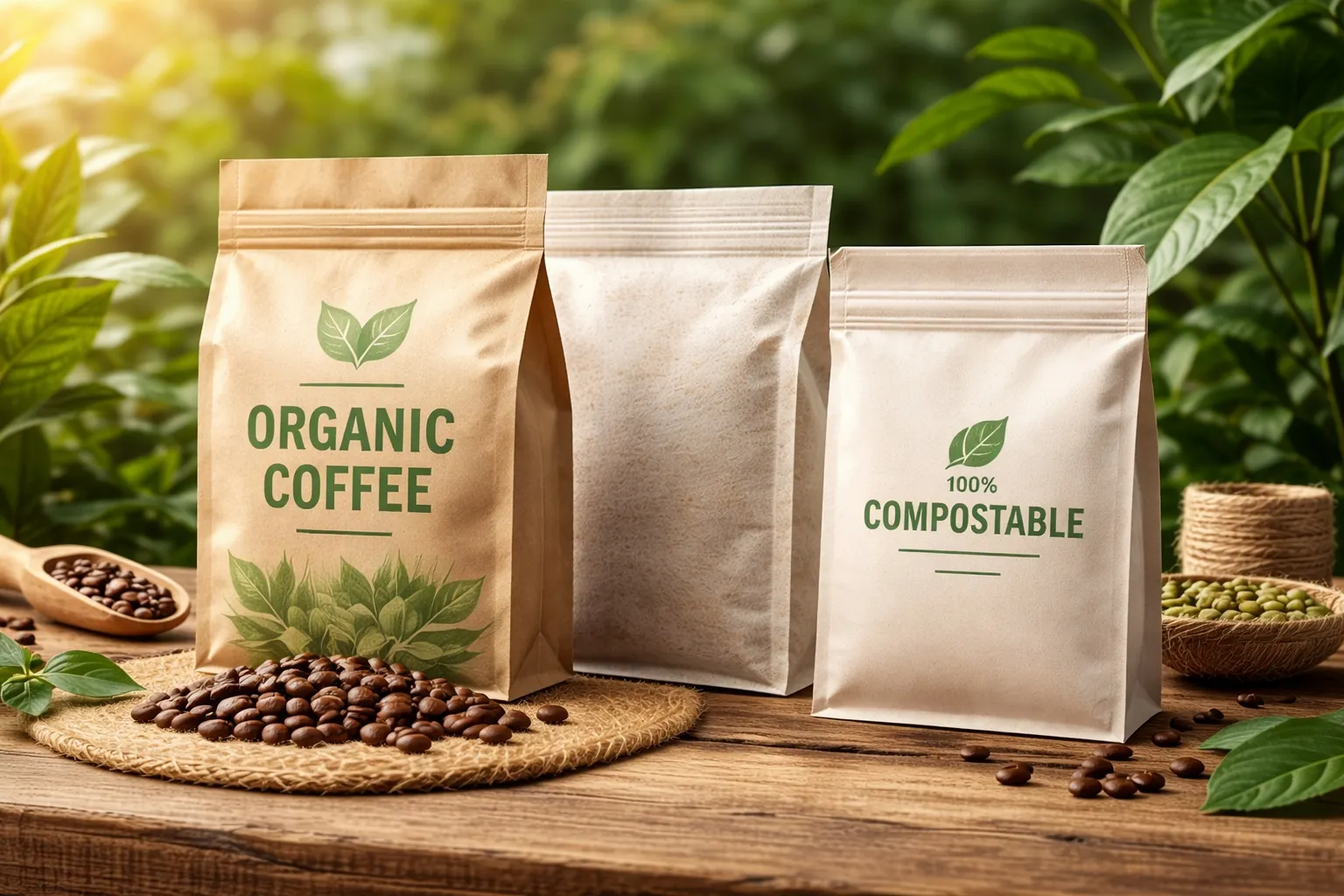
Green coffee packaging is defined as products and systems that are aimed at reducing environmental impact, but at the same time, keep coffee beans (either green or unroasted or roasted coffee) safe. Examples of sustainable options are biodegradable, recyclable, compostable, and renewable materials each having its own advantages and disadvantages.
Green packaging is done with materials that can be easily broken down, recycled or their resources used again unlike traditional plastic or foil packaging which require centuries to break down and sometimes end up in landfills. Such materials assist the brands to portray a promise of environmental stewardship, which is becoming a significant factor in global markets and local markets.
The Reason why Sustainability is important to Coffee Packaging.
1. Brand Value and Consumer Demand.
In the markets of Southeast Asia and elsewhere, consumers are moving towards buying brands that are consistent with their values. Increasing numbers of coffee consumers are attracted to products that are eco-friendly, and they will consistently be willing to pay more in packaging that demonstrates such dedication.
In such countries as Indonesia, Malaysia, Singapore, and Europe, sustainable packaging is not a marketing attribute, it is a brand differentiator that appeals to conscious consumers and creates long term loyalty.
2. Bureaucratic and ecological Tension.
Efforts to curb the use of single-use plastics through environmental regulations are increasingly gaining popularity in the world. Other nations either provide incentives on environmentally friendly packaging or give taxation on non-recyclable materials. The adoption of sustainable packaging assists businesses to remain conformable at a time of future-proofing business.
3. Less Wasting and Carbon Footprint.
Eco-packaging of coffee decreases the waste to the environment in several ways:
· Biodegradable products are degraded in the environment.
· Recyclable alternatives minimise demand of virgin resources.
· Under favourable conditions, compostable packaging replenishes nutrients to soil.
The benefits lead to a cyclical economy where materials are fully reused, and recycled in the production cycle.
Sustainable Coffee Packaging Materials.
The following is a list of the most widely used materials of green coffee packaging: all of them provide a different trade-off between sustainability, performance, and cost.
🌿 Kraft Paper Coffee Bags
· Kraft paper is 100percent recyclable, biodegradable, and compostable because it is made of unbleached wood pulp.
· It is cheap, lightweight and was prevalently sourced.
· Multilayer The kraft paper bags are able to preserve the coffee against moisture, oxygen, and light without any environment destruction.
· Frequently wood is of FSC-certified forests and this guarantees responsible forestry use.
Best suited to roasters that want to make their packaging consistent with an environmentally sustainable brand, without compromising on protection.
🌾 Rice Paper Coffee Bags
· Produced using renewable materials like bamboo and quintan tree bark.
· Rice paper bags are exclusive in style and feel which makes them attractive to the customers who are conscious of sustainability and artistry.
· Some of their benefits include; with an adequate amount of layering, they provide protection against external factors at the same time being eco-friendly.
Ideal when using small roaster or artisanal brands that have unique product demands and want to be environmentally friendly in their packaging.
🔄 Recyclable LDPE Coffee Bags
· Low-Density Polyethylene (LDPE) is recyclable (#4) and is highly accepted when it comes to recycling streams.
· The bags use less energy and materials to make than the traditional multi-layer bags.
· LDPE bags are flexible and durable thus can be tailored to suit the requirements of any brand in size, color and shape.
An effective option between sustainability and a cost-effective brand.
PLA (Polylactic Acid) Biodegradable Bags.
• It is made of renewable vegetable resins (corn, sugar cane, sugar beet).
• PLA can break down within a few months (90 days) in industrial composting plants, whereas traditional plastics can take centuries to break down.
• PLA can be printed digitally, making it environmentally better through the reduction of VOC emissions and the carbon footprint.
Best with roasters that want to be completely eco-friendly in packaging and environmental effects.
Improving Sustainability: Valves, Seals, and Inks.
☕ Degassing Valves that are recycleable.
Degassing valves enable CO 2 to be removed out of roasted coffee bags and preventing the entry of oxygen, which is essential in retaining freshness. BPA free and recycling means that freshness is guaranteed without the sacrifice in terms of sustainability.
🔄 Reusable Packing Materials.
Reusable bags zippered (ziplock), tied (tin ties or Velcro zippers) allow extending its shelf life and also eliminate the extra packaging required to package the coffee.
🎨 Environmentally Friendly Printing Inks and Glues.
Low VOC emissions of water-based inks and water-based glues made out of plant-based materials reduce the carbon footprint of coffee packaging even further. These alternatives are durable and brandable and would be eco friendly.
Action Plan: Sustainability Best practices in Roasters.
The roasters must not rely only on materials to be able to implement green packaging successfully. This is the way dominant brands are going green:
🔍 1. Conduct Due Diligence
A supplier must have sustainability certifications (e.g., FSC, ISO 14001) and should you enquire about the lifecycle assessment. The transparent sourcing creates confidence among the consumers and associates.
📦 2. Freshness and Sustainability of Balance.
Although a few eco-friendly materials can be used to extend freshness not as much as conventional multi-layer plastics, new act like hermetic liners and degassing valves allow to find the balance between sustainability and performance.
♻️ 3. Encourage Reuse and Circularity.
Stimulate reuse of bags by the customers wherever possible, as storage, refills, or at their home as compost, which is part of the circular economy models.
Concluding Remarks: Coffee Packaging in the Future.
With the increasing coffee usage in the world today, sustainable packaging is emerging as a major aspect of brand management and operation duty. Roasters that are now going green with recyclable kraft paper bags to compostable PLA alternatives not only decrease the footprint on the environment; they are becoming industry pioneers in the fast-growing industry.
Roasting in Jakarta, selling to Europe or beans in Southeast Asia, go green coffee packaging is good to the planet and great to business.
Written by
ypak.coffee
ypak
YPAK PACKAGING GROUP was established in 2011 and formed with 3 companies based on Hongkong, Dongguan and Foshan. We have become one of the largest coffee bag manufacturers in China. We use the best quality WIPF valves from Switzerland to keep your coffee fresh.
Conform to the plastic ban policy imposed to many different countries, we have researched and developed the sustainable packaging bags, such as RECYCLABLE and COMPOSTABLE pouches.
No minimum quantity, no color plates are required with our HP 25K INDIGO DIGITAL PRINTING service.
You are welcome to visit YPAK.
Related Articles
Two Gates on the Road to the EU: Reduction by Design and the Documentation Chain for Coffee Packaging

Recyclable Coffee Bags: How to Protect Freshness Without Compromising Sustainability

Your Brand, Perfectly Packaged: The YPAK Guide to Selecting a High-Quality Custom Coffee Bag