

Updated 7 months ago
The Roaster’s Complete Guide to Coffee Packaging: How to Design Packaging That Sells

ypak.coffee
YPAK PACKAGING GROUP was established in 2011 and formed with 3 companies based on Hongkong, Dongguan and Foshan. We have become one of the largest coffee bag manufacturers in China. We use the best quality WIPF valves from Switzerland to keep your coffee fresh.
Conform to the plastic ban policy imposed to many different countries, we have researched and developed the sustainable packaging bags, such as RECYCLABLE and COMPOSTABLE pouches.
No minimum quantity, no color plates are required with our HP 25K INDIGO DIGITAL PRINTING service.
You are welcome to visit YPAK.

The Roaster’s Complete Guide to Coffee Packaging: How to Design Packaging That Sells
Consumers can decide on whether to purchase coffee several seconds when they see it on a retail shelf, in a specialty cafe or online. Studies indicate that 70 percent of consumers reckon that packaging design has a direct effect on their purchasing decision. To coffee roasters and brands, packaging is much more than just a container, it is the initial perception of your brand.
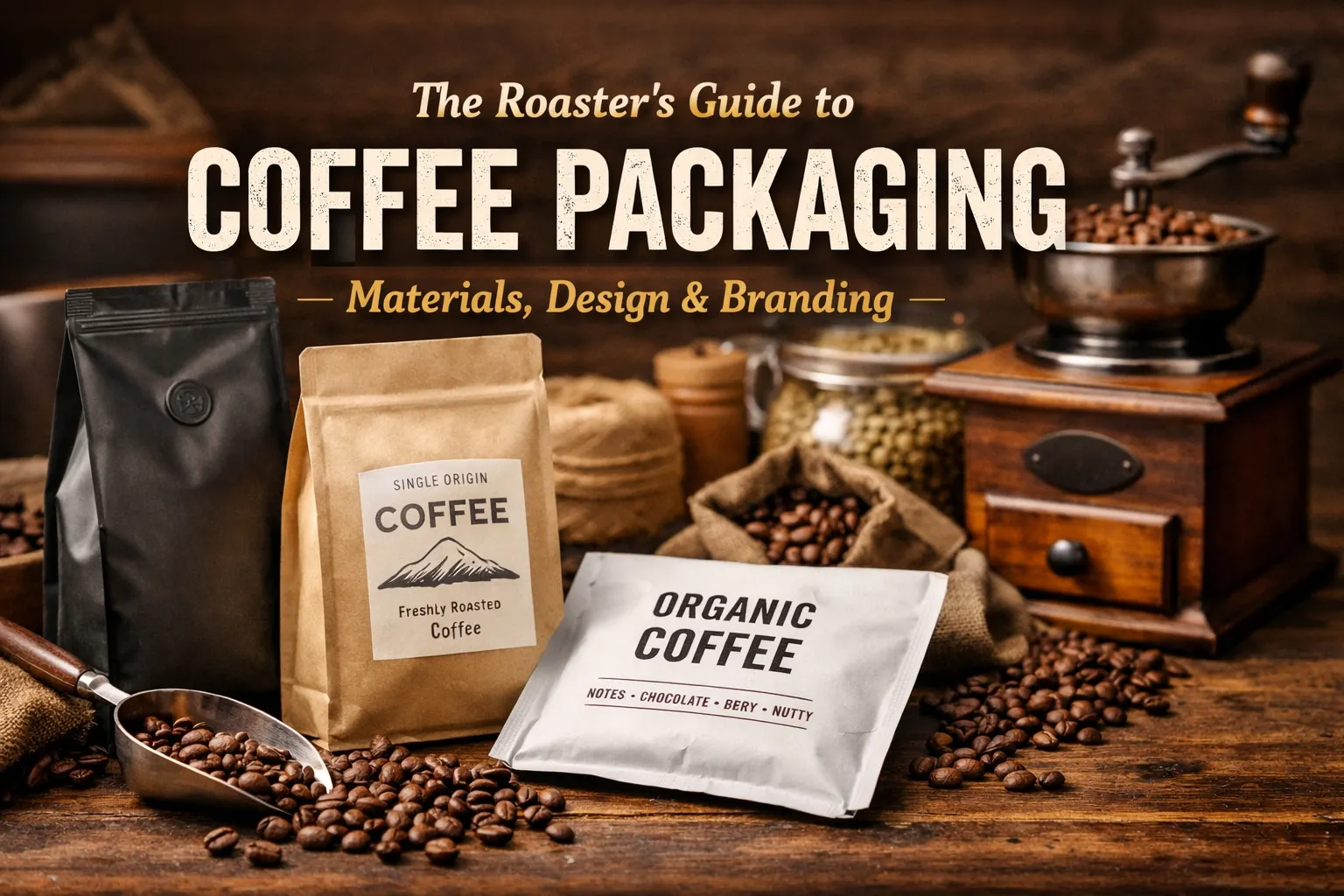
This guide contains all that you should know about the fundamentals of coffee packaging, the major decision roasters need to make, the choice of material, the concept of the design, and the definition of the brand, and you will be able to produce the packaging that will ensure the safety of your coffee and will contribute to the sales.
Why Coffee Packaging Matters
The packaging of coffee has various critical roles. It doesn’t just hold coffee—it:
-
Preserves freshness and extends shelf life
-
Communicates brand identity and values
-
Helps your product stand out on shelves and online
The purchase decision and consumer trust largely depend on the design of packaging. Packaging is among the strongest tools a roaster can apply in order to distinguish his commodity in a market that is already saturated with specialty coffee.
Three Essential Components Every Coffee Package Needs
These three elements are mandatory to quality coffee packaging regardless of your size or market.
1. One-Way Degassing Valve
Carbon dioxide (CO 2 ) is emitted by fresh coffee that has been roasted. In the absence of a degassing valve, gases accumulate in closed bags, and it may impact flavor and may even cause the package to rupture. A one-way valve permits the gases to get out and not the oxygen in to preserve aroma and freshness.
2. Resealable Closure
One of the largest enemies of coffee is Oxygen. Once opened consumers require a mechanism of resealing the package to inhibit oxidation. Possible resealing options are:
-
Zip-lock closures
-
Tin ties
-
Adhesive seals
A resealable option enhances the buyer experience and assists in preserving the quality of coffee even after buying.
3. Regulatory Compliance and Labeling
Food packaging laws vary with the country or region though most markets require the following information:
· Product name
· Net weight
· Roasting date (highly recommended on specialty coffee)
· Company contact information and name.
Always remember to label local it first before final design of packaging design so as to ensure that it meets the local needs and avoids costly issues.
Four Key Packaging Decisions Every Roaster Must Make
When it comes to selecting appropriate coffee packaging, there is a balance between functionality, price, design and customer demands.
1. Choosing the Right Style of Bag.
Various brand positions and sales channels are justified by different types of bags:
· Flat Bottom Bags
High-end appearance, high shelf life and several printable panels. Greater price but suited to the premium stores.
· Stand-Up Pouches (Doypacks)
Easy to use, easy to afford, and retail and e-commerce ready.
· Gusseted Bags
Conventional and cost effective, yet smaller openings are more difficult to fill.
· Flat Pouches
Ideal with sample sizes, single-serve coffee or travel coffee.
Glass jars or paper boxes are also tested by other roasters to make the brand experience exclusive, but it can create more production and logistic problems.
2. Selection of the Right Packaging Material.
The packaging materials do not only influence the appearance, but also the freshness, durability and sustainability.
· Kraft Paper Bags
Natural and environmentally friendly look and reduced price. Optimal to minimum designs, yet the quality of print and barrier protection is minimum.
· Matte or Laminated Bags
Lasting, aesthetically pleasing and can be branded in detail. Usually costly and usually constructed in mixed materials.
Recyclable substances, water based inks and compostable products are further gaining momentum as a sustainable parameter as the concept of sustainability is still popular amongst the consumers. The vast majority of customers will be ready to pay more on such an environmentally responsible packaging.
3. Selecting Coffee Packaging Sizes
Providing appropriate bag sizes will help make sure that the customer needs are met in various application uses. Common sizes include:
-
8 oz (226 g): Small-batch or limited releases
-
12 oz (340 g): Most common retail size in North America
-
1 lb (454 g): Popular for cafés and regular home brewers
-
5 lb (2.27 kg): Wholesale and foodservice
The size strategy must be in line with your target audience, channels of sales and pricing model.
4. Choosing a Packaging Supplier
Quality and delivery requires the availability of a good supplier of packaging. When evaluating the suppliers, consideration should be made of:
· Minimum order quantity (MOQs).
· Production schedules and lead times.
· Unit pricing and total cost
· Sample availability and support in designs.
Good supplier relationship will assist in preventing costly mistakes and ensure that what you are getting in the package is what matches what you have had in mind about the brand.
How to Design Coffee Packaging That Attracts Customers
Even before the taste, customers will make a decision about the quality of coffee. A great package design creates intimacy and creates emotion.
1. Tell a Clear Brand Story
Your packaging must simply respond to three questions:
· Who are you? (Company name, Web site, address, design)
· What do you do? (Small-batch roasting, direct trade, sustainability)
· Why does it matter? (Craft, ethics, environmental responsibility)
An interesting narrative will make consumers identify with your brand.
2. Make Key Information Easy to Find
Essential information must be visible and easy to read at a glance such as:
· Coffee name and origin
· Roast date
· Flavor observations and tasting profile.
· Recommendations of brew methods (espresso, filter, pour-over, etc.)
Understanding information is a source of confidence and enhances the purchasing process.
3. Create a Distinct Visual Identity
Great visual branding will make your coffee be noticed amidst the competitive retail environments. Strategies that have been proven to be effective are:
· Applying psychology of color (green to be sustainable, black to position as a premium product)
· The use of illustrations, patterns or story telling.
· Selecting readable fonts with definite hierarchy.
Uniformity in products helps to build brand awareness and consumer loyalty.
Final Thoughts: Turn Packaging Into a Sales Engine
Exceptional coffee packaging is not just a form of protection to the beans, but also a way to convey quality, brand equity, and make a purchasing choice. Packaging is one of the most critical touchpoints between your customers and coffee whether you are a local specialty roaster or a global e-commerce brand.
Reflecting on intelligent package design and material can contribute greatly to the shelf presence, customer trust, and brand longevity. Your packaging should be earning its own merits in the current competitive market, just like your roasting process, in case you want your coffee to shine in the current competitive market.
Written by
ypak.coffee
ypak
YPAK PACKAGING GROUP was established in 2011 and formed with 3 companies based on Hongkong, Dongguan and Foshan. We have become one of the largest coffee bag manufacturers in China. We use the best quality WIPF valves from Switzerland to keep your coffee fresh.
Conform to the plastic ban policy imposed to many different countries, we have researched and developed the sustainable packaging bags, such as RECYCLABLE and COMPOSTABLE pouches.
No minimum quantity, no color plates are required with our HP 25K INDIGO DIGITAL PRINTING service.
You are welcome to visit YPAK.
Related Articles
Two Gates on the Road to the EU: Reduction by Design and the Documentation Chain for Coffee Packaging

Recyclable Coffee Bags: How to Protect Freshness Without Compromising Sustainability

Your Brand, Perfectly Packaged: The YPAK Guide to Selecting a High-Quality Custom Coffee Bag