

Updated 2 months ago
Recyclable Coffee Bag Manufacturer: PE vs. PP Mono-Material Packaging

ypak.coffee
YPAK PACKAGING GROUP was established in 2011 and formed with 3 companies based on Hongkong, Dongguan and Foshan. We have become one of the largest coffee bag manufacturers in China. We use the best quality WIPF valves from Switzerland to keep your coffee fresh.
Conform to the plastic ban policy imposed to many different countries, we have researched and developed the sustainable packaging bags, such as RECYCLABLE and COMPOSTABLE pouches.
No minimum quantity, no color plates are required with our HP 25K INDIGO DIGITAL PRINTING service.
You are welcome to visit YPAK.
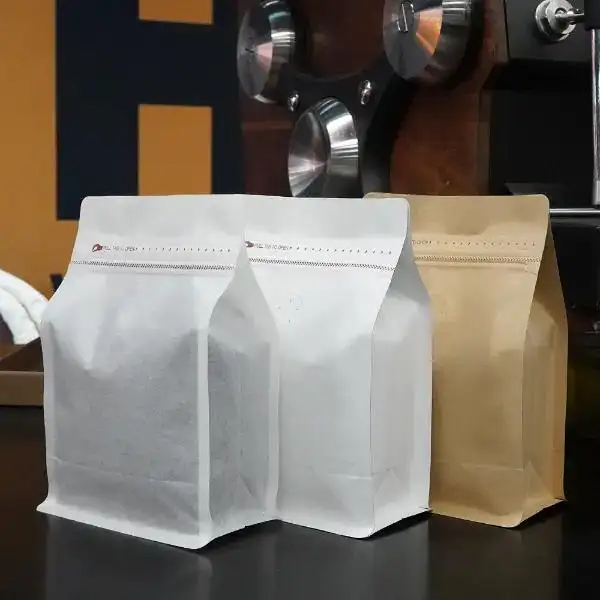
Recyclable Coffee Bag Manufacturer
Traditional coffee bags often combine PET, aluminum foil, PE sealant layers, adhesives and printing inks. These structures provide reliable oxygen, moisture, aroma and light protection, but separating the materials for recycling is difficult.
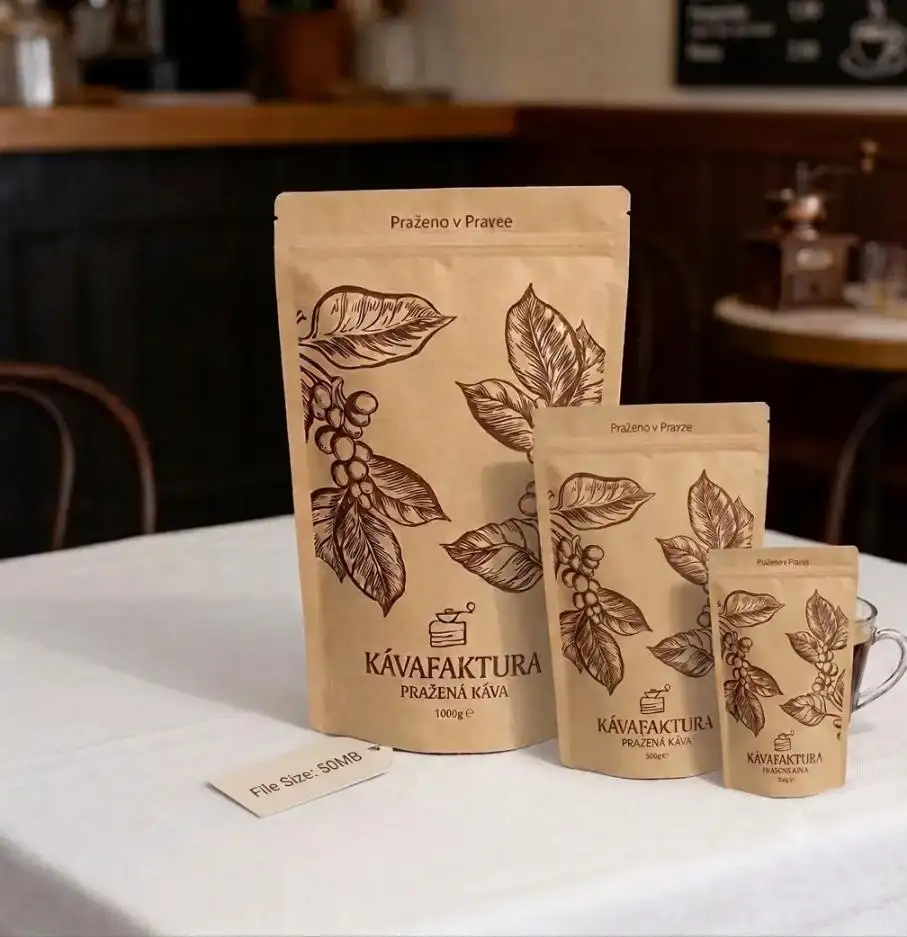
Mono-PE and Mono-PP packaging reduce the number of incompatible polymers, increasing the possibility that used bags can enter an appropriate plastic recycling stream. However, "mono-material" does not necessarily mean that every component is made from one single layer.
PE and PP differ in flexibility, stiffness, sealing behavior, low-temperature performance and barrier design. Therefore, selecting a Recyclable Coffee Bag Manufacturer requires more than choosing a plastic type. Buyers must evaluate the complete structure, local recycling infrastructure and the freshness requirements of the coffee.
What Does a Recyclable Coffee Bags Manufacturer Actually Produce?
A Recyclable Coffee Bag Manufacturer typically develops packaging in which one polymer family accounts for most of the structure. The bag may still contain:
• A printable outer layer
• A main structural film
• An EVOH or coated barrier layer
• A heat-sealing layer
• Inks and adhesives
• A resealable zipper
• A one-way degassing valve
The important questions are whether these components are compatible with the intended recycling stream and whether they affect sorting or reprocessing.
Mono-Material Does Not Always Mean a Single Layer
Mono-material coffee bags may contain several functional layers, provided that the overall structure remains predominantly PE or PP. A multi-layer mono-PE bag, for example, can combine different grades of polyethylene to provide printing strength, flexibility and sealing performance.
Recyclable Design vs. Actual Recycling
| Concept | Meaning |
| Designed for recycling | The structure follows recognized recyclable packaging design principles |
| Technically recyclable | The material can be reprocessed using suitable equipment |
| Recycled in practice | Local collection, sorting and recycling facilities actually accept it |
Not every PE or PP bag will be recycled in every market. Disposal instructions should therefore reflect the infrastructure available in the destination country.
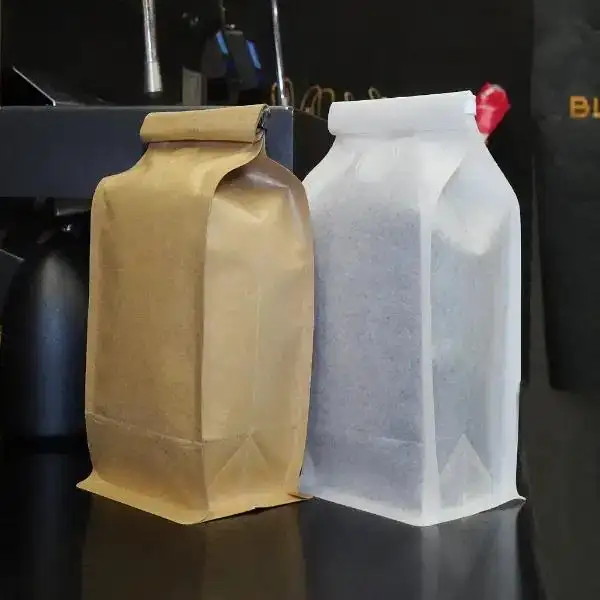
PE vs PP Mono-Material Coffee Bags
Mono-PE coffee bags and Mono-PP coffee bags can both support recyclable coffee packaging, but their performance characteristics differ.
| Comparison | Mono-PE Coffee Bags | Mono-PP Coffee Bags | Purchasing Impact |
| Feel | Usually softer and more flexible | Generally firmer and crisper | Influences shelf presentation and handling |
| Low-temperature behavior | Commonly maintains better flexibility | Some PP structures may become brittle | Important for cold-region transport |
| Heat sealing | Often has a wider sealing window | May require tighter temperature control | Must match filling equipment |
| Structural stiffness | Usually softer | Often provides better stiffness | Affects flat-bottom bag stability |
| Moisture barrier | Can be optimized through film design | Can also provide good moisture resistance | Compare tested WVTR values |
| Oxygen barrier | Often requires EVOH or coatings | May also require coatings or coextrusion | Compare tested OTR values |
| Transparency | Clear and window options are available | Often offers good clarity | Useful for displaying coffee beans |
| Recycling route | May enter PE recycling streams | Depends on local PP film collection | Market-specific verification is required |
| Typical use | E-commerce, subscriptions and flexible formats | Retail packaging requiring stiffness | Material alone should not determine selection |
It is inaccurate to say that PE only blocks moisture or that PP automatically provides superior oxygen protection. Final performance depends on film thickness, orientation, coextrusion, coatings, adhesives, sealing and bag geometry.
How Barrier Technologies Change the PE vs. PP Comparison
EVOH Co-Extrusion
EVOH is commonly used as a thin oxygen-barrier layer within PE- or PP-dominant structures. It can significantly improve aroma and oxygen protection without using a conventional aluminum foil layer.
However, buyers should verify:
• The percentage of EVOH in the total structure
• Barrier performance under humid conditions
• Uniformity of the coextruded layer
• Compliance with the target market's recycling guidelines
YPAK uses PE/EVOHPE structures as one option for high-barrier mono-PE coffee bags and can also discuss PCR content where suitable.
SiOx and AlOx Coatings
Silicon oxide and aluminum oxide coatings can improve oxygen and aroma protection while maintaining transparency. They may reduce dependence on opaque aluminum foil, but coating integrity must be tested after folding, converting and transport.
Bag corners, gussets and repeated bending areas can be particularly important because barrier performance may change if the coating cracks.
Metallized Films
Metallized films provide light and gas protection, but their recycling compatibility depends on the thickness of the metallic layer, the base film and applicable local design guidelines. A metallized appearance should not automatically be described as recyclable.
Mono-PE, Mono-PP and Other Coffee Packaging
| Packaging Route | Main Advantage | Main Limitation | Suitable Projects |
| Mono-PE | Flexible, sealable and compatible with EVOH | May provide less stiffness than PP | E-commerce, subscriptions and general retail |
| Mono-PP | Good stiffness and transparency | Sealing and low-temperature performance require testing | Shelf-focused retail packaging |
| PET/AL/PE | Mature high-barrier and light protection | Difficult to separate for recycling | Long-distance or demanding shelf-life projects |
| PCR packaging | Reduces the use of virgin plastic | PCR percentage and food-contact design require confirmation | Brands with recycled-content targets |
| Compostable bags | Supports a defined composting route | Requires appropriate collection facilities | Markets with composting infrastructure |
| Paper-look laminates | Natural appearance | A paper surface does not guarantee recyclability | Brands prioritizing a paper-style finish |
A responsible Recyclable Coffee Bags Manufacturer should not present Mono-PE or Mono-PP as a universal replacement. Coffee format, required shelf life, logistics conditions and disposal infrastructure must all be considered.
Choosing the Right Material for Different Coffee Sales Channels
| Sales Channel | Main Priorities | Structure to Consider |
| E-commerce and subscriptions | Flexibility, drop resistance and seal reliability | Mono-PE |
| Supermarket retail | Stiffness, print quality and shelf stability | Mono-PP or stiff Mono-PE |
| Export distribution | OTR, WVTR and seal strength | PE/EVOH or tested PP barrier structures |
| Small specialty-coffee runs | Multiple SKUs and digital printing | Digitally printed Mono-PE |
| Cold-region delivery | Low-temperature flexibility | Tested Mono-PE |
| Transparent bean packaging | Clarity and window barrier | Transparent Mono-PE or Mono-PP |
YPAK offers PE/EVOHPE flat-bottom bags with transparent window options in sizes from small sample formats to larger retail packs. Final material selection should still be confirmed through filling, sealing and storage tests.
Bag Style Comparison for Recyclable Coffee Packaging
| Bag Style | Advantage | What to Verify |
| Flat Bottom Bag | Stable shelf presentation and large printing area | Bottom folds and seal integrity |
| Stand-Up Pouch | Efficient material use and suitable for e-commerce | Bottom seal and filling stability |
| Side Gusset Bag | Suitable for larger coffee volumes | Top seal and valve position |
| Three-Side Seal Bag | Simple structure for samples | Limited reclosure options |
| Box Pouch with Window | Strong product visibility | Compatibility of window and main film |
YPAK applies recyclable structures to flat-bottom bags, stand-up pouches, window bags and other formats. Optional zippers, degassing valves and surface finishes should be evaluated as part of the complete structure rather than added independently.
Conclusion: Select the Structure, Not Just the Plastic Name
Do not select packaging based on PE or PP alone. Barrier performance, sealing, valves, bag style and production quality all affect freshness and recyclability.
Please communicate to YPAK your intended shelf life and target market as well as any recycling guidelines and filling methods you wish to stipulate. YPAK manufactures recyclable coffee bags and provides support for Mono-PE material design while offering custom printing, bag design, and production testing. Start your project for recyclable coffee packaging with a structure to meet your specific requirements and performance standards.
FAQs
Q1. What does a Recyclable Coffee Bags Manufacturer produce?
A Recyclable Coffee Bags Manufacturer makes coffee packaging that is compatible with material families like Mono-PE or Mono-PP. Recyclable coffee bags can also be made with barrier layers, inks, adhesives, zippers, and degassing valves.
Q2. What is the difference between Mono-PE and Mono-PP coffee bags?
Mono-PE coffee bags are softer and more flexible than Mono-PP coffee bags. They also are easier to heat seal. Among other things, Mono-PP coffee bags can be more stiff and crystal clear.
Q3. Are all Mono-PE coffee bags recyclable?
Not all Mono-PE coffee bags are recyclable. Mono-PE bags can be designed for recycling, but in some cases, it is the coatings, additives, and attachments to the Mono-PE that render it unrecyclable, along with the lack of a recycling collection system in the destination market.
Q4. Are Mono-PP coffee bags better than Mono-PE bags?
Neither material is better or worse than the other. Mono-PP is better for bags that need to be stiff and clear, but Mono-PE is better for flexible bags that need to be sealed reliably and heat.
Q5. Can recyclable coffee bags protect coffee for long shelf lives?
Yes, as long as the structure supports a barrier to both oxygen and moisture. Buyers should check OTR and WVTR, as well as seal strength and storage-test results. They should not just look at the name and assume the material can provide those tests.
Written by
ypak.coffee
ypak
YPAK PACKAGING GROUP was established in 2011 and formed with 3 companies based on Hongkong, Dongguan and Foshan. We have become one of the largest coffee bag manufacturers in China. We use the best quality WIPF valves from Switzerland to keep your coffee fresh.
Conform to the plastic ban policy imposed to many different countries, we have researched and developed the sustainable packaging bags, such as RECYCLABLE and COMPOSTABLE pouches.
No minimum quantity, no color plates are required with our HP 25K INDIGO DIGITAL PRINTING service.
You are welcome to visit YPAK.
Related Articles
Two Gates on the Road to the EU: Reduction by Design and the Documentation Chain for Coffee Packaging

Recyclable Coffee Bags: How to Protect Freshness Without Compromising Sustainability

Your Brand, Perfectly Packaged: The YPAK Guide to Selecting a High-Quality Custom Coffee Bag