


Updated 7 months ago
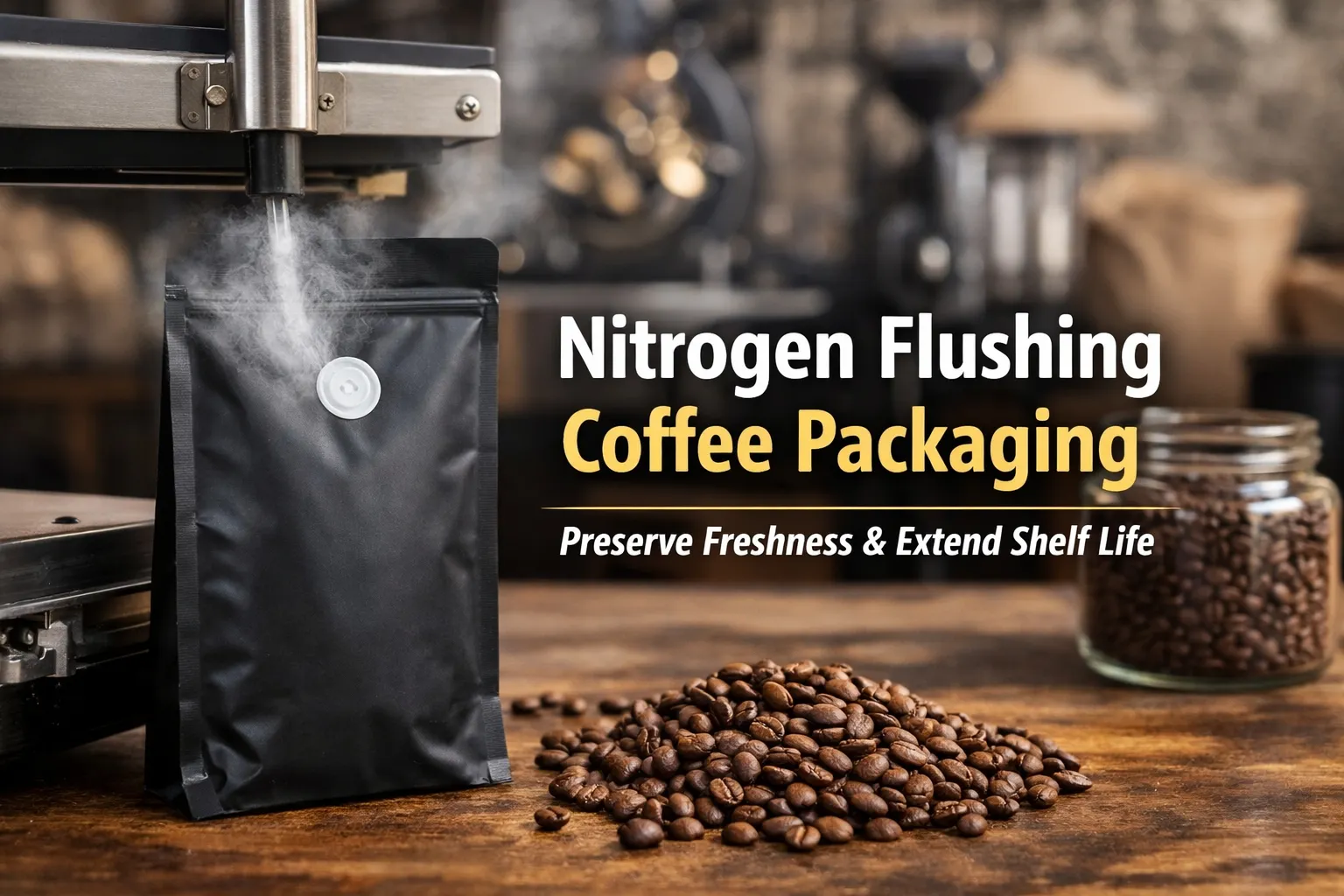
Nitrogen Flushing Coffee Packaging Guide for Freshness

ypak.coffee
YPAK PACKAGING GROUP was established in 2011 and formed with 3 companies based on Hongkong, Dongguan and Foshan. We have become one of the largest coffee bag manufacturers in China. We use the best quality WIPF valves from Switzerland to keep your coffee fresh.
Conform to the plastic ban policy imposed to many different countries, we have researched and developed the sustainable packaging bags, such as RECYCLABLE and COMPOSTABLE pouches.
No minimum quantity, no color plates are required with our HP 25K INDIGO DIGITAL PRINTING service.
You are welcome to visit YPAK.
Nitrogen Flushing Coffee Packaging Guide for Freshness
In the case of coffee roasters and specialty coffee brands, everything is about freshness. As soon as coffee has been roasted it starts losing the aroma and the complexity unless it is safeguarded. Oxidation is increased by exposure to oxygen, moisture, light, and heat which causes stale flavors and poor quality.
In the contemporary competitive global coffee market, particularly in the Asian and southeast Asian markets, freshness is not only an issue of the taste. It has a direct effect in brand reputation, customer satisfaction and repeat purchases. Nitrogen flushing coffee packaging is one of the best solutions which can be found today.
This guide provides an explanation of nitrogen flushing, the mechanism and the use of this technique to increase the shelf life and ensure the quality of a product by coffee business.
What Is Nitrogen Flushing?
Nitrogen flushing is the Modified Atmosphere Packaging (MAP). It is used by replacing the oxygen in a package with nitrogen gas and closing the package.
Nitrogen is an inert gas, which is non reactive and odorless. Since it is not chemical with coffee, it prevents oxidation without changing the flavor.
In the process of packing:
1. Coffee is filled into the bag.
2. The air within the package is either removed or displaced.
3. Oxygen is replaced by nitrogen gas that is injected.
4. Immediately, the package is closed.
With a substantial decrease in oxygen concentration within the bag, the coffee can be maintained in its original state of freshness a lot longer.
The Reason Oxygen is an Enemy of Fresh Coffee.
Oxygen exposure causes:
· Flavor degradation
· Aroma loss
· Oil oxidation
· Stale or rancid taste
Fresh coffee has volatile aromatic compounds that are added in the process of roasting coffee which has made it complex and rich. Chemical reactions take place when oxygen reacts with these compounds, which disintegrate them.
Nitrogen flushing conserves such fragile compounds by reducing the contact with oxygen.
Important Nitrogen Flushing Coffee Packaging Advantages.
1. Extends Shelf Life
Reduced oxygen concentration causes oxidation to be greatly retarded. When well packed in the appropriate packaging material, nitrogen-flushed coffee can revert to the same quality after several months of the product being kept in a sealed package.
This is particularly useful to coffee exporters or eCommerce brands that ship to foreign countries.
2. Maintains Aroma and Flavor Freshness.
Specialty coffee consumers want quality cups every time. Flushing with nitrogen is useful in maintaining the delicate flavors, such as fruity, floral, chocolatey, and nutty, which characterize high-quality beans.
This is more so essential to:
· Single-origin coffee
· Limited seasonal releases
· Complex medium and light roasts.
3. Supports Natural Degassing
Coffee emits carbon dioxide (CO 2 ) days or even weeks after being roasted. When confined in a totally airtight atmosphere, the accumulation of gases may lead to the expansion or bursting of packaging.
The vast majority of coffee bags with nitrogen have a one-way out gassing valve, which lets the CO 2 escape but not any oxygen.
This combination ensures:
· Stable packaging structure
· Safe gas release
· Constant preservation of freshness.
Comparison between Nitrogen Flushing and Vacuum Packaging.
Nitrogen flushing has been mixed up with the vacuum packaging of many new coffee brands. Although both of them are designed to decrease oxygen, they work in different ways.
Vacuum Packaging
· Removes air by suction.
· Makes a vacuum within the bag.
· May compress coffee beans.
· That would not be as well suited to freshly roasted coffee that still degas.
Nitrogen Flushing
· Substitutes oxygen with nitrogen.
· Keeps the pressure internally stable.
· Protects bean structure.
· Preferably works with degassing valves.
In the case of specialty coffee, nitrogen flushing is normally the best alternative as it safeguards structure and flavor.
What Coffee Products Are the most advantageous?
Nitrogen flushing would suit:
· Whole bean coffee
· Ground coffee
· Bulk retail packaging
· Export shipments
· Private label coffee brands
· Coffee service, subscriptions.
It comes in handy especially in brands that are distributed over large distances or in a place where the climate is humid with the increased danger of oxidation.
Implementation of Nitrogen Flushing in Coffee Packaging.
A common flow of nitrogen flushing consists of:
Step 1: Proper Cooling of the Roasted.
Before packaging, make sure that beans are cool enough to prevent condensation and water accumulation.
Step 2: Filling the Packaging
Store in high-barrier coffee bags created of multilayer substances (usually of foil lined or high-oxygen-barrier sheets).
Step 3: Nitrogen Injection
The nitrogen gas is injected using the MAP compatible packaging equipment to force out the oxygen in the bag. Other systems involve vacuum, then gas, to achieve even smaller residual levels of oxygen.
Step 4: Sealing and Valve Integration.
Close the bag upon flushing. Make sure that the valve of one-way degassing is correctly installed and operational.
Step 5: Quality Control Testing.
Test residual oxygen levels. In most cases, manufacturers will achieve maximum oxygen content at 2-3 percent.
Packaging Materials Matter
Nitrogen flushing can be really effective, however, only in case of combining it with adequate packaging materials.
Look for:
· High oxygen barrier films
· Moisture resistance
· Light protection
· Durable seals
The former will not perform even the best of nitrogen flushing processes when packed material is susceptible to the slow seepage of oxygen.
Constraints and Good Practices.
Although nitrogen flushing is an effective increase in shelf-life, it is not a long-term solution.
Important considerations:
· As soon as coffee is opened it is exposed to oxygen.
· Quality is still affected by storage conditions (heat, humidity, sunlight).
· There should be proper warehouse and transport management.
· Change of bags should be strictly sealed after use.
In the case of ultra-premium coffee brands, it is possible to use nitrogen flushing and store it in a climate-controlled environment to preserve it as much as possible.
Written by
ypak.coffee
ypak
YPAK PACKAGING GROUP was established in 2011 and formed with 3 companies based on Hongkong, Dongguan and Foshan. We have become one of the largest coffee bag manufacturers in China. We use the best quality WIPF valves from Switzerland to keep your coffee fresh.
Conform to the plastic ban policy imposed to many different countries, we have researched and developed the sustainable packaging bags, such as RECYCLABLE and COMPOSTABLE pouches.
No minimum quantity, no color plates are required with our HP 25K INDIGO DIGITAL PRINTING service.
You are welcome to visit YPAK.
Related Articles
Two Gates on the Road to the EU: Reduction by Design and the Documentation Chain for Coffee Packaging

Recyclable Coffee Bags: How to Protect Freshness Without Compromising Sustainability

Your Brand, Perfectly Packaged: The YPAK Guide to Selecting a High-Quality Custom Coffee Bag