

Updated 4 months ago
EU PPWR 2026: The PFAS Ban Survival Guide for Roasters
ypak.coffee
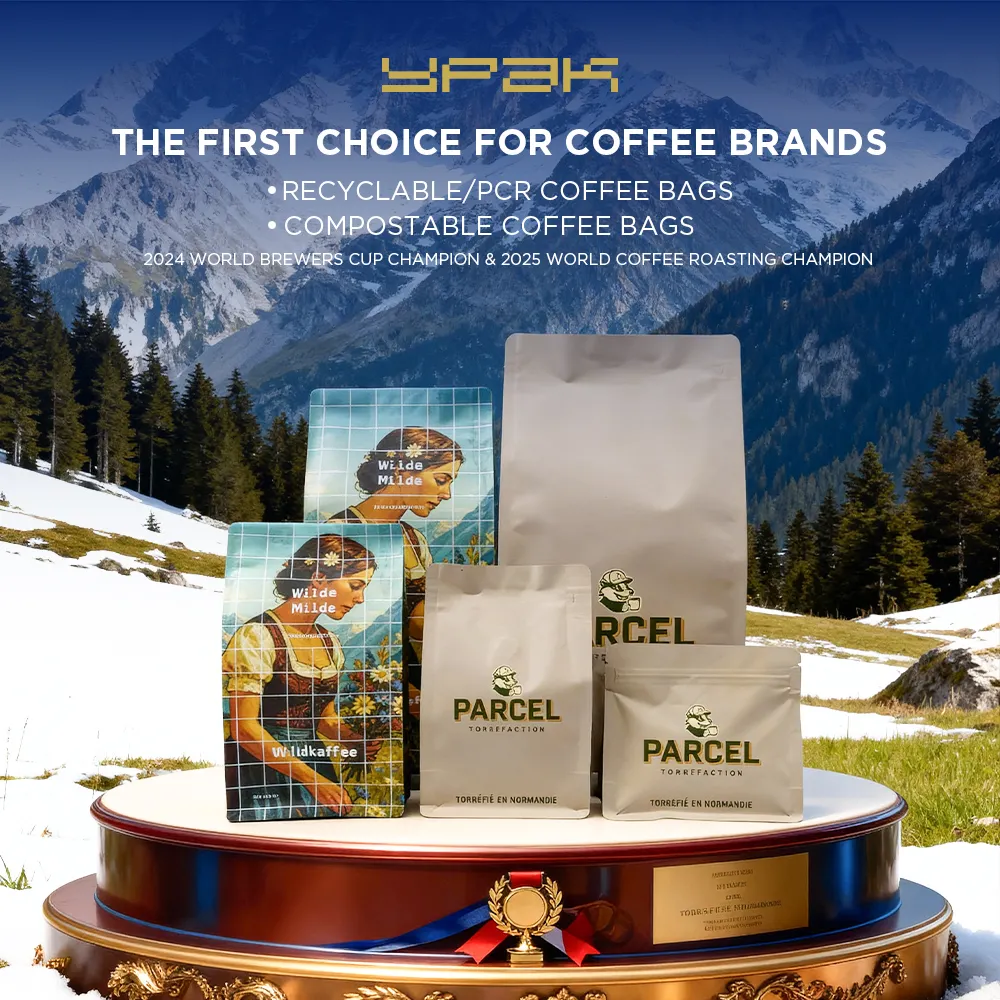
YPAK PACKAGING GROUP was established in 2011 and formed with 3 companies based on Hongkong, Dongguan and Foshan. We have become one of the largest coffee bag manufacturers in China. We use the best quality WIPF valves from Switzerland to keep your coffee fresh.
Conform to the plastic ban policy imposed to many different countries, we have researched and developed the sustainable packaging bags, such as RECYCLABLE and COMPOSTABLE pouches.
No minimum quantity, no color plates are required with our HP 25K INDIGO DIGITAL PRINTING service.
You are welcome to visit YPAK.

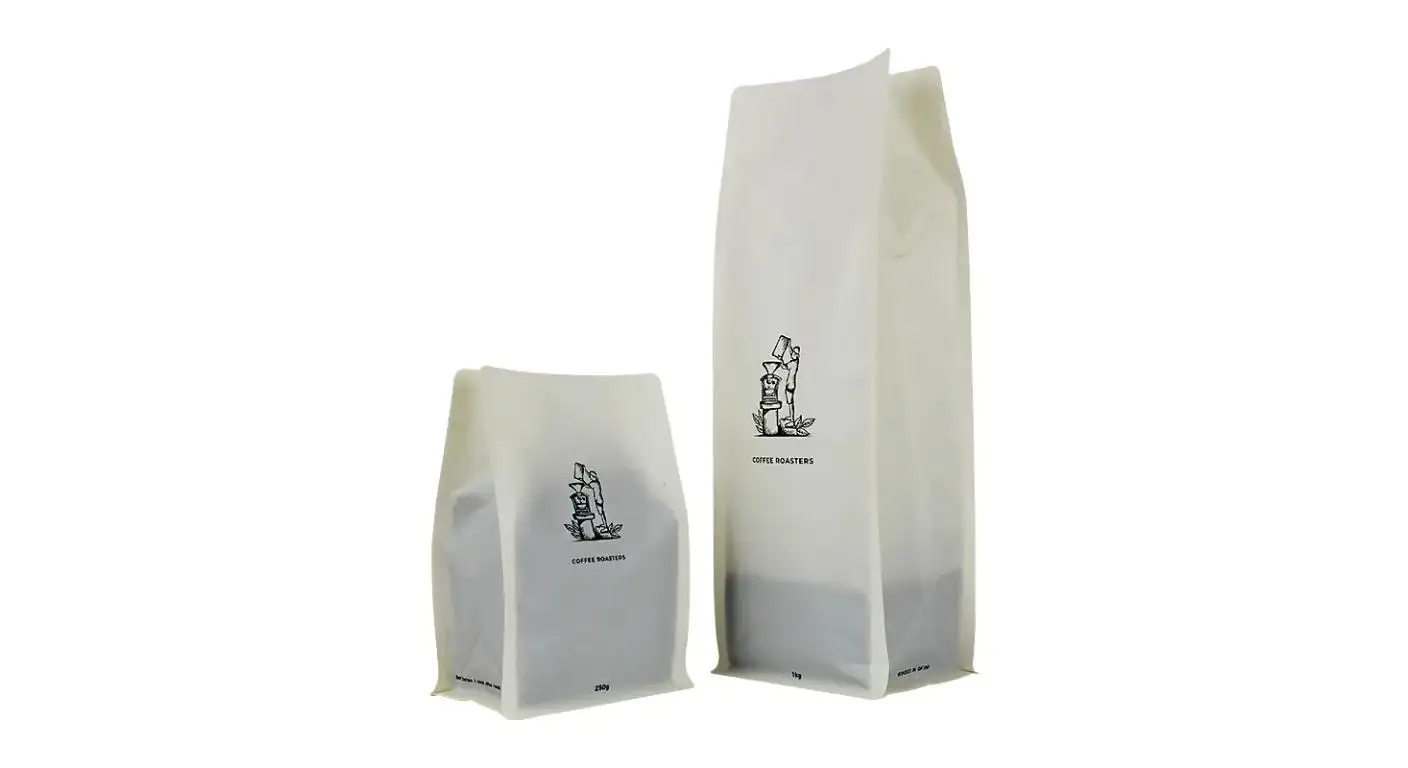
PFAS-Free coffee packaging
Introduction: The Non-Negotiable Deadline of August 12, 2026
For specialty coffee brands operating within or exporting to the European Union, the calendar has become a tactical roadmap. We are no longer discussing voluntary sustainability initiatives; we are facing a rigid regulatory wall. According to the latest amendments of the EU Packaging and Packaging Waste Regulation (PPWR), any food-contact packaging placed on the EU market must be verified PFAS-Free (Per- and Polyfluorinated Alkyl Substances) by August 12, 2026.PFAS, often dubbed "forever chemicals," have historically been the invisible workhorses of the packaging industry, providing grease resistance and moisture barriers. However, with the onset of intensified customs inspections and retail audits across the EU, the absence of verified compliance is no longer just an environmental oversight—it is a catastrophic business risk. Brands lacking a transparent compliance trail face immediate market exclusion, severe financial penalties, and irreversible damage to their brand equity.
Section 1: The Invisible PFAS Crisis Hidden in Your Coffee Bags
A common misconception among roasters is that coffee—being a dry, roasted product—doesn't require the aggressive grease-proofing that fast-food packaging does. However, the reality of high-performance laminate engineering reveals a different story.
1. The Laminate Lining Trap
In traditional multi-layer structures (such as PET/AL/PE or metallized PET), PFAS are often utilized as processing aids or functional coatings to enhance surface tension and moisture resistance. Even if not intentionally added as a primary barrier, cross-contamination in the manufacturing of non-specialized films can lead to detectable levels that fail the stringent EU thresholds.
2. The Blind Spot: The Degassing Valve
This is perhaps the most dangerous oversight for many brands. The one-way degassing valve is a complex mechanical component. Historically, many valve manufacturers utilized fluorinated rubbers or lubricants containing PFAS to ensure smooth mechanical operation and airtight sealing. Under the new PPWR framework, a single non-compliant valve can render an entire shipment of specialty coffee illegal.
3. High-Precision Detection: No Room for "Trace Amounts"
European regulatory bodies have significantly upgraded their analytical capabilities. With the Method Detection Limit (MDL) now reaching as low as 0.01 mg/kg for specific substances, any "legacy" chemicals in your supply chain will be flagged. YPAK’s transition to total PFAS-free manufacturing addresses this at the molecular level.
Section 2: Decoding PPWR – From "Recyclable" to "Design for Recycling" (DfR)
The PPWR is a comprehensive structural shift that goes far beyond a single chemical ban. It fundamentally reclassifies packaging based on its Circular Economy Potential.
The 2026 Compliance Cliff: The immediate priority is the mandatory PFAS ban and heavy metal residue audits.
The 2030 Scalability Mandate: By 2030, all packaging must not only be technically recyclable but must be recyclable at scale. This effectively signals the end of the road for traditional Aluminum foil (AL) laminates.
The Grading System (DfR): Future EPR (Extended Producer Responsibility) fees will be "eco-modulated." Packaging will be graded from A to E. Multi-material laminates (like PET/AL/PE) are projected to fall into Grade D or E, incurring massive "plastic taxes" and environmental levies that will erode roasters' margins.
Section 3: YPAK’s Strategic Answer – The Power of Third-Party Verification
In an era of "greenwashing" and vague environmental claims, YPAK’s strategy is anchored in Technical Certainty. We don't ask you to trust our word; we ask you to trust the data.
1. The SGS 430-Substance Screening
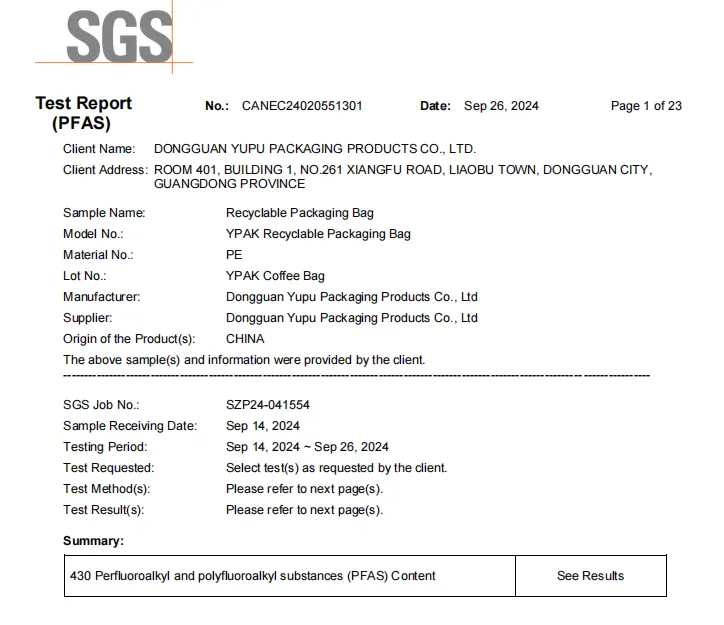
According to our latest SGS Laboratory Report (No: CANEC24020551301), YPAK’s Recyclable Mono-PE structures have undergone a comprehensive "High-Resolution" scan. We screened for 430 distinct PFAS substances, including PFOA, PFOS, and their precursors. The results confirmed that our materials are safely below the detectable limits, ensuring full compliance with the 2026 mandate.
2. Global Food Safety Compliance
Simultaneously, our structures have cleared the rigorous migration tests required by (EC) No 1935/2004 and (EU) No 10/2011 (SGS Report No: CANEC24020556101). This ensures that while we meet environmental rules, we never compromise the sensory purity of your coffee.
Section 4: The Barrier Revolution – Can Mono-PE Truly Replace Aluminum?
The number one anxiety for roasters is shelf-life. "If I remove the aluminum foil, will my coffee stay fresh?"
YPAK has engineered a "Triple-Shield" Mono-material System to resolve this dilemma:
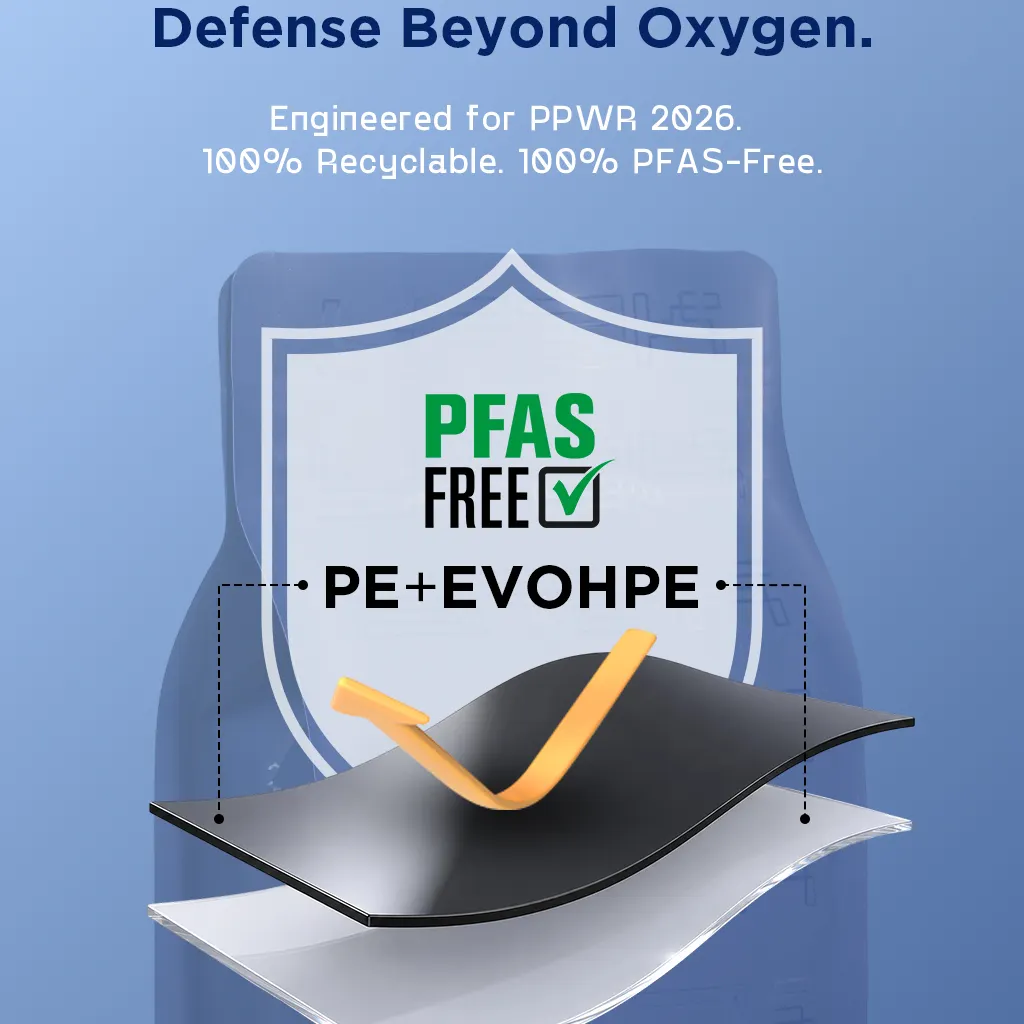
Advanced Co-extruded PE/EVOH: By utilizing high-barrier Ethylene Vinyl Alcohol (EVOH) co-extruded within a single-polymer Polyethylene (PE) structure, we have achieved Oxygen Transmission Rates (OTR) that rival traditional foil laminates.The WIPF Valve Integration: We have standardized the use of Swiss-made WIPF valves for our 2026 compliance series. These valves are not only PFAS-free but are also engineered for mechanical compatibility within the plastic recycling stream (PE-compatible).
Section 5: The "Anti-Greenwashing" Checklist – How to Verify Your Supplier
In the current chaotic market, many suppliers claim "compliance" without the paperwork to back it up. We advise roasters to follow this 3-step audit:
Scope Verification: Check the BRCGS Directory. Does your supplier actually hold a manufacturing certificate for food packaging, or are they merely a trading intermediary?
GRS Chain of Custody: If you are marketing PCR (Post-Consumer Recycled) content, demand a Transaction Certificate (TC) for your specific batch.
Audit the MDL: Look at the "Method Detection Limit" on your supplier's PFAS reports. YPAK utilizes the most granular testing algorithms available at SGS to ensure true safety.
Section 6: Early Adoption as a Competitive Edge (The EPR Advantage)
Navigating Europe requires more than clean chemistry; it requires legal alignment. YPAK has been a proactive participant in European EPR (Extended Producer Responsibility) systems since 2022, with active registrations in Germany, France, and Spain.
Conclusion: Transforming Compliance into Brand Premiumization
The PPWR and the PFAS ban should not be viewed as a "cost of doing business." They are an opportunity to re-position your brand. In a market where consumers are increasingly wary of hidden chemicals, being a PFAS-Free, Recyclable, and EPR-compliant brand is a powerful marketing differentiator.
At World of Coffee Brussels (Booth 6654), YPAK is showcasing the future of this transition. From Aqueous-coated paper solutions to 100% Recyclable Flat Bottom Bags, we are providing the answers to the industry’s most pressing questions.Your Compliance Journey Starts Here: Contact Sam@ypak.coffee to request our 2026 PPWR Compliance Whitepaper and schedule your Free Materials Audit today.
Written by
ypak.coffee
ypak
YPAK PACKAGING GROUP was established in 2011 and formed with 3 companies based on Hongkong, Dongguan and Foshan. We have become one of the largest coffee bag manufacturers in China. We use the best quality WIPF valves from Switzerland to keep your coffee fresh.
Conform to the plastic ban policy imposed to many different countries, we have researched and developed the sustainable packaging bags, such as RECYCLABLE and COMPOSTABLE pouches.
No minimum quantity, no color plates are required with our HP 25K INDIGO DIGITAL PRINTING service.
You are welcome to visit YPAK.
Related Articles
YPAK at World of Coffee Panama 2026: Coffee Packaging for Short Runs and EU-Bound Lots
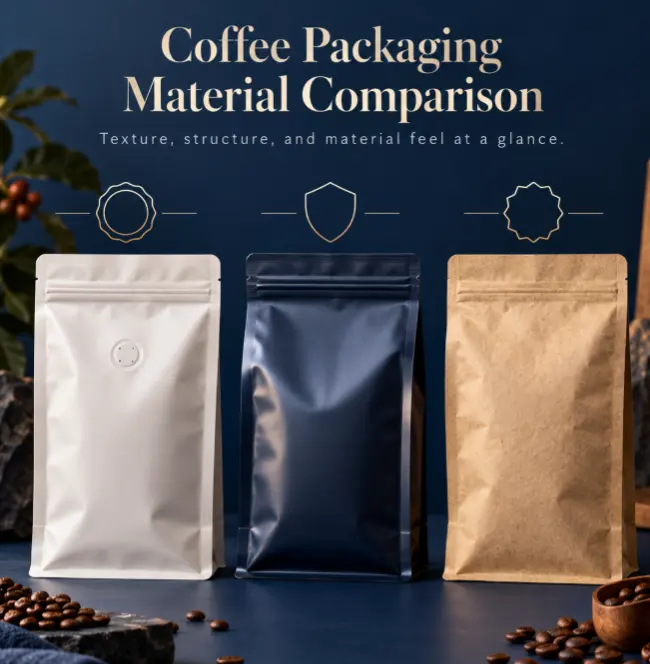
PPWR Recyclability Grades for Coffee Packaging: What Survives 2030, and What Survives 2038
Customized Coffee Packaging Solutions: From Product Ideas to Market-Ready Packaging