

Updated 6 months ago
PE Vs. PP for Eco Friendly Coffee Gift Bags: How to Balance Function and Form

ypak.coffee
YPAK PACKAGING GROUP was established in 2011 and formed with 3 companies based on Hongkong, Dongguan and Foshan. We have become one of the largest coffee bag manufacturers in China. We use the best quality WIPF valves from Switzerland to keep your coffee fresh.
Conform to the plastic ban policy imposed to many different countries, we have researched and developed the sustainable packaging bags, such as RECYCLABLE and COMPOSTABLE pouches.
No minimum quantity, no color plates are required with our HP 25K INDIGO DIGITAL PRINTING service.
You are welcome to visit YPAK.
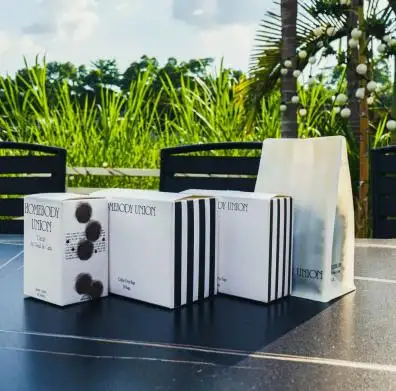
Eco Friendly Coffee Gift Bags
Why Material Choice Matters In Eco Friendly Coffee Gift Bags
Eco Friendly Coffee Gift Bags are no longer judged only by visual presentation. In today's coffee market, buyers expect them to protect aroma, support brand positioning, travel safely through logistics, and still make sense from a sustainability perspective. For that reason, the choice between PE and PP is not a minor converting detail. It influences how the bag feels in the hand, how it performs on the packing line, and how credible the final sustainability claim will be.
This decision also matters because flexible packaging already has measurable environmental advantages in coffee applications. In a coffee packaging comparison published by the Flexible Packaging Association, the stand-up flexible pouch showed a far higher product-to-package ratio than rigid alternatives, and HDPE canisters and steel cans generated substantially higher greenhouse gas emissions than the flexible pouch. That is why material optimization inside Eco Friendly Coffee Gift Bags should be treated as a practical business decision, not only a design preference.
Why PE Supports Flexible and Reliable Eco Friendly Coffee Gift Bags
PE is often the stronger choice when softness, seal reliability, and pouch flexibility are the main priorities. Polyethylene is widely used in flexible packaging because it is lightweight, moisture-resistant, and naturally suited to film structures. Resin suppliers also highlight PE grades designed for blown and cast film applications with very low seal initiation temperature and strong seal performance, which is highly relevant for coffee gift bags that need dependable side seals, bottom seals, zippers, or pouch integrity during transport.
For coffee brands, that flexibility translates into several practical benefits. A PE-led structure usually folds more easily, absorbs handling stress more effectively, and helps reduce the risk of seal failure in automated filling. This is especially useful when the pack must combine a refined appearance with everyday usability. At YPAK PACKAGING, we often see PE perform well in stand-up pouches, soft-touch gift formats, and lightweight promotional coffee packs where comfort, sealing stability, and e-commerce durability matter at the same time.
The market direction also supports PE's relevance. Recent industry recognition from the Flexible Packaging Association highlighted MDO-PE and PE pouch solutions as recyclable flexible packaging with strong print performance. That does not mean every PE bag is automatically recyclable, but it does show that PE-based mono-material design is becoming an increasingly serious route for brands that want Eco Friendly Coffee Gift Bags with a more realistic circularity story.
Where PP Brings Better Structure and Premium Shelf Presence
PP enters the conversation when the client wants more shape retention, a cleaner upright body, and a more structured premium feel. PlasticsEurope notes that PP has a density of about 0.895 to 0.92 g/cm³, making it the lowest-density commodity plastic, and also states that PP offers superior mechanical properties and thermal resistance compared with PE. LyondellBasell similarly reports common commercial PP melting points in the range of 145°C to 165°C. Together, these characteristics explain why PP is often selected when stiffness, dimensional stability, and higher heat tolerance are priorities.
In practical packaging terms, PP can help Eco Friendly Coffee Gift Bags hold sharper lines and present a more defined silhouette on shelf. That matters in gift channels, boutique retail, and seasonal coffee launches where the pack must feel elevated before the customer even opens it. A more structured bag can improve perceived value, support cleaner stacking, and create a neater billboard effect for graphics.
However, structure is not the same as versatility. When comparing the two materials, PP generally offers the crisper body, while PE more often supports the forgiving seal window and softer handling behavior that converters value in flexible pouch production. For many coffee gift projects, the real question is not which polymer is better in general, but which one better serves the exact packaging role.
Recycling Reality Depends On Design and Local Infrastructure
One of the biggest misconceptions in the market is that a bag becomes sustainable simply because it uses a familiar polyolefin. In reality, sustainability claims depend on structure, compatibility, and collection systems. In the United States, How2Recycle states that only pure PE films are recyclable through the Store Drop-off stream. APR also notes that, as of September 2024, PP flexible film collection systems in North America remain limited to Canada, which means PP flexibles do not currently meet APR's collection accessibility criteria there.
That regional difference matters for exporters and global coffee brands. In the UK, WRAP reports that government plans under “Simpler Recycling” aim for PE and PP films to be collected from households by March 2027. This shows that the infrastructure picture is moving, but it is still uneven by market. A design that looks environmentally credible in one region may need a different disposal message in another.
For this reason, YPAK PACKAGING recommends that clients review four points before confirming material direction:
✓ Target polymer stream: mono-material PE or mono-material PP
✓ Regional end-of-life route: store drop-off, check locally, or developing collection
✓ Converting details: inks, adhesives, color, and added features that may affect recyclability
✓ Consumer communication: disposal instructions that match the selling market
APR's current design guidance also makes clear that color and package design choices can affect sortation and recyclate value, and that natural material is generally preferred from a recycling standpoint. In short, true progress in Eco Friendly Coffee Gift Bags comes from system thinking, not from a single material label.
How YPAK PACKAGING Helps Clients Choose Between PE and PP
From a manufacturer's perspective, the PE versus PP decision should follow the commercial goal of the bag. If the project needs soft handling, dependable heat sealing, export durability, and a clearer current pathway in U.S. PE film recovery, PE is often the more practical starting point. If the client needs a crisp body, stronger shelf structure, and a more formal premium presentation, PP can be the stronger visual and mechanical solution.
At YPAK PACKAGING, we typically guide clients by matching the resin strategy to the full packaging brief. That includes bag format, filling method, sealing method, surface finish, shipping conditions, and sustainability claims for the target market. A coffee gift bag is rarely just a bag. It is part of the product story, the unboxing experience, and the compliance path that supports long-term brand trust.
The Best Answer Is a Purpose-Built Packaging Strategy
The real showdown between flexibility and structure does not end with a simple winner. Both PE and PP play valuable roles in Eco Friendly Coffee Gift Bags, yet each material serves a different purpose. PE is often the preferred option when flexibility, sealing reliability, and existing PE film recovery channels are the main priorities. PP is more suitable when rigidity, shape retention, and a more premium structured appearance are required.
For coffee brands that want packaging to combine visual appeal with dependable performance, the most effective approach is to define the product objective first and select the polymer accordingly. At YPAK PACKAGING, this is the principle that guides our work. We support clients in developing coffee gift bag solutions that present well, perform consistently, and align with practical sustainability goals without relying on unclear material claims.
CTA: If you are planning a new coffee gift packaging line, YPAK PACKAGING can help you compare PE and PP structures, review recyclability pathways for your target market, and develop Eco Friendly Coffee Gift Bags that fit both your brand image and your operational needs.
Written by
ypak.coffee
ypak
YPAK PACKAGING GROUP was established in 2011 and formed with 3 companies based on Hongkong, Dongguan and Foshan. We have become one of the largest coffee bag manufacturers in China. We use the best quality WIPF valves from Switzerland to keep your coffee fresh.
Conform to the plastic ban policy imposed to many different countries, we have researched and developed the sustainable packaging bags, such as RECYCLABLE and COMPOSTABLE pouches.
No minimum quantity, no color plates are required with our HP 25K INDIGO DIGITAL PRINTING service.
You are welcome to visit YPAK.
Related Articles
Two Gates on the Road to the EU: Reduction by Design and the Documentation Chain for Coffee Packaging

Recyclable Coffee Bags: How to Protect Freshness Without Compromising Sustainability

Your Brand, Perfectly Packaged: The YPAK Guide to Selecting a High-Quality Custom Coffee Bag