

The Ultimate Coffee Roaster’s Guide to Coffee Packaging
To coffee roasters, packaging is neither only a physical container, but it is an effective tool of strategy that helps to build brand perception, purchase behavior, and future business success. Research reveals that the packaging of coffee and its design can influence 70 percent of purchasing decisions, which confirms that it is not only the taste of coffee but also the appearance on shelves that can make it or break it.
Here, in a complete guide, we are going to investigate all the aspects of coffee packaging that a roaster should know: the necessary functional elements and the major design approaches that are able to increase the sales and create loyal customers.
Why Coffee Packaging Matters More Than You Think
When a consumer picks up a coffee bag, they make a judgment in seconds. The bag’s look, feel, and information guide expectations before the first sip. Good packaging does three things:
-
Protects freshness and quality
-
Communicates your brand story
-
Drives sales and customer loyalty
A single packaging choice can be the difference between a one-time purchase and a repeat customer — especially in competitive markets like specialty coffee.
Three Fundamental Components of Effective Coffee Packaging
For coffee packaging to do its job, it must include these essential elements:
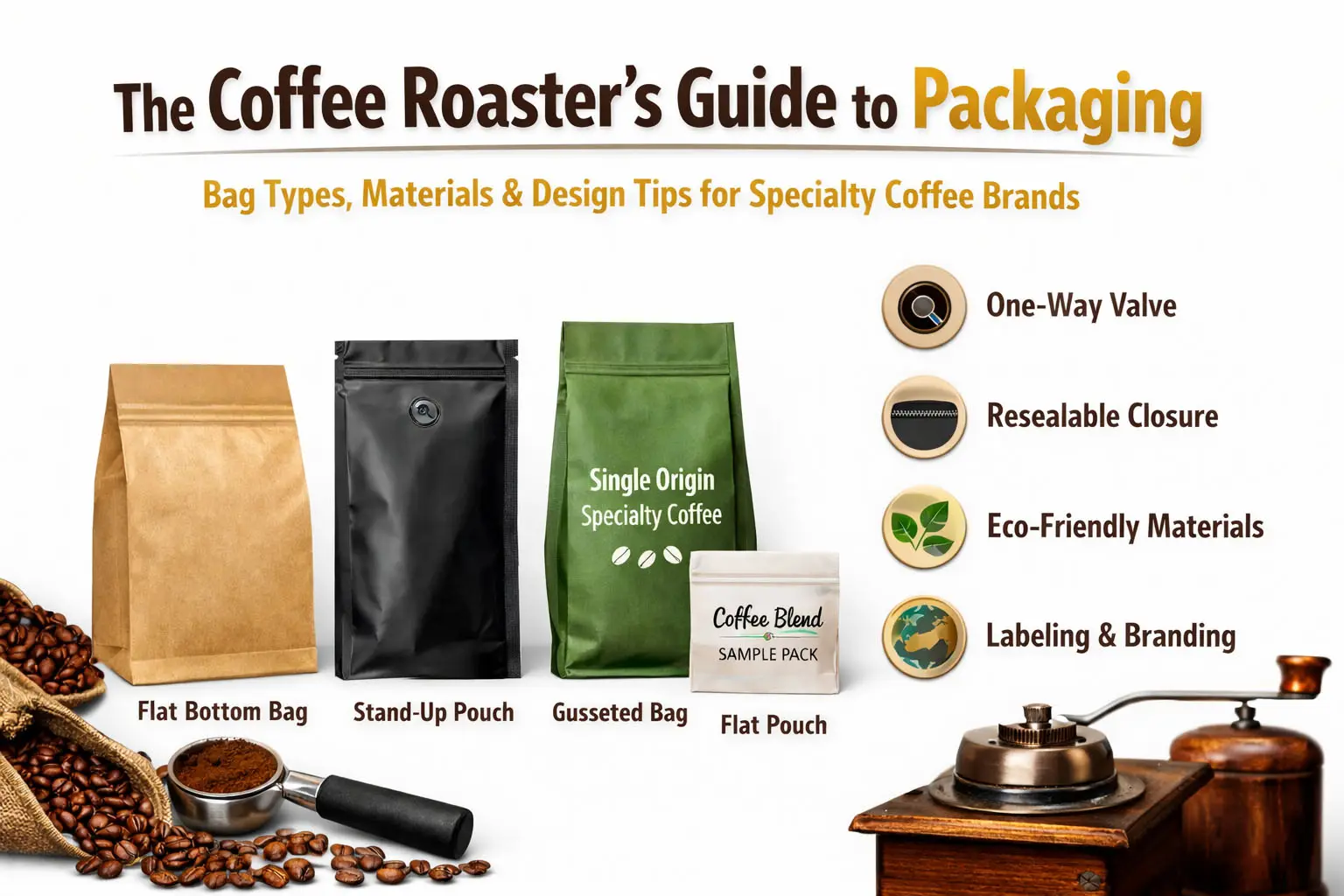
1. One-Way Valve to Preserve Freshness
Freshly roasted coffee beans release carbon dioxide (CO₂). Without a way for CO₂ to escape, pressure can build inside the bag, and oxygen can get in, leading to stale flavor. A one-way valve solves this by letting gas out while keeping air out — preserving aroma and taste longer.
2. Resealable Closure to Maintain Flavor
Exposure to air quickly degrades coffee’s aroma and flavor. A resealable option — such as a zip lock, tin tie, or airtight seal — gives your customers the ability to keep their coffee fresh long after opening, boosting satisfaction and perceived value.
3. Clear Legal & Informational Labels
Different regions have specific packaging requirements. At a minimum, most markets require:
-
Product name and coffee type
-
Net weight or volume
-
Business contact details or origin
-
Roast date (highly recommended)
Pro tip: Always check local labeling laws in your target market before printing.
Four Critical Packaging Decisions Every Roaster Must Make
1. Choosing the Right Bag Style
The physical style of your packaging affects usability, shelf presentation, and brand perception. Common formats include:
• Flat Bottom Bags
Premium look, easy to display, and offer multiple large branding surfaces.
• Stand-Up Pouches
Cost-effective, popular with specialty brands, easy to fill and store.
• Gusseted Bags
Traditional choice with a classic feel but less convenience for filling and display.
• Flat Pouches
Ideal for single-serve packs or travel sizes — practical for subscriptions and sampling.
Some roasters also explore alternative packaging formats like jars or boxes to stand out, but these can mean higher production costs and custom design challenges.
2. Selecting the Ideal Material
Material choice impacts not just aesthetics but also sustainability and shelf life.
Kraft Paper Bags
-
Affordable and natural
-
Biodegradable and compostable
-
May require extra labeling or stamping
Matte & Printed Bags
-
High-end customization and brand appeal
-
Better barrier options and durability
-
Can be recyclable depending on material choice
Understanding your audience is key: some customers prioritize sustainability, while others seek premium presentation.
3. Deciding on Bag Size
Standard coffee packaging sizes include:
-
8 oz — Small-batch, specialty, high value
-
12 oz (340 g) — Widely accepted retail size
-
1 lb (454 g) — Popular in cafes and stores
-
5 lb (2.27 kg) — Wholesale and bulk customers
Choosing the right size helps meet customer expectations and expands opportunities for retail and online sales.
4. Choosing a Reliable Packaging Supplier
Your packaging manufacturer is a long-term partner in quality and consistency. When selecting a supplier, evaluate:
-
Minimum print orders
-
Lead times and production timelines
-
Cost per unit at scale
Always ask for printed proofs before full production to avoid costly mistakes.
Designing Packaging That Sells — Not Just Looks Good
Packaging is your silent salesperson. To create a design that truly sells:
Convey Clear Brand Messaging
Your packaging should instantly answer three questions:
-
Who are you? (Logo, brand name, origin)
-
What makes your coffee unique? (Direct-trade, single origin, roast profile)
-
What does your brand stand for? (Sustainability, community, quality)
Tell a story that resonates with your target customers.
Include Essential Coffee Details
Educate and excite customers with helpful information:
-
Coffee name and origin
-
Tasting notes and flavor profile
-
Roast level and roast date
-
Certifications (e.g., organic, fair trade)
This builds credibility and trust — especially with specialty coffee drinkers.
Use Eye-Catching Visual Elements
Design should be visually compelling but aligned with brand identity. Consider:
-
Bold colors that stand out on retail shelves
-
Unique typography and graphics
-
Storytelling elements (maps, farmer profiles, or origin imagery)
Color psychology matters — green signals sustainability, while rich earth tones can imply artisan quality.
Sustainability: A Growing Consumer Priority
Today’s global coffee drinkers are increasingly eco-aware. Sustainable packaging isn’t just ethical — it’s a competitive advantage. While traditional barrier bags protect freshness best, many roasters now offer biodegradable, compostable, and recyclable alternatives to align with environmental values and market trends.
Conclusion: Packaging as a Growth Strategy
The packaging of coffee has a very crucial role in the development of your brand, development of your product and the development of repeat purchase. With the appropriate style of bag and material, design, and supplier, you can make coffee packages that do not only maintain the freshness but also convey the story of your brand, and gain loyal customers.
Online, in conventional shops or cafes, a good packaging design is one of the primary growth drivers in the modern competitive coffee market.
Related Articles
Two Gates on the Road to the EU: Reduction by Design and the Documentation Chain for Coffee Packaging

Recyclable Coffee Bags: How to Protect Freshness Without Compromising Sustainability

Your Brand, Perfectly Packaged: The YPAK Guide to Selecting a High-Quality Custom Coffee Bag